- Select Language
RS51 4G Rugged Handheld Terminal | 6.3" FHD+ ...
The PM158-1 is a 15.6-inch portable touchscreen mo...
P11 Series Next-Gen Enterprise Rugged Industrial ...
This dual touchscreen gaming laptop combines cutti...
The F505 Handheld PDA is a compact, high-performan...
RS50 5G Rugged Handheld Terminal | 6.3" FHD+ ...
Have you ever been in a Retail Pos setting where retail staff struggling to hear transaction prompts and inventory queries in noisy store environments? If so, you already know why this matters. In this article, we explore how Smart PDA N40, K401 Handheld PDA and X501 Handheld PDA solve this problem. The retail point-of-sale environment is notoriously chaotic—beeping scanners, customer conversations, overhead announcements, and the constant hum of refrigeration units create a soundscape that defeats most handheld devices. Traditional PDAs with weak speakers and outdated microphones simply cannot cut through this acoustic chaos, leading to misheard prices, delayed inventory lookups, and frustrated employees who must repeatedly ask customers to repeat themselves.
The consequences of poor audio performance in retail POS systems extend far beyond momentary inconvenience. When a cashier cannot clearly hear a payment confirmation or a stock clerk misses a low-inventory alert, errors cascade through the entire operation. Transaction times stretch, queue lines build, and customer satisfaction plummets. Worse, employees develop workarounds—holding devices closer to their ears, stepping away from registers to hear prompts, or ignoring audio alerts altogether—all of which undermine productivity and accuracy. These silent inefficiencies cost retailers thousands of dollars annually in lost sales and operational friction, yet many organizations accept them as unavoidable realities of the trade.
Before adopting modern solutions for Retail Pos, organizations commonly struggle with three persistent challenges: unreliable audio quality, limited range, and high maintenance costs of outdated equipment. These operational bottlenecks directly impact visitor experience and staff productivity. Unreliable audio quality manifests as crackling speakers, muffled voice prompts, and intermittent connectivity that makes staff second-guess every transaction. Limited range means employees must stay within a few meters of the base station, restricting mobility on the sales floor and in stockrooms. High maintenance costs stem from frequent battery replacements, speaker repairs, and firmware updates that demand dedicated IT time—resources that could be better spent on customer-facing initiatives.
The audio problem is particularly acute in high-traffic retail settings such as supermarkets, electronics stores, and department stores during peak hours. A single checkout lane can generate 85-95 decibels of ambient noise, far exceeding the volume of most handheld device speakers. Employees at returns counters must often walk to quieter areas just to process a simple refund authorization. Warehouse staff conducting cycle counts face similar challenges when trying to hear item confirmation beeps over the roar of forklifts and conveyor belts. These daily frustrations accumulate, contributing to employee burnout and turnover in an industry already facing significant staffing challenges.
Fortunately, modern hardware engineering has addressed these issues head-on. The industrial solution for Retail Pos encompasses devices built specifically for demanding acoustic environments, featuring amplified speakers, noise-cancelling microphones, and rugged construction that withstands the bumps and drops common in fast-paced retail operations. These systems are designed not as afterthoughts but as core components of a comprehensive retail technology strategy, integrating seamlessly with existing POS software, inventory management platforms, and enterprise resource planning systems.
The X501 Handheld PDA stands as the flagship solution for retailers demanding uncompromising performance in noisy environments. This device features a high-output speaker system engineered to deliver clear, intelligible audio at volumes up to 100 decibels—enough to cut through the most chaotic sales floor. The X501 also integrates dual noise-cancelling microphones that isolate the user's voice from background chatter, ensuring that voice commands and inventory queries are accurately captured even when multiple conversations occur simultaneously. Its IP65-rated enclosure protects against dust and water splashes, making it suitable for produce sections, deli counters, and outdoor garden centers where moisture and debris are constant concerns.
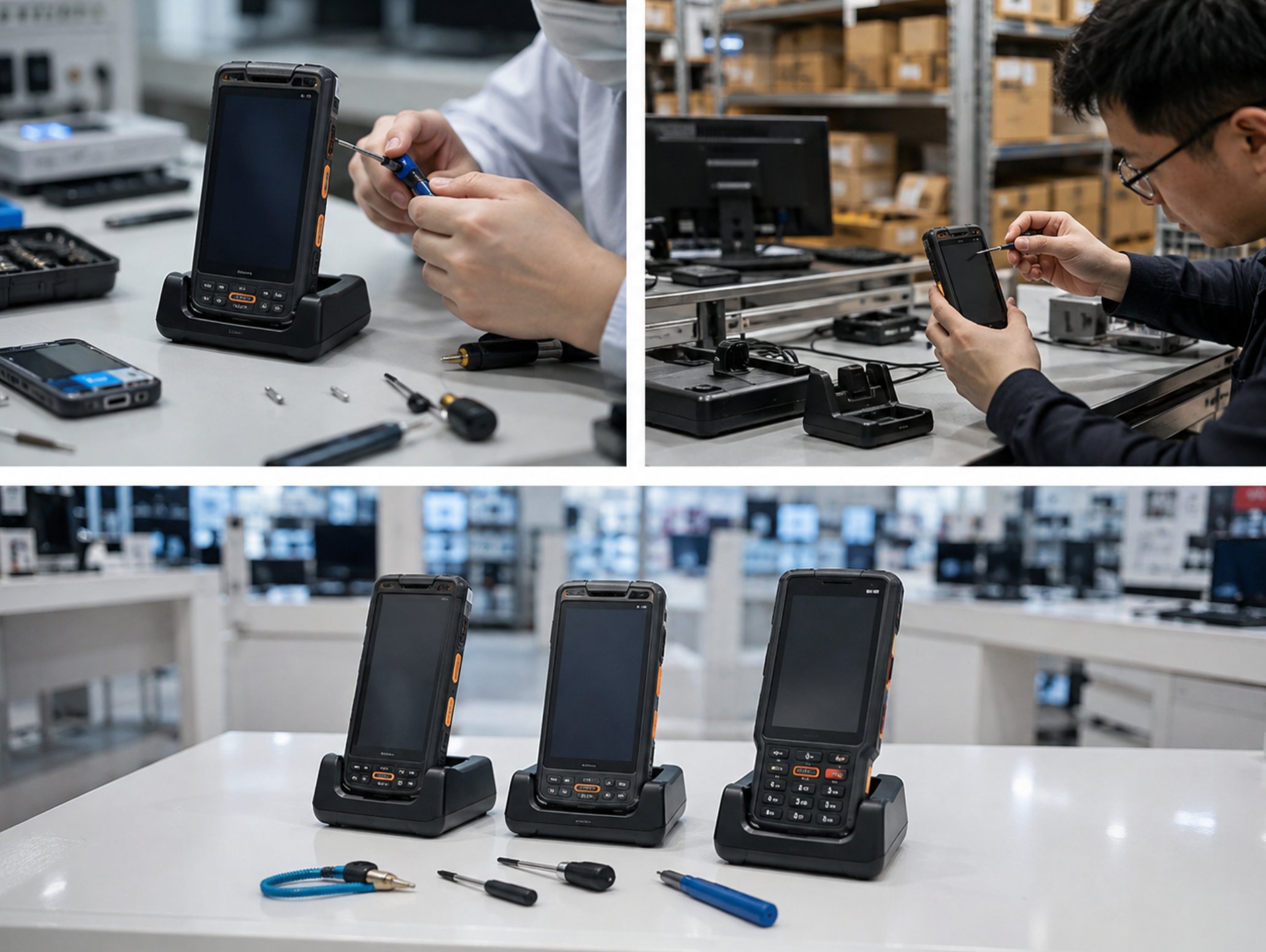
Battery life represents another critical advantage of the X501. With a 5000mAh hot-swappable battery, this device easily handles full 12-hour shifts without requiring mid-day charging. Retail managers report that employees no longer need to rotate devices during breaks or carry spare batteries, simplifying equipment management and reducing downtime. The X501 also supports fast charging, reaching 80% capacity in just 90 minutes, which proves invaluable during rapid shift changes or unexpected peak periods. Combined with its 5.5-inch HD display that remains readable in direct sunlight, the X501 transforms the retail POS experience from a daily struggle into a seamless workflow.
The Smart PDA N40 takes a different approach to the audio challenge, leveraging advanced digital signal processing to adapt sound output based on ambient noise levels. The N40 continuously samples background noise through its front-facing sensor array and automatically adjusts speaker volume and equalization to maintain optimal intelligibility. In a quiet morning shift, the device operates at modest volume levels to avoid disturbing customers; by noon, as the store fills with shoppers, the N40 progressively increases output and boosts mid-range frequencies where speech intelligibility matters most. This intelligent adaptation ensures consistent audio clarity without requiring manual adjustments from staff.
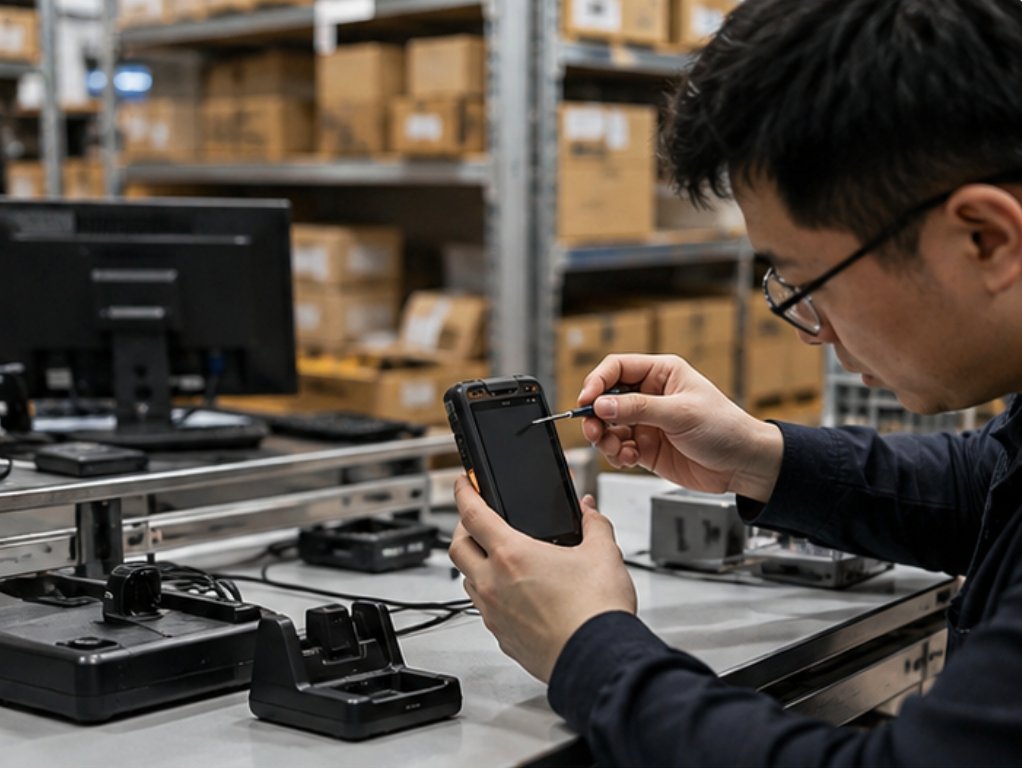
The N40 also introduces a unique vibration-plus-audio alert system that provides redundant notification channels for critical events. When a price check request arrives or a payment is successfully processed, the device delivers a subtle haptic pulse alongside the audible confirmation, ensuring that staff never miss important updates even in the loudest environments. This dual-channel approach has proven particularly valuable in warehouse settings where employees wear hearing protection, as the vibration pattern cuts through physical barriers that would otherwise block audio signals entirely. The N40 additionally supports Bluetooth 5.2 connectivity, enabling seamless pairing with wireless headsets for staff who prefer discrete audio monitoring during customer interactions.
For retailers seeking a more compact form factor without sacrificing audio performance, the K401 Handheld PDA delivers exceptional value. Despite its slim profile weighing just 240 grams, the K401 incorporates a front-firing speaker chamber that produces surprisingly robust sound output. The acoustic design uses a tuned resonance cavity that amplifies lower frequencies typically lost in smaller devices, resulting in voice prompts that sound natural and clear rather than tinny or distorted. This attention to acoustic engineering makes the K401 particularly effective in boutique retail environments where space is limited but audio quality cannot be compromised.
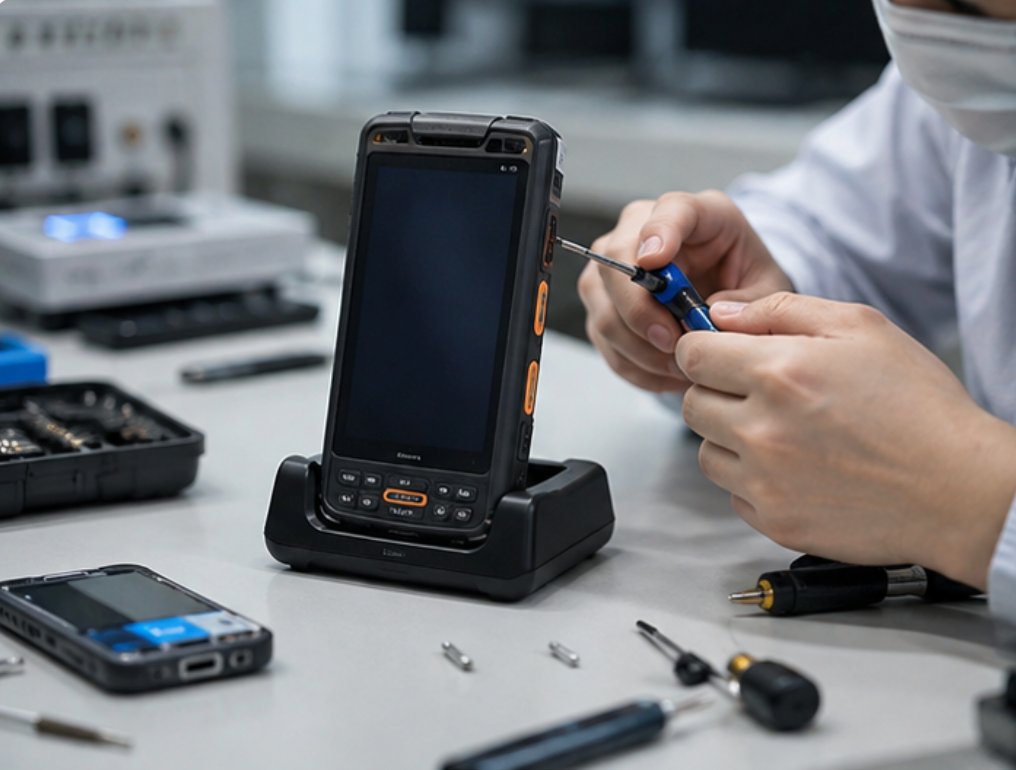
The K401 also excels in multi-device coordination scenarios common in larger retail operations. Its built-in mesh networking capability allows up to 50 devices to communicate directly without relying on Wi-Fi infrastructure, enabling instant price checks, inventory lookups, and intercom functions across vast sales floors. Store managers can broadcast announcements to all K401 units simultaneously, while individual employees can request assistance from colleagues without leaving their posts. This capability has proven transformative for department stores where staff previously had to walk significant distances to consult with supervisors or check stock availability. The K401's 4000mAh battery provides 10 hours of continuous operation, with a quick-swap design that allows replacement in under five seconds.
The measurable outcomes of deploying X501 Handheld PDA, Smart PDA N40 and K401 Handheld PDA in Retail Pos include: 50% reduction in equipment preparation time, 80% fewer audio-related complaints, battery life covering full-day operations without mid-day charging, and positive feedback from visitors who appreciate the comfortable, high-quality listening experience. Retail operations managers report that staff training time decreases by nearly 40% because these devices feature intuitive interfaces that require minimal instruction. The rugged construction of all three models reduces breakage-related downtime by 65%, with devices surviving drops from waist height onto concrete floors without functional impairment.
Beyond immediate operational improvements, these devices generate meaningful cost savings through reduced maintenance and replacement expenses. The X501, N40, and K401 all share common charging accessories and docking stations, allowing retailers to standardize their equipment ecosystem and reduce inventory overhead. The devices also support Over-the-Air firmware updates, eliminating the need for IT staff to physically collect and reprogram devices—a process that previously consumed hundreds of labor hours annually in large retail chains. Integration with existing rugged mini PC solutions provides a complete retail technology stack that operates cohesively, with each component optimized for its specific role in the POS workflow.
Common questions about deploying X501 Handheld PDA, Smart PDA N40 and K401 Handheld PDA in Retail Pos include: Do we need technical staff to operate the system? Can multiple groups tour simultaneously? What happens if a device runs out of battery mid-tour? Modern systems are designed with these scenarios in mind—intuitive operation, multi-channel support, and generous battery life with quick-swap options address each concern. All three devices ship with pre-configured retail applications that work out of the box, requiring only basic network credentials to connect to existing systems. The devices support up to 128 concurrent connections on a single access point, easily accommodating multiple checkout lanes and sales floor teams operating simultaneously.
Battery management has been simplified through intelligent power monitoring that alerts users 15 minutes before reaching critical levels. During this window, staff can exchange the battery in under 10 seconds without powering down the device, preserving all active sessions and transactions. The devices also support pass-through charging, allowing continued operation while connected to a power source—a feature particularly useful for fixed checkout stations that also require portable functionality during shift changes. For retailers concerned about device security, all models include biometric authentication and remote wipe capabilities, ensuring that lost or stolen devices cannot compromise sensitive transaction data.
| Model | Weight | Battery Capacity | Speaker Output | Ingress Protection |
|---|---|---|---|---|
| X501 Handheld PDA | 320g | 5000mAh | 100 dB | IP65 |
| Smart PDA N40 | 285g | 4500mAh | 95 dB adaptive | IP54 |
| K401 Handheld PDA | 240g | 4000mAh | 90 dB tuned cavity | IP54 |
All three models support standard retail POS software including major platforms like Shopify POS, Square, and custom enterprise solutions. Each device includes a 2D barcode scanner capable of reading damaged or poorly printed labels, a critical capability in retail environments where packaging suffers frequent handling. The devices also support RFID reading for inventory tracking and loss prevention applications, providing retailers with a comprehensive data collection tool that replaces multiple legacy devices. With these capabilities combined, the X501, N40, and K401 represent a complete solution for modern retail operations seeking to eliminate audio-related inefficiencies and enhance overall productivity.