- Select Language
Enterprise Flagship SeriesEngineered for mission-c...
The R501 PDA combines a powerful MT6762 Octa-Core ...
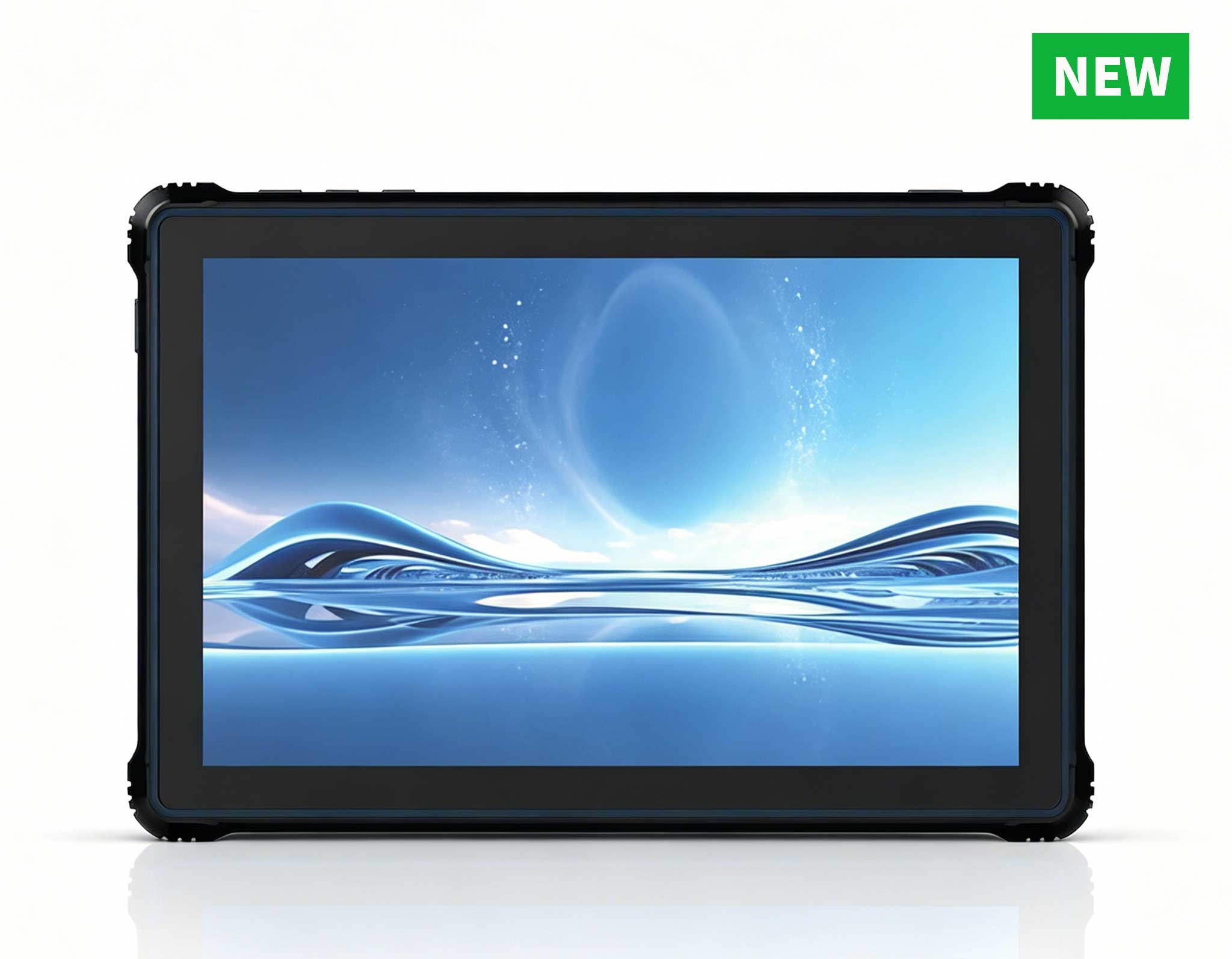
RT80 5G Rugged Tablet | 10.1" FHD 400nit | Un...
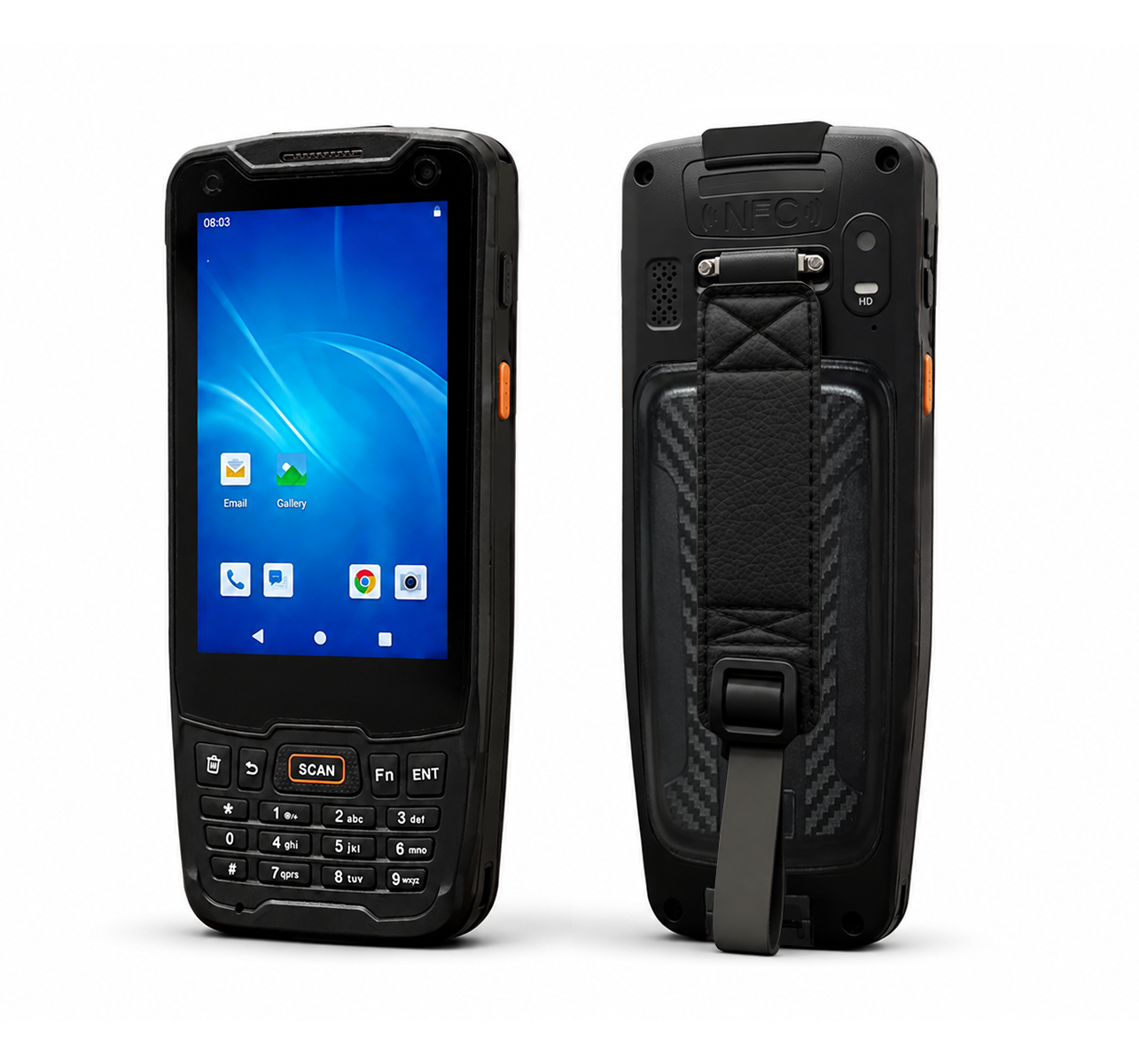
R350C 4-inch Industrial Handheld PDA | Qualcom...
Explore an innovative Personal Digital Assistant f...
Full SpecificationsModelHotus ST11‑UOSWindows 10 P...
Full SpecificationsModelHotus ST11‑JOSWindows 10 P...
The F505 Handheld PDA is a compact, high-performan...
From the unknown so simpleUsed for mobile phones, ...
The T80 handheld PDA combines advanced barcode sca...
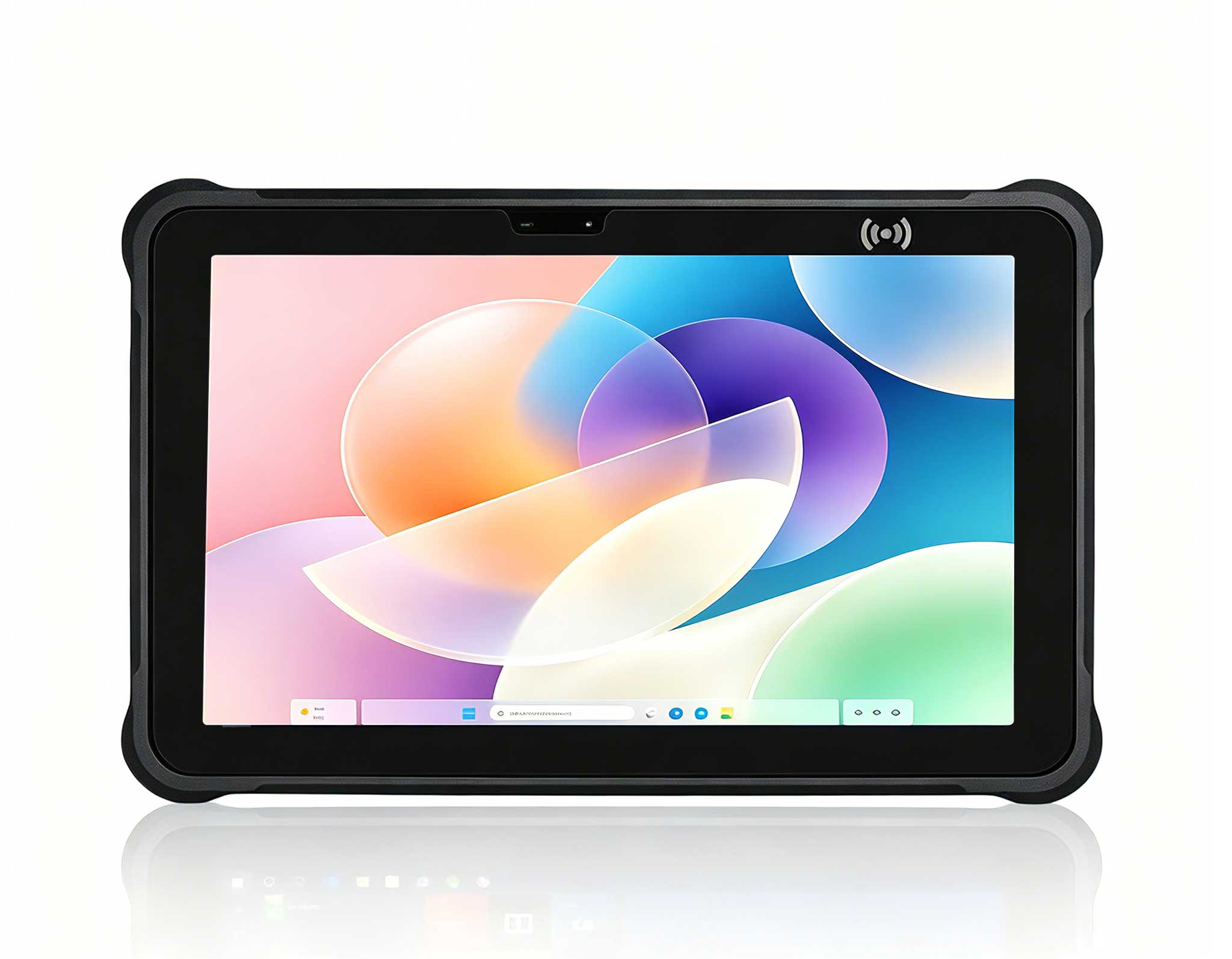
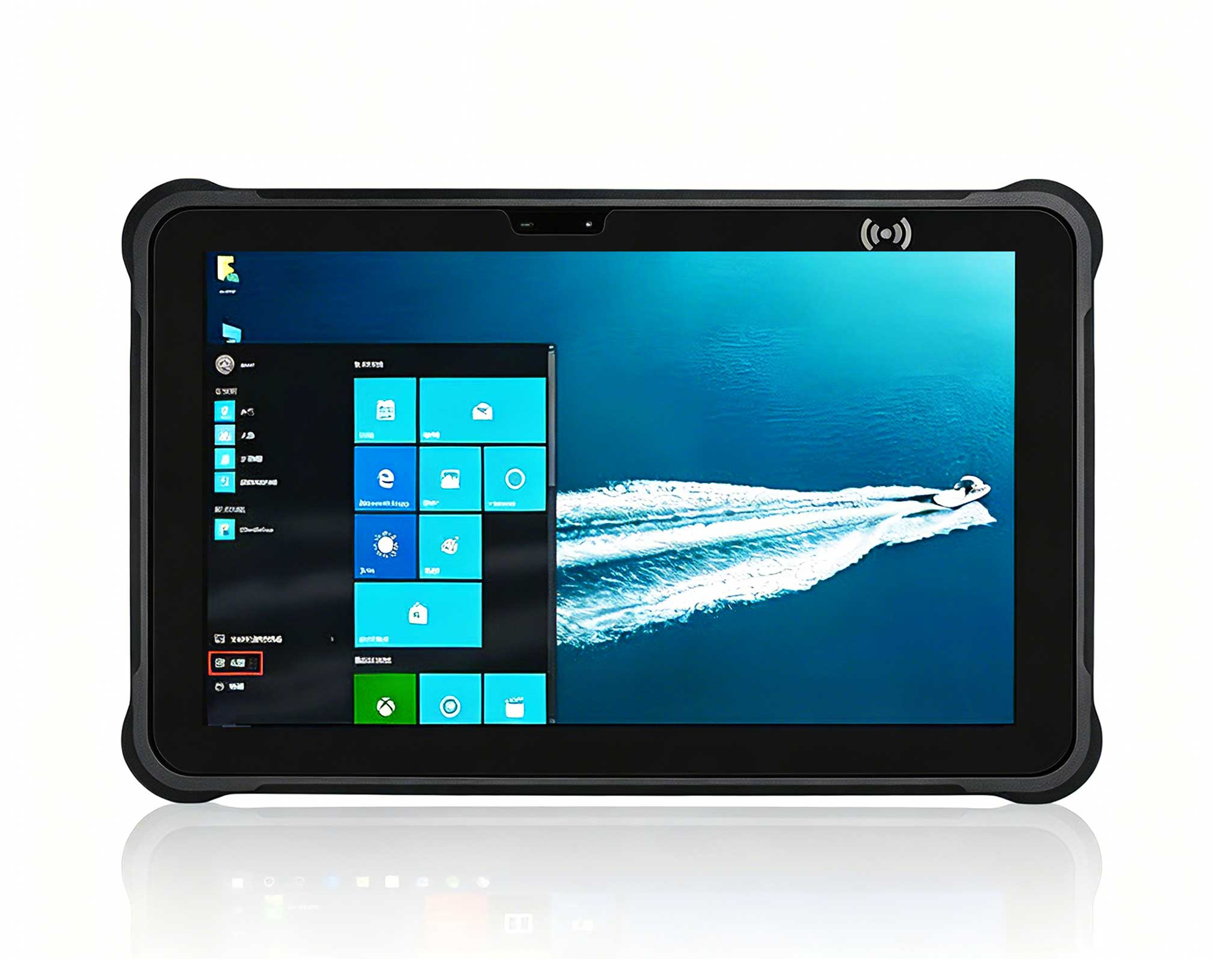
Buyers comparing three-proof tablets usually meet these three units as separate product pages, each photographed from the same angle and each promising the same IP rating. What the pages do not advertise is that the HTNJ08C, the HTNJ10C and the HTYJ10A share a single engineering lineage — the published specifications repeat almost line for line, and the differences that remain are deliberate forks rather than independent designs. Reading the three data sheets side by side reveals how a rugged tablet line actually grows: not by redesigning the chassis for every market, but by holding the platform constant and splitting exactly three variables. For procurement teams, understanding where the line splits — and where it refuses to — is the fastest way to match a unit to a crew without overpaying for capability nobody uses.

The shared foundation is unusually complete. All three units specify IP67 sealing with 1.22-meter drop resistance, a 7.6V 3500mAh battery, WIFI6 with Bluetooth 5, a front 500W and rear 800W autofocus camera with LED, and an identical interface stack: audio jack, Mini HDMI, Type-A, Type-C, DC-in, RJ45, TF card, SIM slot, and a 12-pin POGOPIN connector. The optional module list repeats as well — 4G, NFC, barcode scanning, fingerprint reading, and a charging dock are offered across the entire line. The product page for each unit even repeats the same construction note about a double-layer body. When protection rating, battery, connectivity, cameras, ports and optional modules are all identical, those elements are not coincidence; they are the family's shared bill of materials, the parts that one validation campaign covers for every member of the line. For a purchasing department, that repetition is not laziness to be criticized — it is cost and risk compressed into identical part numbers, since every dock, spare battery and replacement cable ordered for one unit works on the other two without a second purchase order.
That structure is the quiet trend inside industrial three-proof hardware: the sealed enclosure, the power budget and the connector set have become commodities that a supplier amortizes across every model, while competition happens only where a customer can perceive a difference. The three variables this line actually splits are screen size, processor platform, and the resulting weight — everything else is family standard.
The first split is physical. The HTNJ08C carries an 8-inch LCD at 1200×1920 and 560 nits inside a 23.8×16×2.5 cm body weighing 1.8 kg with packaging. The HTNJ10C and the HTYJ10A both use a 10-inch panel at the same 1200×1920 resolution and the same 560 nits, in a 28.4×19×2.5 cm body at 2.1 kg. Three hundred grams sounds marginal until it is carried for a shift: the 8-inch unit fits a jacket pocket and stays operable in one hand for scan-and-check work, while the 10-inch units trade portability for reading area on schematics, forms and maps. Notably, pixel density favors the smaller unit — the same 1200×1920 array on 8 inches renders a visibly finer image than on 10, which matters to anyone reviewing inspection photos or dense tables in daylight. The 560-nit brightness, however, is constant, so outdoor readability does not become a reason to choose between them.
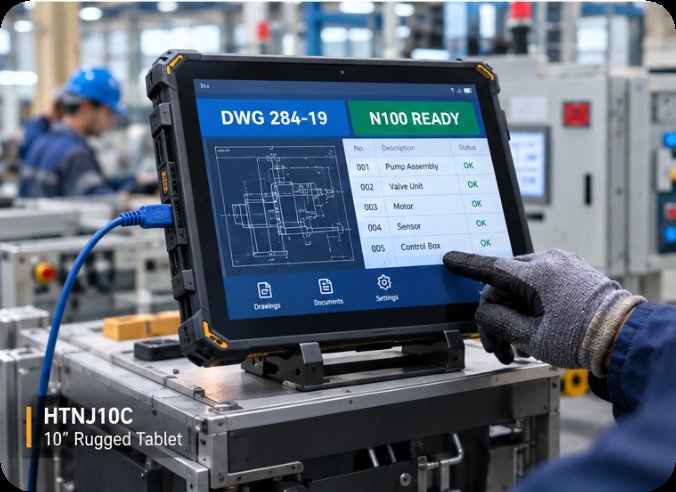
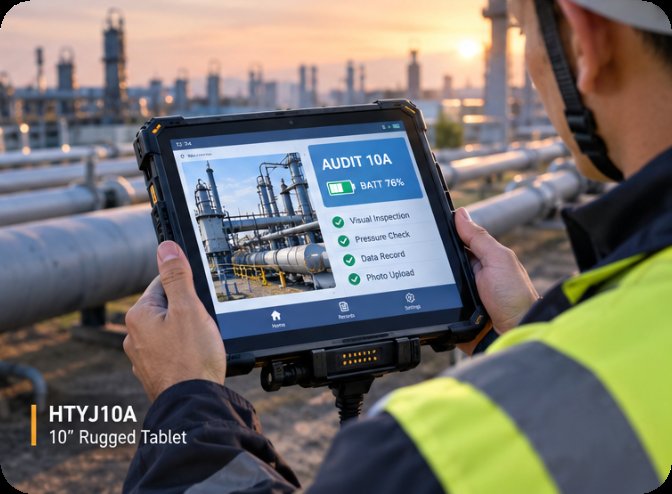
The second split is computational, and it does not follow the screen size. Both the HTNJ08C and the HTNJ10C run the same Intel N100, a 10th-generation 4-core, 4-thread part at 3.4 GHz — so the 8-inch and one of the 10-inch units are computationally identical. The HTYJ10A instead offers a 10th-generation Intel Core i5-10210Y or i7-10510Y, the low-power Y-series parts that trade some sustained throughput for lower heat inside a sealed, fanless body. The fork creates an odd but honest purchasing map: a buyer who wants the smallest body without giving up the standard N100 platform picks the 8-inch unit; a buyer who wants the 10-inch canvas with standard compute picks the HTNJ10C; and a buyer whose software genuinely needs the faster Y-series Core — legacy Windows line-of-business applications, heavier local analytics — pays the premium only at the top. The line does not force compute upgrades on people who only wanted a bigger screen, which is rarer than it sounds in this market.
The constants deserve as much attention as the forks. A single 3500mAh battery at 7.6V serves the 8-inch and both 10-inch units, which tells purchasing two things: the power draw of the platform is stable enough that the family did not need a bigger pack for the larger panels, and spare batteries, docks and chargers are interchangeable across a mixed fleet. The same logic applies to the accessory chain — the identical adapter specification (AC100V–240V input, DC19V/3.42A output) and the 12-pin POGOPIN mean one charging infrastructure covers all three nameplates. For a crew that deploys mixed units, a technician can swap a dead tablet for a spare of any size without touching the vehicle mount or the dock wiring.
Sealing is the other constant. IP67 with 1.22-meter drop resistance is specified identically for all three, and the 7H-hardness, ten-point capacitive touch layer repeats on every page. There is no "rugged" and "semi-rugged" tier inside this family — a buyer who steps down to the 8-inch body gives up screen area, never ingress protection. That single fact simplifies the safety conversation with site managers: the protection case can be argued once for the line, not per model. It also narrows the certification paperwork, because a drop test or immersion report accepted for one nameplate transfers to its siblings in most customer audit frameworks, shortening the approval cycle that usually separates a purchase order from a first shift.
The third split is not on the datasheet at all, because it is configurational. Every unit lists the same optional functions — 4G cellular, NFC, barcode scanning, fingerprint reading and a charging dock — and "optional" is the operative word. Two crews can order the same HTNJ10C and receive materially different tools: one with cellular and scanning for logistics rounds, one as a Wi-Fi-only terminal for workshop bench work. In practice this is where the family strategy pays off for the buyer. Because the modules hang off the same base hardware and the same POGOPIN and SIM infrastructure, configuration choices do not create new validation work or new spare-part trees. A fleet manager can standardize on the line, then tune each unit's module loadout to the job — which is precisely the procurement pattern industrial customers have been converging on as tablet lines mature.
Put the three splits together and the line maps cleanly onto three buyer profiles. The HTNJ08C serves mobile inspection roles where the device lives in one hand or a pocket — utilities reading meters, warehouse staff doing cycle counts, technicians climbing structures who need a screen they can glance at, not study. The HTNJ10C serves desk-adjacent field work: a 10-inch canvas for documents and diagnostics, standard N100 compute, RJ45 on board for wired network handoff during setup or in a fixed vehicle. The HTYJ10A serves the crews whose software defines the hardware — operations standardized on specific Windows applications that benefit from the i5 or i7 Y-series headroom, accepting the same 2.1 kg body to get it. None of the three profiles requires compromising on sealing, battery logistics or dock infrastructure, because none of those was ever a variable.
The summary table collects the published figures for the three units, using the current product pages:
| Item | HTNJ08C | HTNJ10C | HTYJ10A |
|---|---|---|---|
| Display | 8", 1200×1920, 560 nits | 10", 1200×1920, 560 nits | 10", 1200×1920, 560 nits |
| Processor | Intel N100, 4C/4T, 3.4GHz | Intel N100, 4C/4T, 3.4GHz | Intel Core i5-10210Y / i7-10510Y |
| Battery | 7.6V, 3500mAh | 7.6V, 3500mAh | 7.6V, 3500mAh |
| Sealing | IP67, 1.22m drop | IP67, 1.22m drop | IP67, 1.22m drop |
| Wireless | WIFI6 + BT5 | WIFI6 + BT5 | WIFI6 + BT5 |
| Body | 23.8×16×2.5 cm, 1.8 kg | 28.4×19×2.5 cm, 2.1 kg | 28.4×19×2.5 cm, 2.1 kg |
| Optional | 4G, NFC, scan, fingerprint, charging dock (all units) | ||
The trend this line illustrates is likely to define three-proof tablet purchasing through the rest of the decade: shared, validated platforms below; perceptible choices — screen, compute, modules — on top. When the next refresh arrives, the efficient question for a buyer is no longer "which model is best" but "which fork of the same chassis does my crew actually need," because the answer decides everything from spare batteries to dock wiring. Specifications above reflect the published product pages for the HTNJ08C, HTNJ10C and HTYJ10A.
Readers comparing sealed tablets for field deployment can review the industrial three-proof applications covered by this line, or the HTNJ08C rugged tablet, HTNJ10C rugged tablet and HTYJ10A rugged tablet product pages, along with the full HOTUS product range and additional product comparisons and competitor analysis.