- Select Language
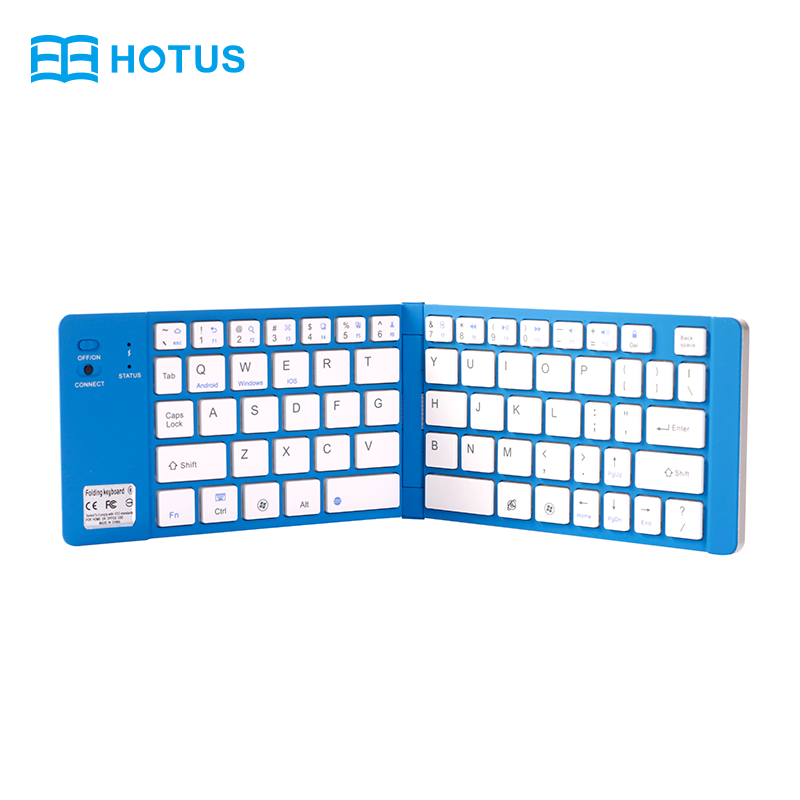
Full SpecificationsModel Hotus SH5‑WOperating ...
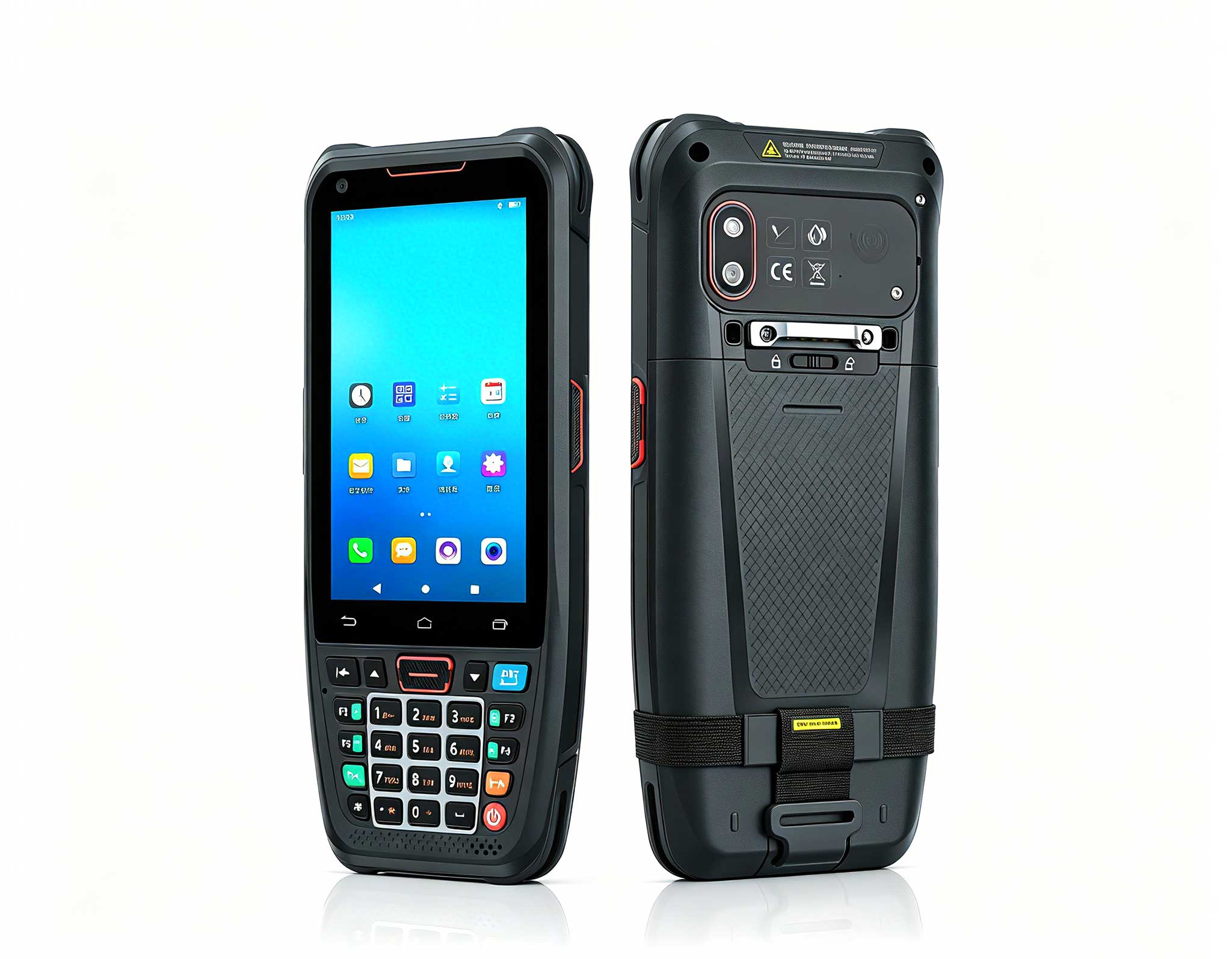
The N40 Android smart PDA features a Cortex-A53 qu...
R366-S Thin 5.5-inch Industrial PDA | Qualcomm Oct...
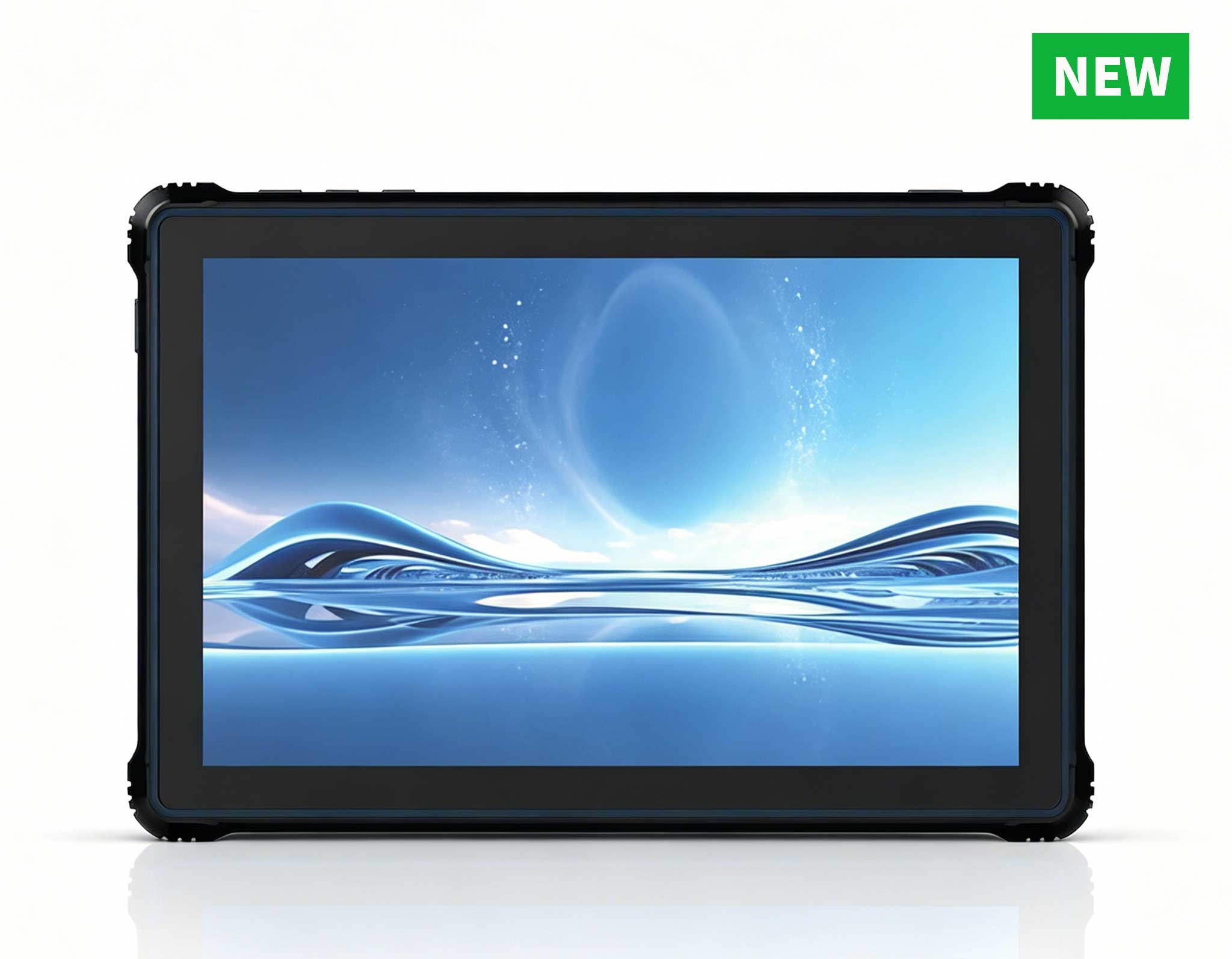
RT80 5G Rugged Tablet | 10.1" FHD 400nit | Un...
The PM156-1 is a 15.6-inch portable PC monitor fea...
R860-S 5.5-inch Industrial PDA with Thermal Printe...
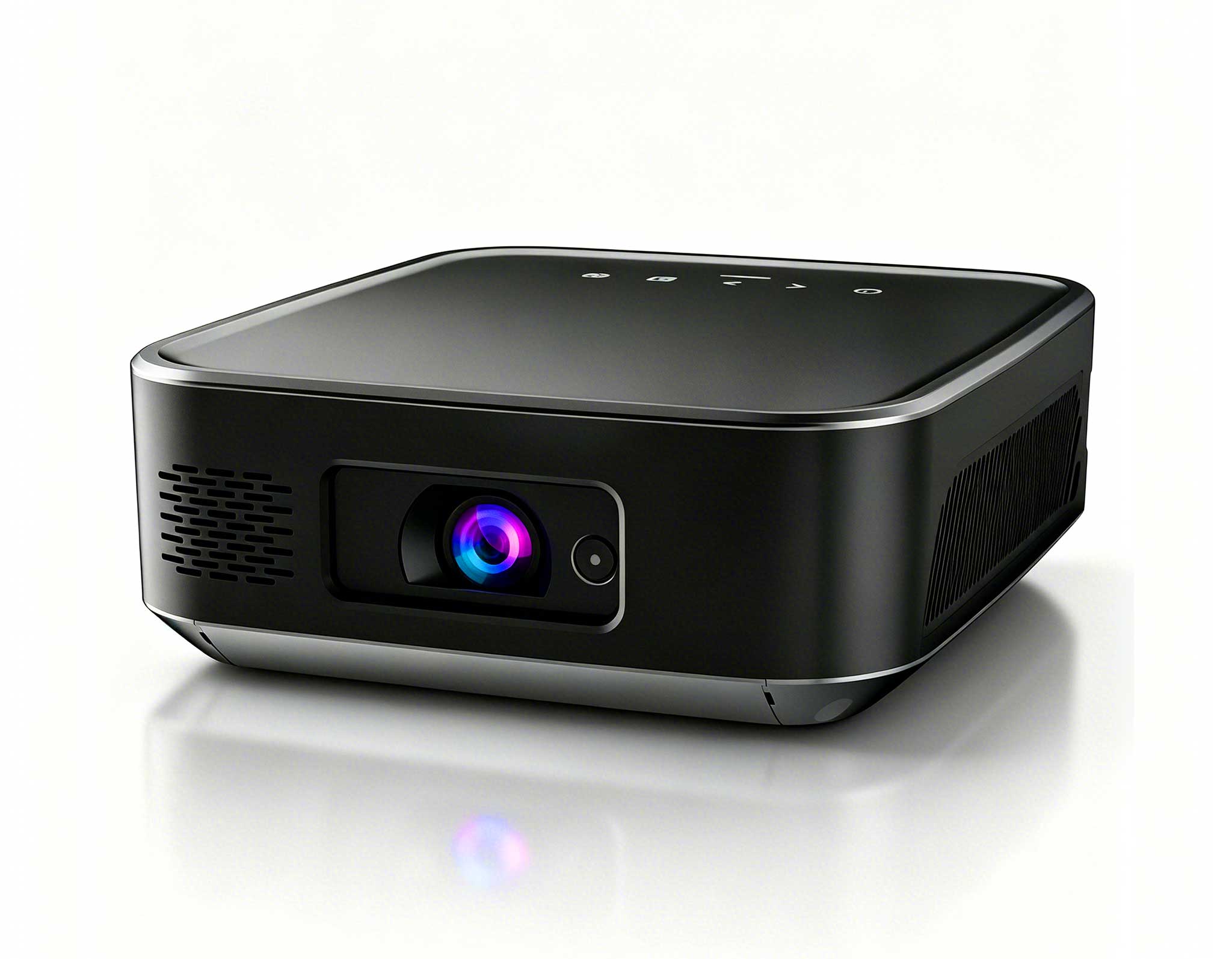
Technical SpecificationsModel: Palm-sized miniPCTy...
Full SpecificationsModel Hotus SH5‑WOperating ...
Maintenance instructions: Store at room temperatur...
A highway maintenance crew does not get to choose its own schedule. Potholes appear when the freeze-thaw cycle says so, patching season opens when the asphalt plants do, and the inspection backlog peaks exactly when traffic does. Equipment planning that ignores this calendar fails in a predictable way: the field tablets die mid-route in July heat, the office cannot parse what the field collected, and the winter emergency kit is assembled from whatever survived the summer. The hardware side is easier to solve, because our rugged tablet range already splits naturally into three roles, and the season gives each one a date.
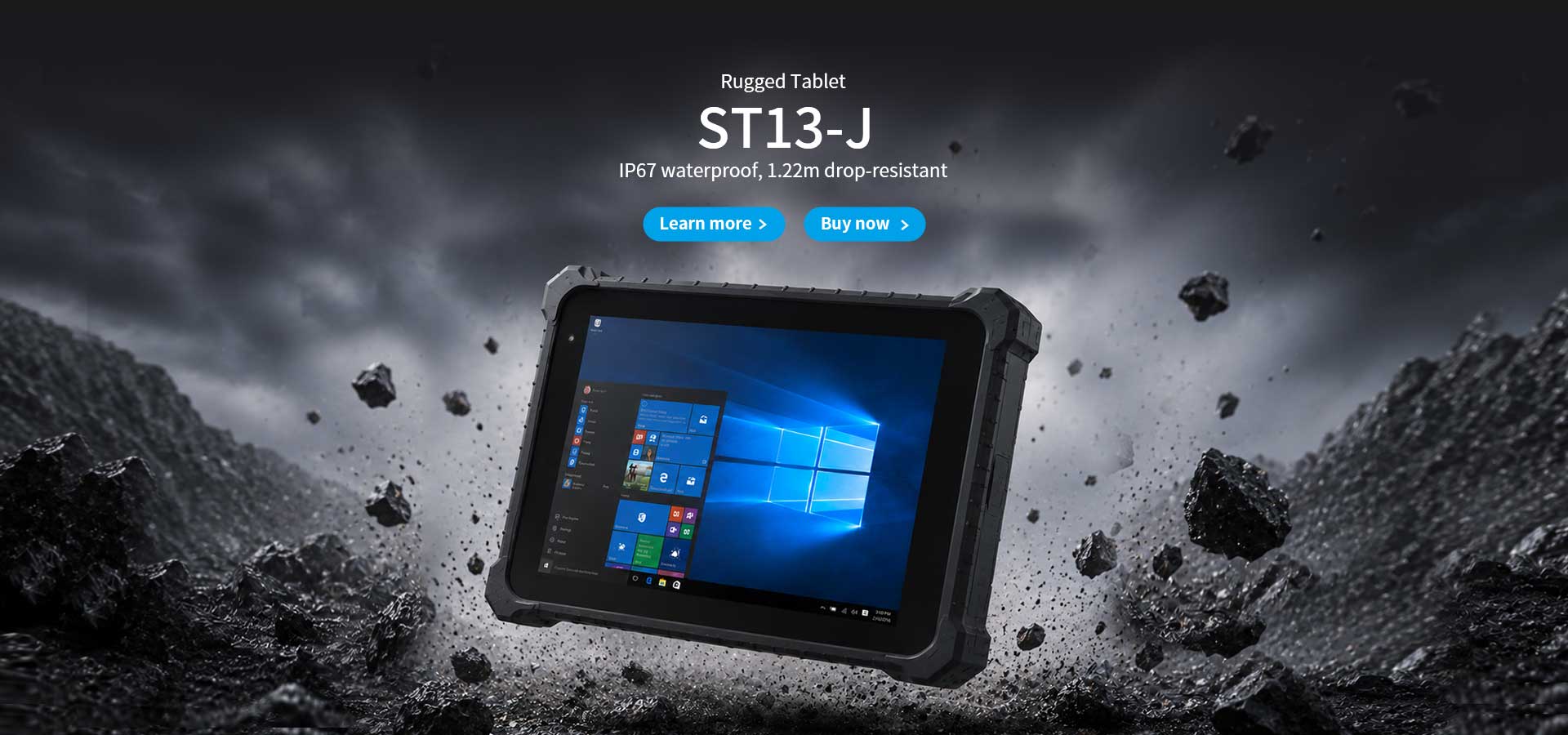
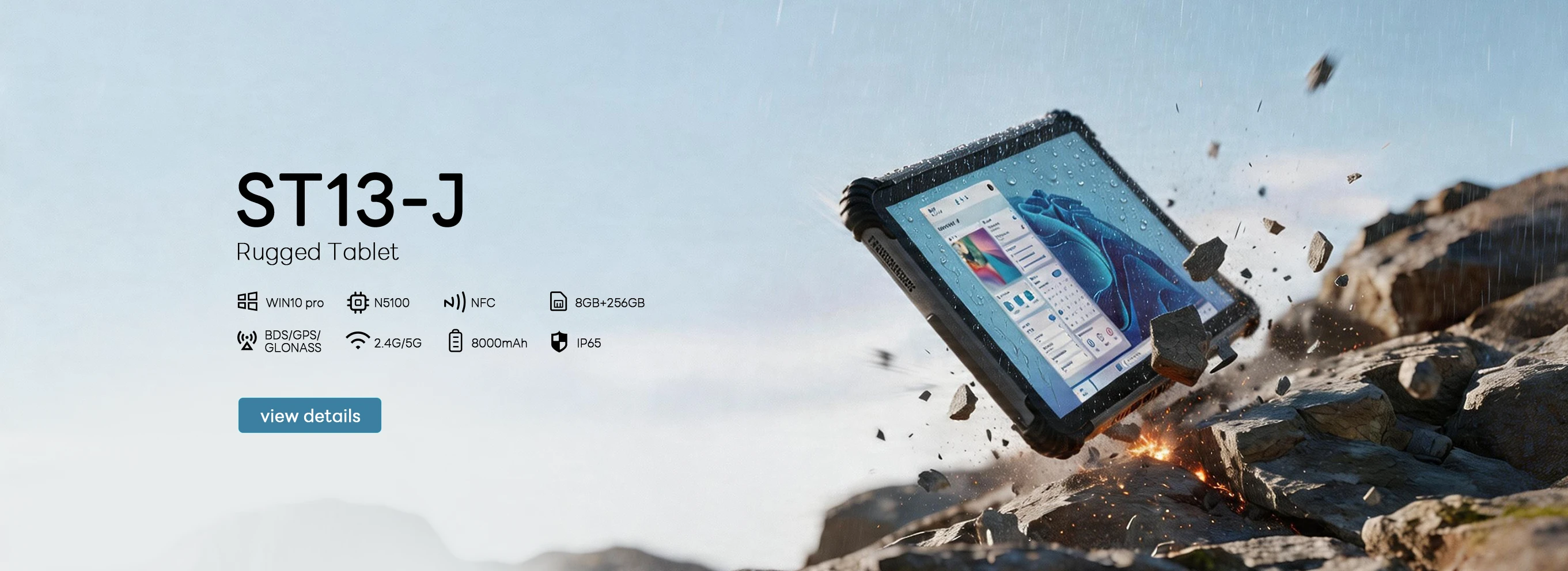
This article organizes the planning around four calendar nodes and assigns each node a device. The ST13-J rugged industrial tablet is the planning screen, with a 13.3-inch full-HD panel and a vehicle-mount option for the survey truck. The ST11-M rugged industrial tablet is the office bridge, built on an Intel Core i5 and carrying the ports that talk to older test instruments. The RT81 rugged tablet is the field recorder, an Android 13 unit with optional centimeter-grade Beidou RTK positioning and an IP67 shell. Work through the nodes in order and the fleet is ready before the first thaw survey, not after it.
Four dates drive everything else. The spring thaw survey opens the year, when frost damage has to be logged fast enough to enter the summer repair program. Early summer is the procurement checkpoint, because delivery lead times and accessory orders — docks, vehicle mounts, spare batteries — must land before the paving crews take the lanes. Autumn is the verification pass, when completed repairs are re-measured and the year's data is archived. Winter is the quiet build: batteries cycled, firmware updated, mounts re-torqued, and the emergency kit sealed. Each of the next sections ties one device to the node where it earns its cost, so the plan can be reviewed node by node instead of as a single vague purchase.
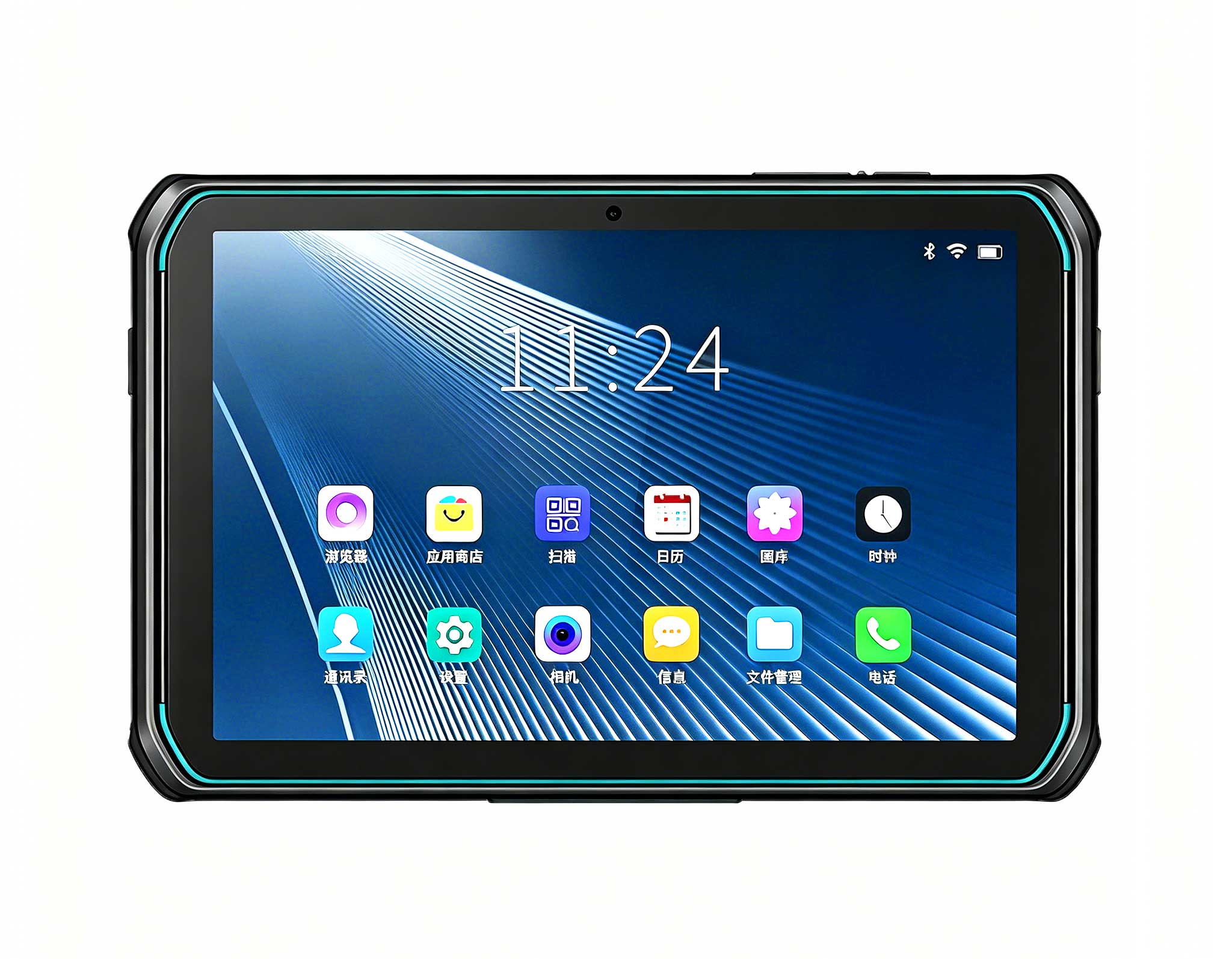
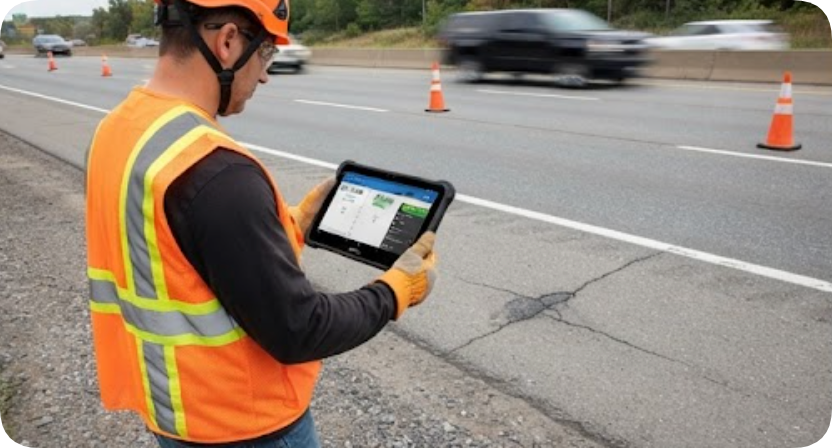
The thaw survey is a dust-and-runoff job: shoulders are soft, shoulders are muddy, and the inspector's hands are full. This is the RT81's node. It runs Android 13 on a Qualcomm SM6115 octa-core platform, weighs under 650g, and carries an IP67 rating with 1.2m drop protection, so a slide into the ditch is an inconvenience rather than a claim. Its 10.1-inch FHD panel at 400 nits stays readable against an open sky, and the optional 2D barcode scanner reads markers at 3 mil or better for culvert and sign inventories. Location is the point of the exercise: the tablet records GPS, GLONASS and Galileo, and the independent Beidou receiver with RTK support narrows a defect to centimeter-grade accuracy where the option is fitted, which is what turns a photo into a repair ticket with coordinates attached. The rear 20-megapixel autofocus camera with flash closes each record, and the dual microphones with noise reduction keep voice notes usable next to passing traffic.
Planning nodes live in the truck cab and the depot meeting room, and this is where the ST13-J's 13.3-inch panel pays for itself. The full-HD display shows the defect map, the repair program spreadsheet and the camera feed side by side without a laptop, and at 1920×1080 the annotation layer stays legible on a dashboard. The spec sheet lists 260 or 400 nits panel options, a stylus and wet-hand touch support for gloved use, and an 8000mAh battery at 7.6V for a full planning day away from the vehicle. The same page lists a docking station and vehicle mount among the optional features, which is the difference between a tablet that rides in a bag and a workstation that is already bolted where the planner sits. Multi-window operation is comfortable at this size, which is exactly what a planner juggling a map layer and a works program needs in the cab.
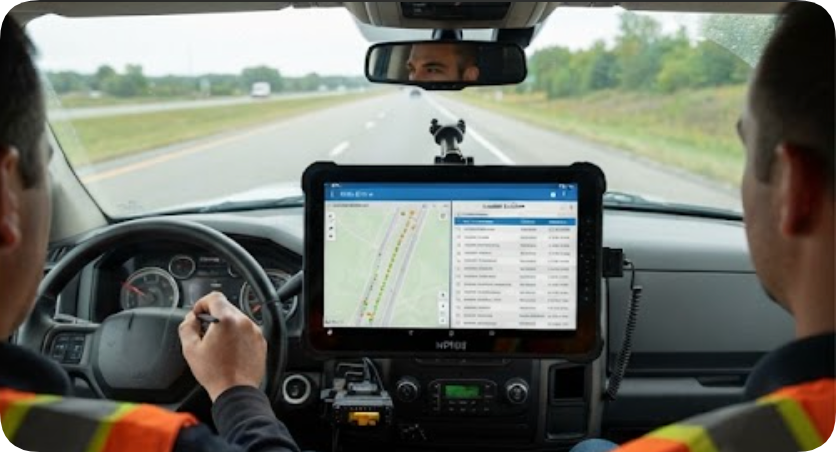
A season plan is only as good as its coordinates, because a defect recorded without a usable position reappears every spring as a duplicate entry. The RT81 handles the field side, as above. The ST13-J records GPS, BDS and GLONASS as well, which matters when the planner re-drives a route to confirm a program entry from the cab. What closes the loop is the office step in the next section, where the same records are reconciled against the maintenance database. Crews that skip the reconciliation step tend to discover the duplicates during the autumn verification pass, when the repair program is already frozen and every correction costs a change order.
Battery planning is season planning, because the failure mode is always the same: a unit that reached 30 percent at the depot dies on the far end of the route in summer heat. The RT81 carries 10000mAh at 3.8V, sized for a full field day with margin. The ST13-J's 8000mAh at 7.6V covers a planning shift, and its vehicle mount keeps it topped up between stops. The ST11-M holds 6000mAh at 7.6V, with the page listing roughly four hours to charge and about seven and a half hours of use — figures that hold for office duty but argue against assigning it to a full field day. The seasonal rule is simple: size the battery to the node, and keep one charged spare per node rather than one shared spare for all three.
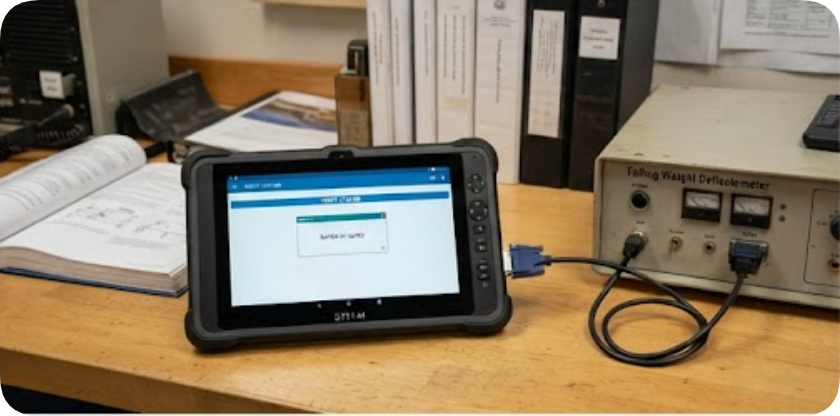
The autumn verification pass lives or dies on the transfer step, and this is the ST11-M's node. Its port list is the deepest of the three: HDMI, RJ45, RS232, dual USB 3.0, SIM and TF slots, plus a pogo-pin bank on the bottom and back. The RS232 port in particular keeps it useful in a depot where falling-weight deflectometers and profilometers still output to serial lines, and the Core i5-8200Y with up to 16GB of memory runs the desktop analysis software those instruments assume. Its 10.1-inch panel reaches 430 nits typical with a 1000-nit option, bright enough for a windshield-adjacent desk. Once the season's records are reconciled here, the archive that winter builds from is actually trustworthy. Wireless ac Wi-Fi and 4G LTE cover the transfer itself, so the reconciliation pass does not wait on a cable.
The temperature column decides which unit rides where. The ST13-J is rated for operation from minus 20 to 55 degrees Celsius with IP65 sealing, which covers both the January emergency kit and a July cab dashboard; the ST11-M carries the same IP65 build for depot and cab duty. The RT81 is rated from minus 10 to 50 degrees with IP67 sealing, a field-first envelope that suits every survey window the calendar actually opens. Weight separates them just as cleanly: about 1450g for the 13.3-inch planner, a lighter build for the ST11-M at its 10.1-inch size, and under 650g for the unit an inspector holds all morning. For readers weighing these panels against each other, our product comparisons and competitor analysis section keeps the full model-by-model notes in one place.
The procurement checkpoint in early summer is where the plan becomes a purchase order, and the order matters. Vehicle mounts and docks for the ST13-J go on the list first, because they carry the longest lead times and bolt into the truck. Field units come next, with the RT81's RTK option specified per crew rather than per fleet, since centimeter positioning is a surveyor's tool, not every inspector's. The office bridge follows, and accessories — spare batteries sized to the battery table above, screen films, chargers — close the list. Crews reviewing the full rugged mobile computing solutions catalog will find the three roles complement rather than overlap, which is the outcome a season plan should produce: one device per node, each with a date, none double-booked.
| Attribute | ST13-J | ST11-M | RT81 |
|---|---|---|---|
| Platform | Windows 11 Pro, Intel N5100 quad-core | Windows 11 Pro, Intel i5-8200Y | Android 13, Qualcomm SM6115 octa-core |
| Display | 13.3-inch 1920×1080, 260 or 400 nits | 10.1-inch 1200×1920, 430 nits typical | 10.1-inch 1200×1920, 400 nits |
| Battery | 8000mAh at 7.6V | 6000mAh at 7.6V | 10000mAh at 3.8V |
| Positioning | GPS, BDS, GLONASS | GPS, BDS, GLONASS, precision modules optional | GPS, GLONASS, Galileo, Beidou RTK optional |
| Protection | IP65, 1.2m drop, minus 20 to 55 °C | IP65 build | IP67, 1.2m drop, minus 10 to 50 °C |
| Ports | Dock and vehicle mount optional | HDMI, RJ45, RS232, dual USB 3.0 | Dual nano-SIM, Type-C with PD, pogo pins |
| Weight | approx. 1450g | not published on the product page | under 650g |
The table condenses each page's Product Details section as published; where a figure is not listed, it is marked rather than inferred, and optional features are marked as optional because they ship per order rather than per model.