A solar farm does not buy a tablet the way an office does. Out on the array, the device rides in a technician's hand through dust, heat, and direct sun, then drops onto a steel frame more often than anyone admits. The sticker price is only the first line of a longer sheet. This breakdown follows three Hotus rugged tablets — the SH6, the HTYJ10A, and the HTNJ10B — through the real cost layers a PV operator should weigh before signing the quote. Two sites with the same panel count can still land on very different invoices depending on how the three tiers are mixed.
🖥️ Why the Screen Brightness Sets the Floor
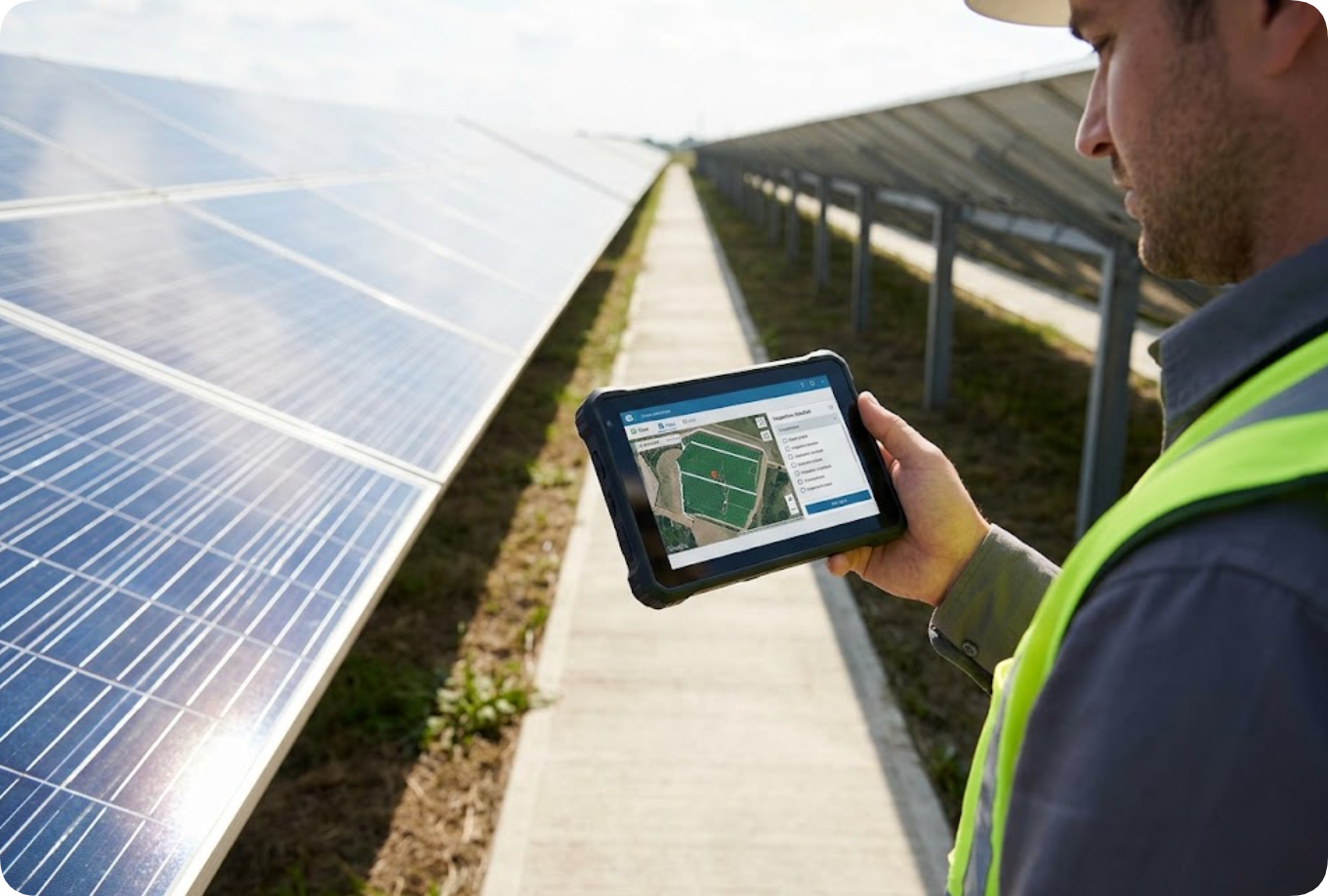
The single largest visible cost on a rugged tablet is the panel. The SH6 ships with a 6.5-inch display rated at 380 nits, bright enough for a shaded substation or a vehicle cab but prone to washing out at noon on an open rack. The HTYJ10A and HTNJ10B step up to 10.1-inch panels at 560 nits, a high-brightness optical stack that stays readable when the sun is behind the glass. That extra nit rating is not a free upgrade; the boosted-backlight LCD costs more per unit than a standard panel, and the 560-nit parts also carry optical bonding and a glove-and-wet-hand touch layer that a budget panel skips — both are line items, not defaults. It is the reason those two models sit above the SH6 on the floor before any other spec is compared. The SH6 handheld is the right call when most work happens under cover, and the 560-nit pair earns its premium only when the screen faces the sky.
⚖️ Battery Swaps Versus a Dead Shift
A flat battery at 2 p.m. ends a shift faster than any software limitation. All three tablets carry removable cells, but the capacities diverge: the SH6 holds a 5000 mAh pack rated near 4.5 hours, while the HTYJ10A and HTNJ10B use 3500 mAh packs. The larger SH6 cell suits a lone inspector who cannot stop to swap; the 3500 mAh units assume a spare in the pocket and a quick exchange at the truck. That swap-and-go design is itself a cost decision — a sealed battery would force a whole-unit return for a ten-dollar cell. The HTYJ10A pairs its smaller pack with an i5 or i7 compute tier, so its power budget is the tightest of the three and the spare-battery habit matters most there. A small fleet also needs a charging plan: a few spare packs and a crew-vehicle charger cost far less than the lost hours of a device waiting at an outlet.
✅ Sealing and Certification as Fixed Overhead
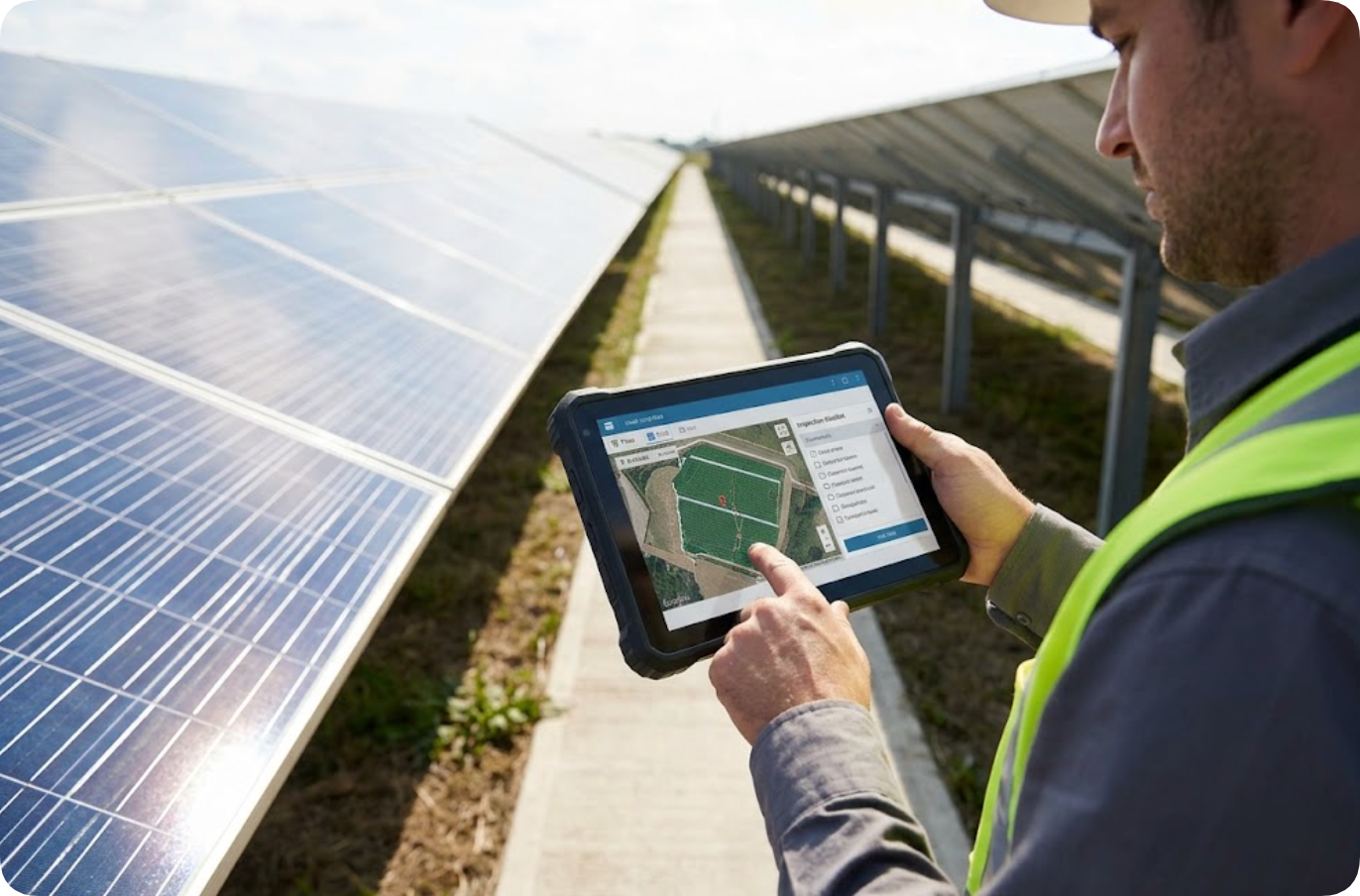
Ruggedization is a fixed cost spread across every unit, not a per-feature add-on. The HTYJ10A and HTNJ10B both carry IP67 sealing and MIL-STD-810G drop certification at 1.22 meters, which means a sealed chassis, a drop-test program, and paperwork that does not vary with order size. The SH6 lands at IP65 with a 1.2-meter rating and adds CE, FCC, and 3C marks — a slightly lighter seal, but the same certification overhead that keeps it field-ready. When a quote looks high, this is usually the line that does not move: the test lab and the gasket are in every box. MIL-STD-810G is not a sticker; it is a sequence of thermal-shock, vibration, and drop runs that each unit family must survive before certification, and that program cost is amortized into the price of every tablet that carries the mark. The HTNJ10B shows the pattern clearly — a value-tier Pentium part wrapped in the same rugged shell as its flagship sibling.
💰 The Cost of a Device Failing Mid-Array
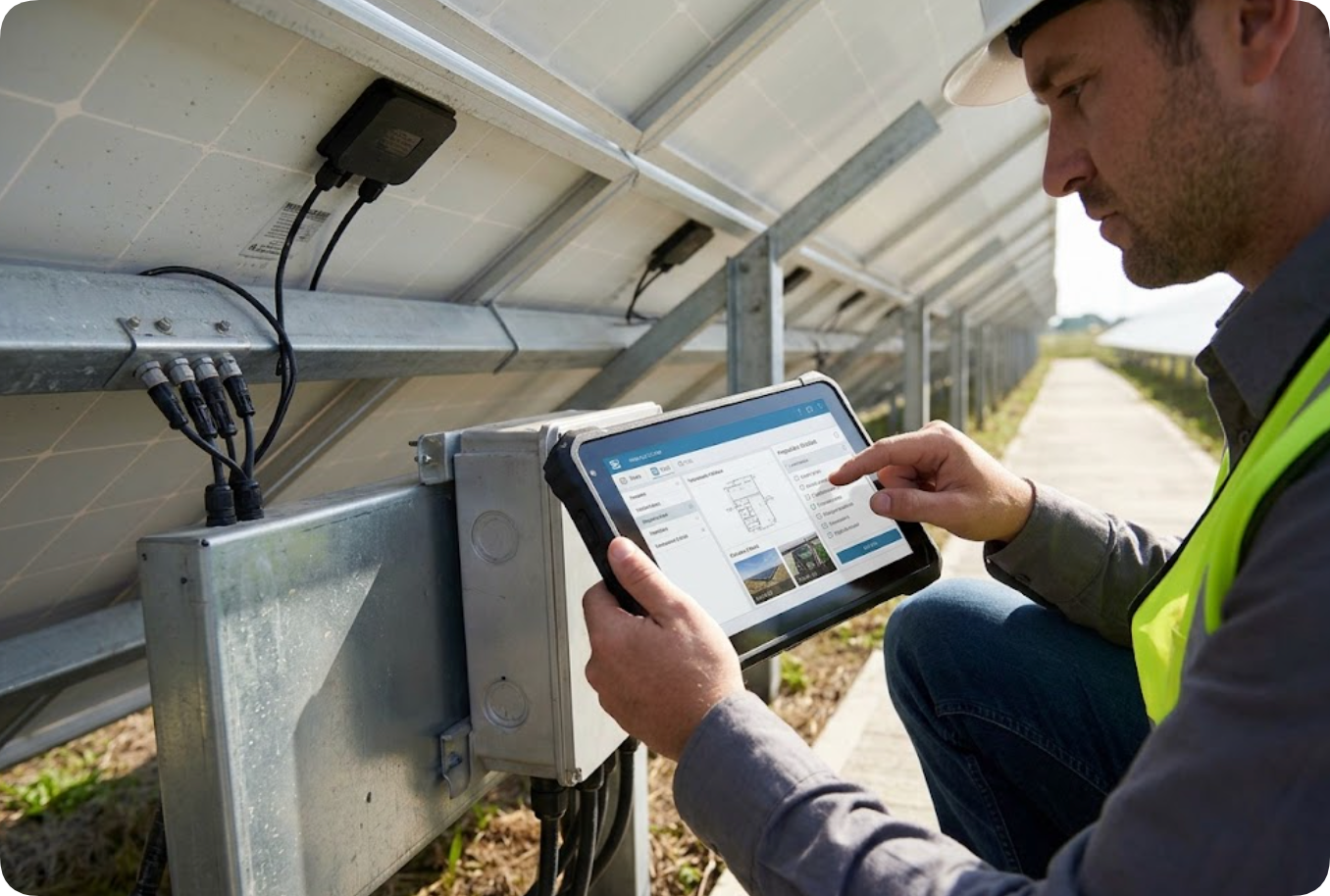
The number that never appears on the quote is the cost of a failure. A tablet that dies halfway down a string leaves the crew idle while data from the morning walk is recovered, and a second pass burns the same labor twice. IP67 and a 1.2-meter drop rating are not marketing — they are the difference between a device that survives the season and one that becomes a warranty claim in week three. The cheaper upfront tablet that fails in the field costs more than the sealed one that does not, once a single lost inspection day is priced against it. The same failure also risks the data already captured that morning: a device that will not boot at the truck may not have synced its walk, so the crew walks the string again rather than trusting a partial file.
💰 Three Tablets, Three Cost Profiles
The spec sheet tells the budget story faster than the price tag:
| Factor | SH6 | HTYJ10A | HTNJ10B |
|---|---|---|---|
| OS | Windows 11 Pro | Windows 10/11 Pro | Windows 10/11 Pro |
| Compute | Intel N100 | Intel i5-10210Y / i7-10510Y | Intel Pentium N6000 |
| Display | 6.5 in, 380 nits | 10.1 in, 560 nits | 10.1 in, 560 nits |
| Memory | 8GB / 256GB | 8GB / 256GB | RAM + SSD (expandable) |
| Protection | IP65, 1.2 m | IP67, 1.22 m, MIL-STD-810G | IP67, 1.22 m, MIL-STD-810G |
| Battery | 5000 mAh removable | 3500 mAh removable | 3500 mAh removable |
| Wireless | Wi-Fi 6, BT 5.2 | Wi-Fi 6 | Wi-Fi 5, BT 4.2 |
| Form | 6.5 in handheld, ~460 g | 10.1 in, ~2.1 kg G.W. | 10.1 in, ~2.1 kg G.W. |
Reading the Vendor Quote Line by Line
A real quote should list the panel nit rating, the battery type and capacity, the certification marks, and the warranty window — not just a model name. The SH6's 380-nit panel, the HTYJ10A's i7 option, and the HTNJ10B's expandable storage are line items a buyer can trade against the site's actual need, and the HTNJ10B's open-ended "RAM plus SSD" line deserves a base figure before signing — an unspecified floor can surface as a paid upgrade two quarters later. Asking for the certification sheet separately from the brochure is the step that keeps the "rugged" claim honest. The full Hotus rugged tablet range spans these tiers, so the quote should name the exact configuration rather than a category.
Matching the Budget to the Site Size
A small rooftop array with one or two inspectors rarely needs the i7 or the 560-nit panel; the SH6 handheld covers it for less, and its lighter weight lowers shipping and carry cost across a compact site. A utility-scale farm with crews split across strings benefits from the 560-nit screens and the swappable batteries of the HTYJ10A and HTNJ10B, where a dead device strands more people. The 10.1-inch units also travel heavier at roughly 2.1 kg gross per box, so a multi-site rollout pays freight and case cost that the 460 g SH6 largely avoids — a line that shows up in the logistics budget, not the device quote. The right spend is the one matched to how many hands and how much sun the site actually has, and a few side-by-side comparisons make that trade visible before purchase.
Frequently Asked Questions
1. Does a higher nit rating always mean a higher price?
Yes, in this lineup it tracks the panel cost: the 560-nit HTYJ10A and HTNJ10B sit above the 380-nit SH6. But 380 nits is enough under a canopy or inside a combiner box, so the premium only pays off where the screen meets direct sun.2. Why do all three ship with removable batteries?
A removable cell turns a failure into a thirty-second swap at the truck instead of a whole-unit return. The SH6's 5000 mAh pack runs longer; the 3500 mAh packs in the other two assume a spare is carried — either way the field cost stays low.3. Is the i5 or i7 in the HTYJ10A worth the premium over the Pentium N6000 in the HTNJ10B?
Only if the work is heavy — GIS stitching, image analysis, or a local database. For form-filling and photo capture, the Pentium runs Windows fine and leaves the budget with the HTNJ10B.4. What certifications should the quote list for outdoor solar work?
Ask for CE, FCC, and 3C (the SH6 carries all three) plus the IP67 and MIL-STD-810G drop marks on the HTYJ10A and HTNJ10B. A certification sheet beats a marketing line when the site audit arrives.Choosing among the SH6, HTYJ10A, and HTNJ10B is less about finding the cheapest tablet and more about paying for the exact ruggedization the site demands. The rugged tablet lineup for PV inspection lays out the tiers so the quote can be read against the real conditions, not a generic spec