- Select Language
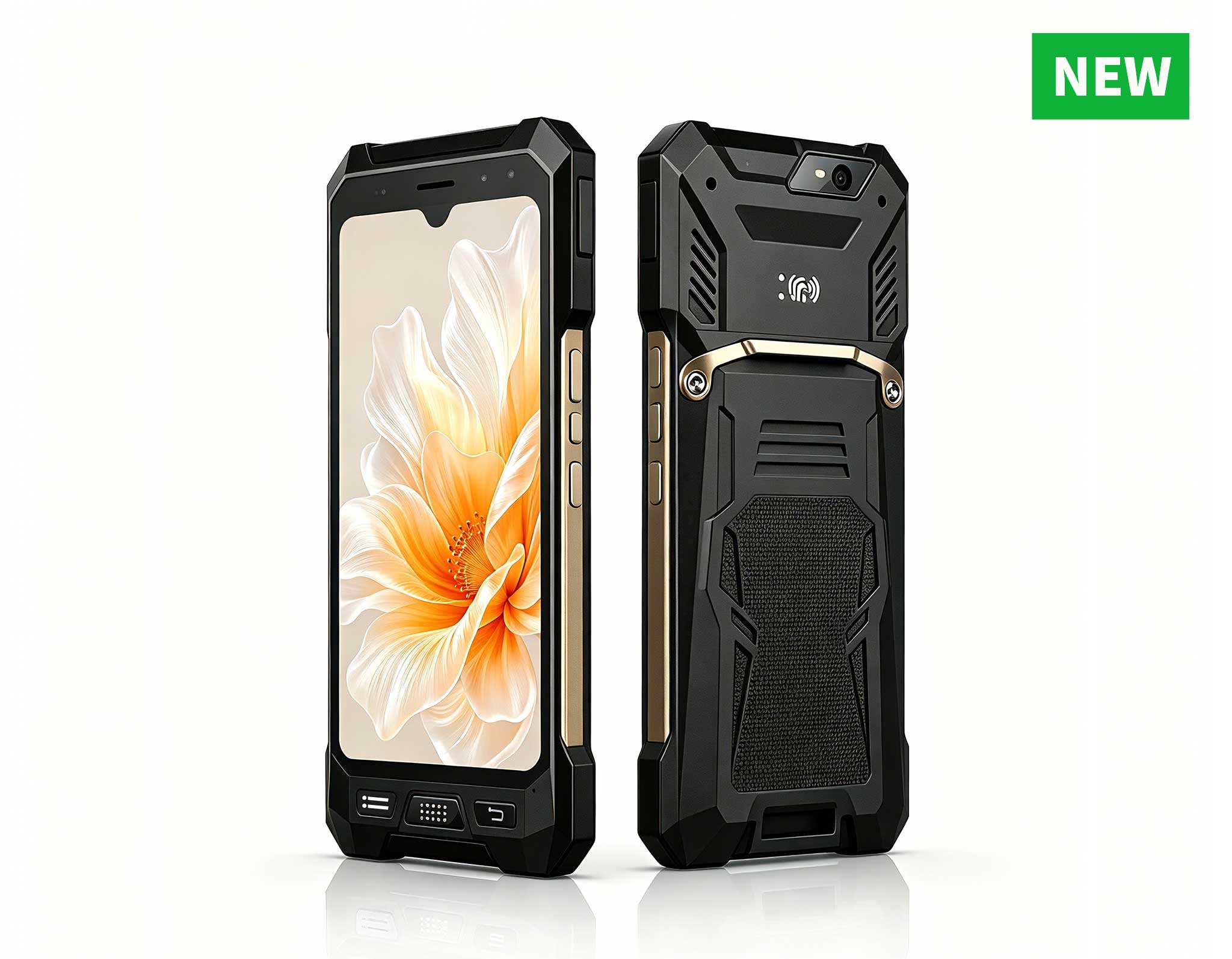
R530C 6.0-inch Industrial PDA | Qualcomm Octa-core...
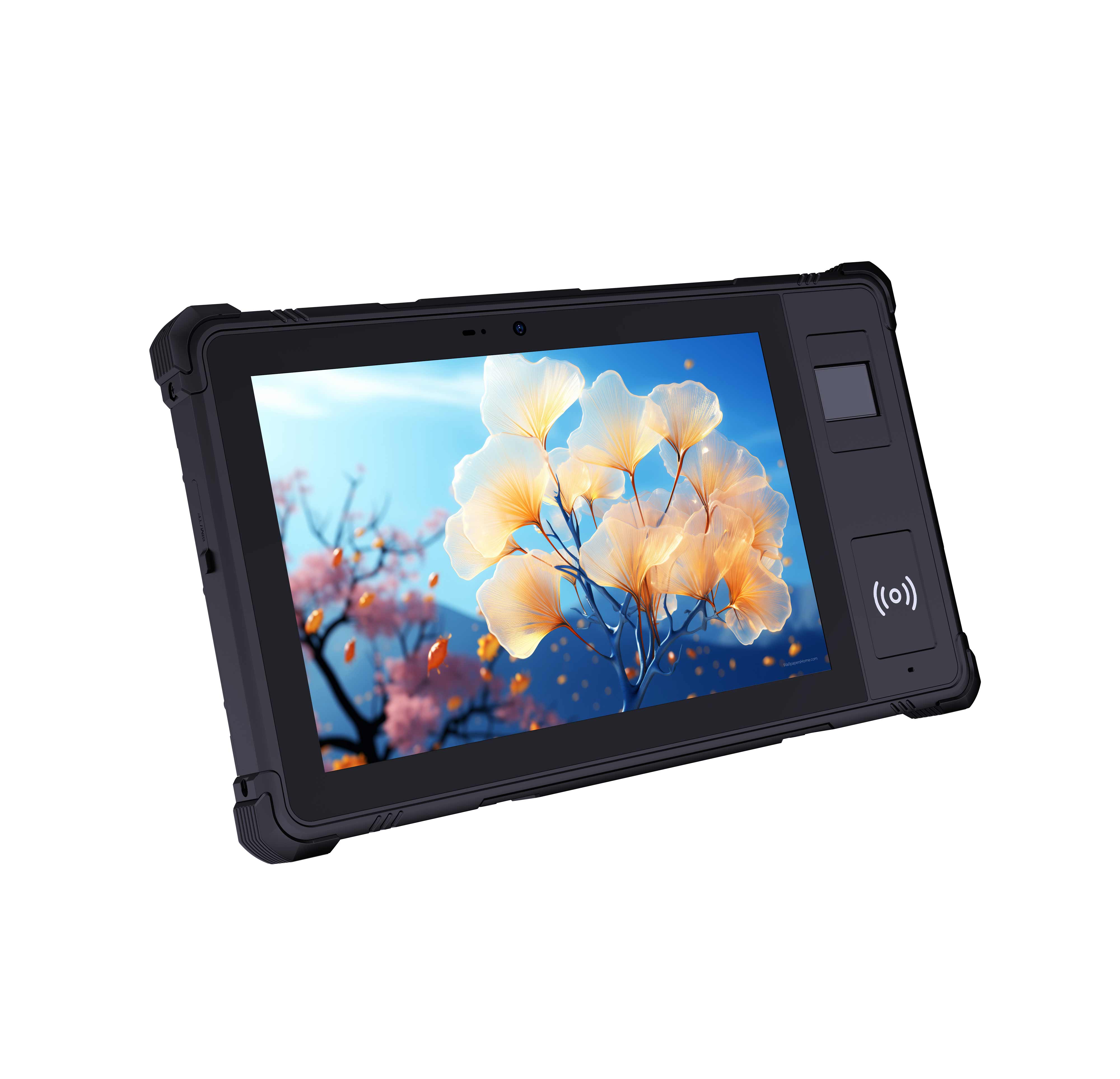
P8 Series 8-Inch Rugged Industrial Tablet PC Mobi...
Explore our customized PDA designed for versatile ...
The N60 PDA is a cutting-edge device for inventory...
Maintenance instructions: Store at room temperatur...
R530C 6.0-inch Industrial PDA | Qualcomm Octa-core...
Every field maintenance job carries a cost that never appears on a datasheet: the distance between the technician and the tag to be read. A barcode demands that you stand in front of it. A long-range imager lets you stay three or four metres back. An RFID reader lets you keep walking. Three Hotus handhelds - the U9000, the N60 and the R366C-S - sit at three points on that line, as do the Janam XT3 and the CipherLab RK25.
It helps to separate the spectrum into three bands. Contact reading, up to roughly half a metre, means pointing a 1D or 2D scanner at a printed label - asset plates, meter serials, service stickers. Mid-range reading, from one to four metres, means pulling a barcode off a ceiling conduit or a shelf edge without a ladder. Far-field reading, from several metres to twenty, means UHF RFID turns a walk-through into a complete inventory event with no deliberate aiming. Our field crews state the rule this article tests: the expensive part is the walk, not the scan. For how we equip mobile service teams, see our field maintenance solutions.
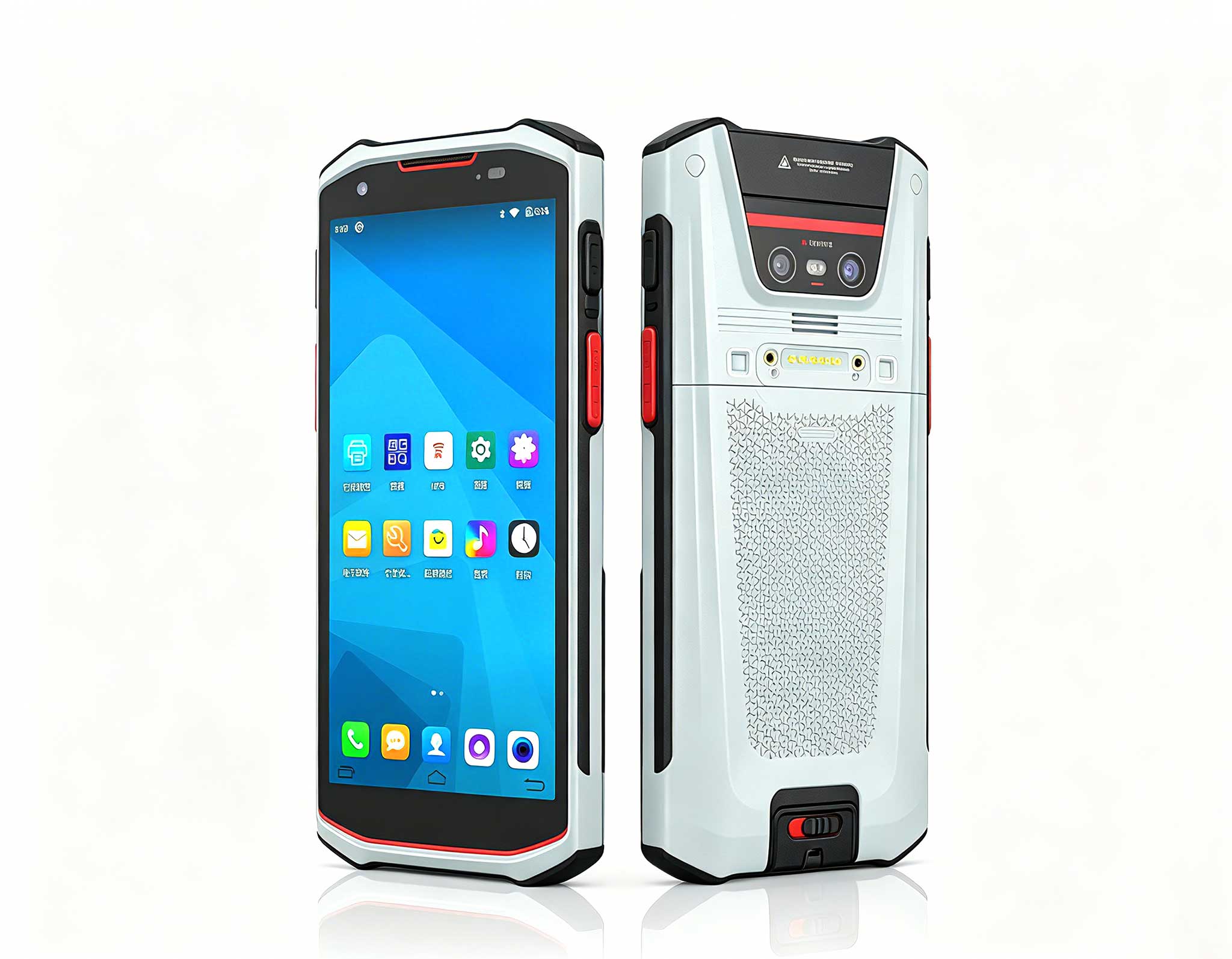
The U9000 Handheld PDA is the flexible middle. Its 5.0-inch IPS display runs at 720×1280 behind Corning Gorilla Glass and accepts glove and wet-hand input, which matters where gloves stay on. A Cortex-A53 quad-core at 2.0GHz on Android 9.0 handles work-order forms without complaint, memory ranges from 2GB + 16GB to 3GB + 32GB, and the 3.7V 4800mAh removable battery is rated above twelve hours.
What makes it interesting is that the reading hardware is specified per order rather than fixed. A buyer can take a 1D linear scanner, a 2D imager from the Honeywell N5703, N6603 or 6602 family, 13.56MHz NFC at two to five centimetres, LF 125K/134.2K for ISO11784 and ISO11785 tags, or a radio module covering 840-960MHz that conforms to EPCglobal UHF Class1 Gen2 and ISO 18000-6C and reads beyond 1.5 metres. Cellular reaches 5G alongside dual-band Wi-Fi and GPS, Galileo, Glonass and Beidou. The 178 × 78 × 24mm body is the thickest of the three - the cost of a configurable radio bay.
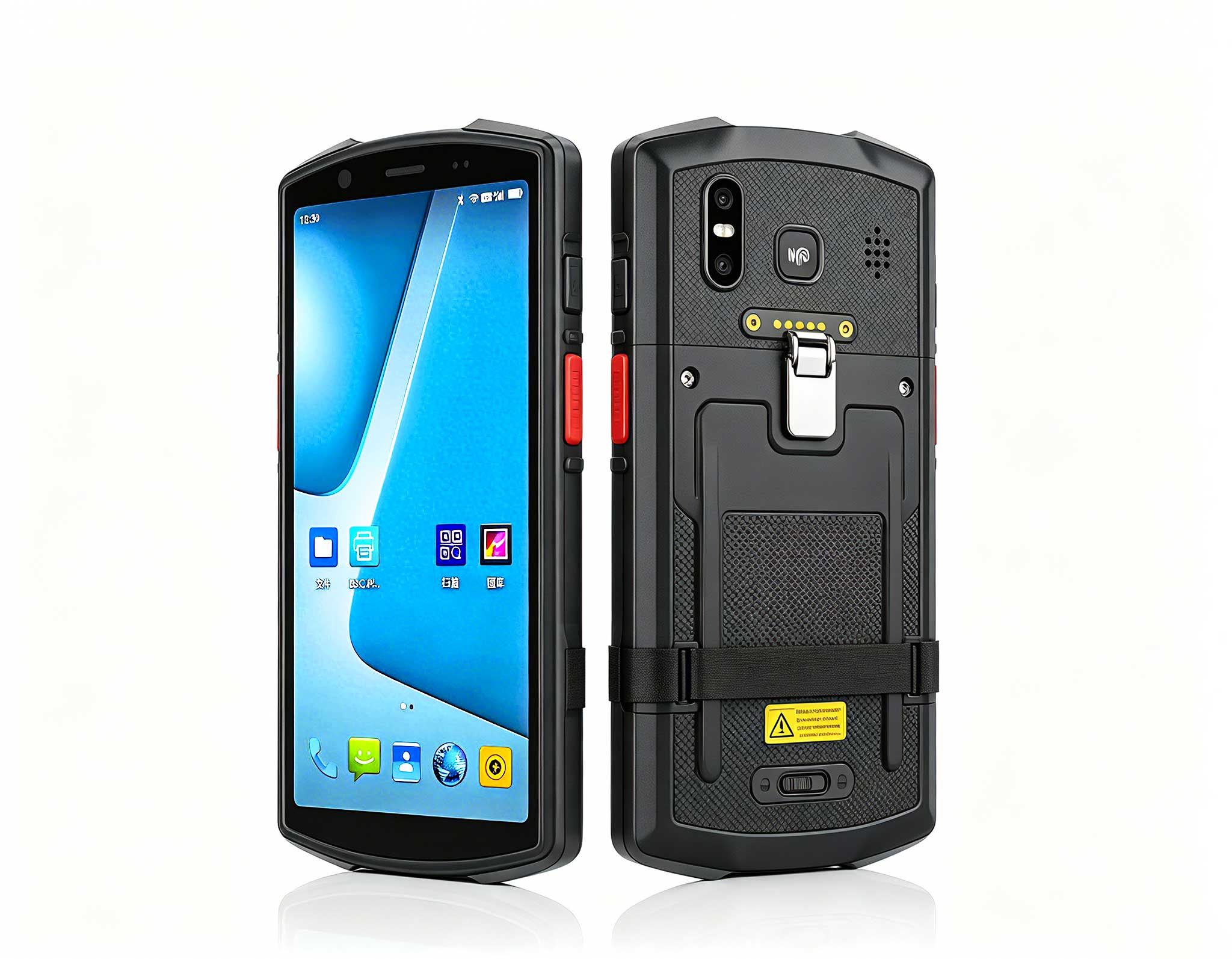
The N60 Inventory Management PDA takes the opposite approach. It commits to contact reading and then makes that moment as easy as possible. The screen grows to 5.99 inches at 1080×2160, still glove and wet-hand capable, and the scanner is a Honeywell N6703 2D imager whose published symbology list runs from PDF417 and Micro PDF417 through GS1 Composite, Aztec, Data Matrix and QR to Maxicode and Hanxin. For dense, worn or small-module labels, that engine list is the reason to choose this device.
It also carries the most memory of the three, at 4GB + 64GB expandable to 6GB + 128GB, on a Cortex-A76/A53 octa-core at 2.0GHz running Android 10.0. The chassis measures 164.5 × 79.4 × 12.3mm, and that 12.3mm is the number worth pausing on: thin enough to ride in a thigh pocket without a holster, which is how a device ends up carried on every walk. Cellular reaches 5G, fingerprint unlock is supported, and the removable 4200mAh battery is rated above twelve hours. There is no UHF option here - this model is a close reader by design.
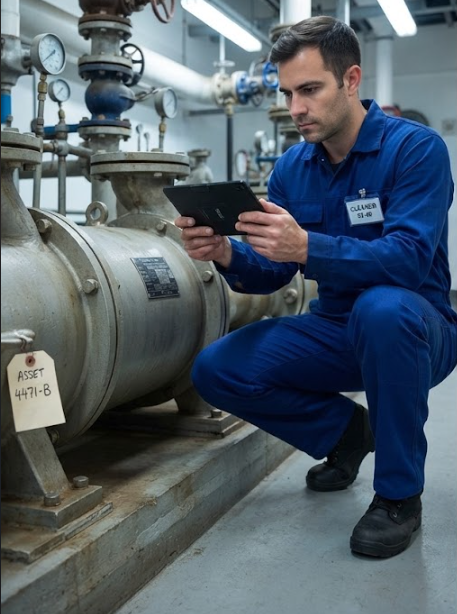
The R366C-S Industrial UHF RFID Reader is the model that changes the shape of a shift. Its module is an Impinj E710 with a published read rate of 900 tags per second or better and a read distance of ten to twenty metres from a 4dBi antenna, across FCC 902-928MHz, ETSI 865-868MHz and SRRC-MII 840-845MHz and 920-925MHz, on EPC Class 1 Gen 2 / ISO 18000-6C. This is the device that lets a technician finish an aisle of spares by walking down it.
The rest of the specification supports that one job. A Qualcomm SM6225 octa-core at 2.4GHz on an 11nm process runs Android 13 with 4GB + 64GB and a TF slot to 256GB, connectivity covers dual-band Wi-Fi with 802.11 a/b/g/n/ac/ax readiness and Bluetooth 5.1 plus 4G LTE, and the battery is a 10000mAh 3.8V removable pack. The consequence is a 170 × 79 × 22.6mm body at under 700g. Far-field reading is paid for in grams.
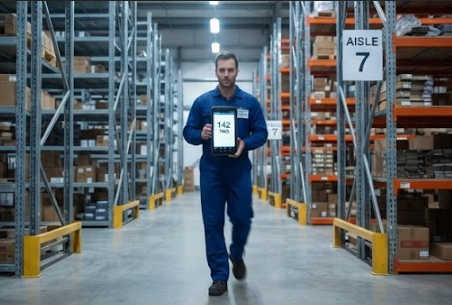
The Janam XT3 answers with protection rather than radio range. A 5-inch FHD+ display and a Qualcomm octa-core with 4GB + 64GB on Android 11 are backed by IP67 sealing, MIL-STD-810H conformance and a 1.8-metre drop rating - a published durability profile none of the three Hotus models matches on paper. Its scanner is described as long-range 2D, placing it in the mid-range band, and it connects over 4G, Wi-Fi 6 and Bluetooth 5.1. For cold chain and genuinely extreme environments, that stated envelope answers a question our line-up answers less explicitly.
The CipherLab RK25 answers with physical controls and an optional radio. It keeps a 4-inch WVGA 800×480 touchscreen but adds a 28-key backlit keypad built for gloved operation, with a trigger rated at 2.5 million actuations and reading angles of 10 and 70 degrees. Its engine is an SE4750 mid-range 2D scanner reaching about four metres, with a long-range option, and an optional sled is specified at more than 700 tags per second beyond 8m. IP65 sealing, a 1.2-metre drop rating and a 180g body round out a device aimed at light manufacturing and mobile field work.
| Device | Primary reading method | Published read distance | Display | Memory | OS | Battery | Protection published | Weight |
|---|---|---|---|---|---|---|---|---|
| Hotus U9000 | Order configurable: 1D/2D, NFC, LF or UHF | Radio module beyond 1.5m; NFC 2-5cm | 5.0in IPS 720×1280 | 2GB+16GB to 3GB+32GB | Android 9.0 | 4800mAh removable, over 12h | Not published | 178×78×24mm |
| Hotus N60 | 2D imager (Honeywell N6703) | Not published | 5.99in IPS 1080×2160 | 4GB+64GB to 6GB+128GB | Android 10.0 | 4200mAh removable, over 12h | Not published | 164.5×79.4×12.3mm |
| Hotus R366C-S | UHF RFID (Impinj E710) | 10-20m, 900+ tags/s | 5.5in IPS 720×1440 | 4GB+64GB, TF to 256GB | Android 13 | 10000mAh removable | Not published | Under 700g, 170×79×22.6mm |
| Janam XT3 | Long-range 2D | Not published | 5in FHD+ | 4GB+64GB | Android 11 | Not published | IP67, MIL-STD-810H, 1.8m drop | Not published |
| CipherLab RK25 | SE4750 2D, optional sled | 2D up to 4m; sled beyond 8m | 4in WVGA 800×480 | 2GB/4GB + 16GB/64GB | Android 9.0 GMS | 4000mAh | IP65, 1.2m drop, 2.5M trigger | 180g |
Three points deserve to be stated plainly. First, none of the three Hotus product pages publish an IP rating, an operating temperature range or a drop height. The Janam XT3 publishes all three and the CipherLab RK25 publishes two, so a buyer who needs documented environmental limits gets a documented answer from the competitors and an open question from us. Ask for current test reports rather than assuming a number.
Second, the RK25's 28-key keypad, 2.5-million-actuation trigger, dual reading angles and AER certification are real advantages in single-handed, gloved, blind-operation field work, and our line-up has no equivalent published specification to set against them. Third, the two radio figures are not directly comparable: the RK25 sled is quoted beyond 8m and 700+ tags per second, the R366C-S quotes 10-20m and 900+ tags per second. One is an add-on sled with its own antenna, the other an integrated module with a 4dBi antenna. Both are manufacturer claims; neither is a controlled test.
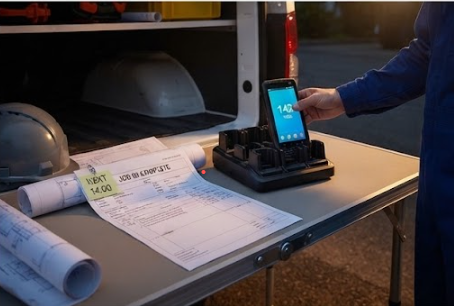
| If most of the day is... | Distance band | Consider | Because |
|---|---|---|---|
| Reading asset plates and meters up close | Contact, up to 0.5m | Hotus N60 | N6703 imager with the widest symbology list, 12.3mm thin for pocket carry |
| Mixed work where the tool must change with the job | Contact to mid | Hotus U9000 | 1D, 2D, NFC, LF or UHF specified on one chassis, with 5G |
| Counting tagged spares, tools or assets in bulk | Far field, 10-20m | Hotus R366C-S | Impinj E710 at 900+ tags/s, 10000mAh for multi-shift scanning |
| Working in certified extreme environments | Mid range | Janam XT3 | IP67, MIL-STD-810H and 1.8m drop are published, not implied |
| One-handed gloved work with physical keys | Mid range, 2D to 4m | CipherLab RK25 | 28-key keypad, 2.5M trigger, optional UHF sled |
The exercise is deliberately unglamorous. Count the reading tasks in a real week and the device category follows almost automatically.
All three Hotus handhelds share the same order model: the reading hardware is specified to the task, the battery is removable, and the platform is an Android build your existing work-order software can already target. If you are replacing a fleet or specifying one for the first time, browse the full handheld PDA lineup and then see how these devices sit against other platforms in our device comparison library. Tell us your reading tasks and we will tell you which distance band they fall into.