- Select Language
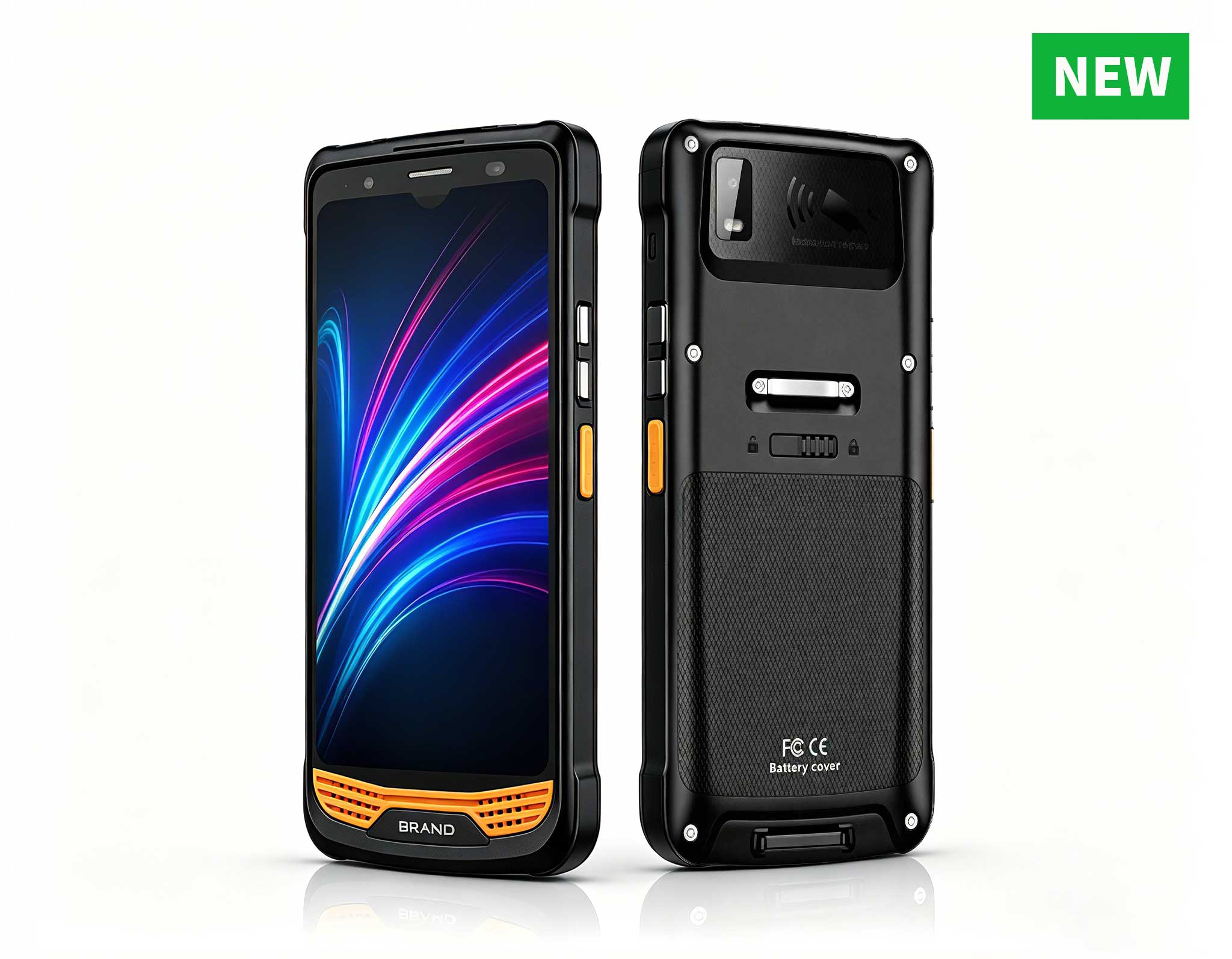
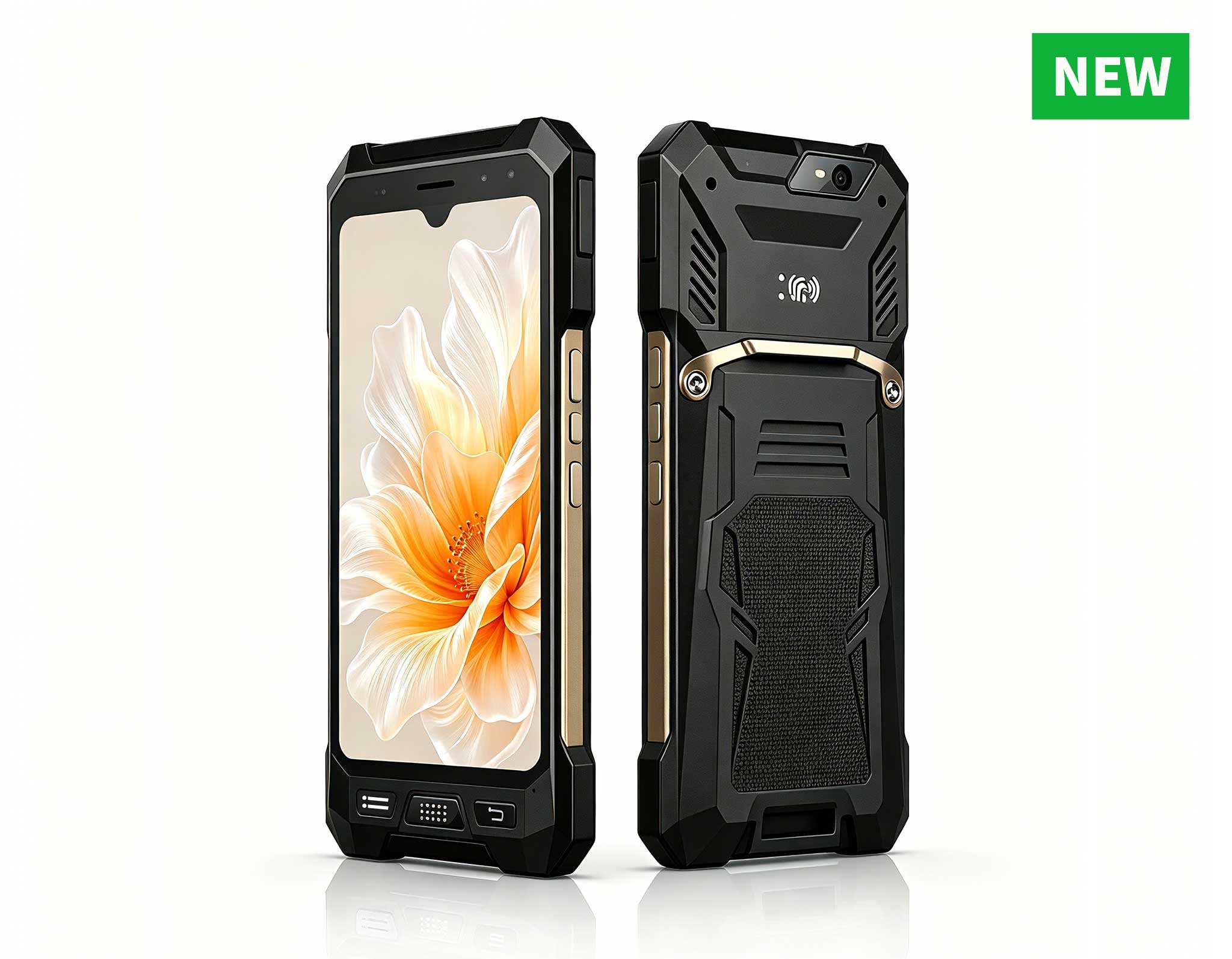
R366-S 5.5-inch Industrial PDA | Qualcomm Octa-cor...
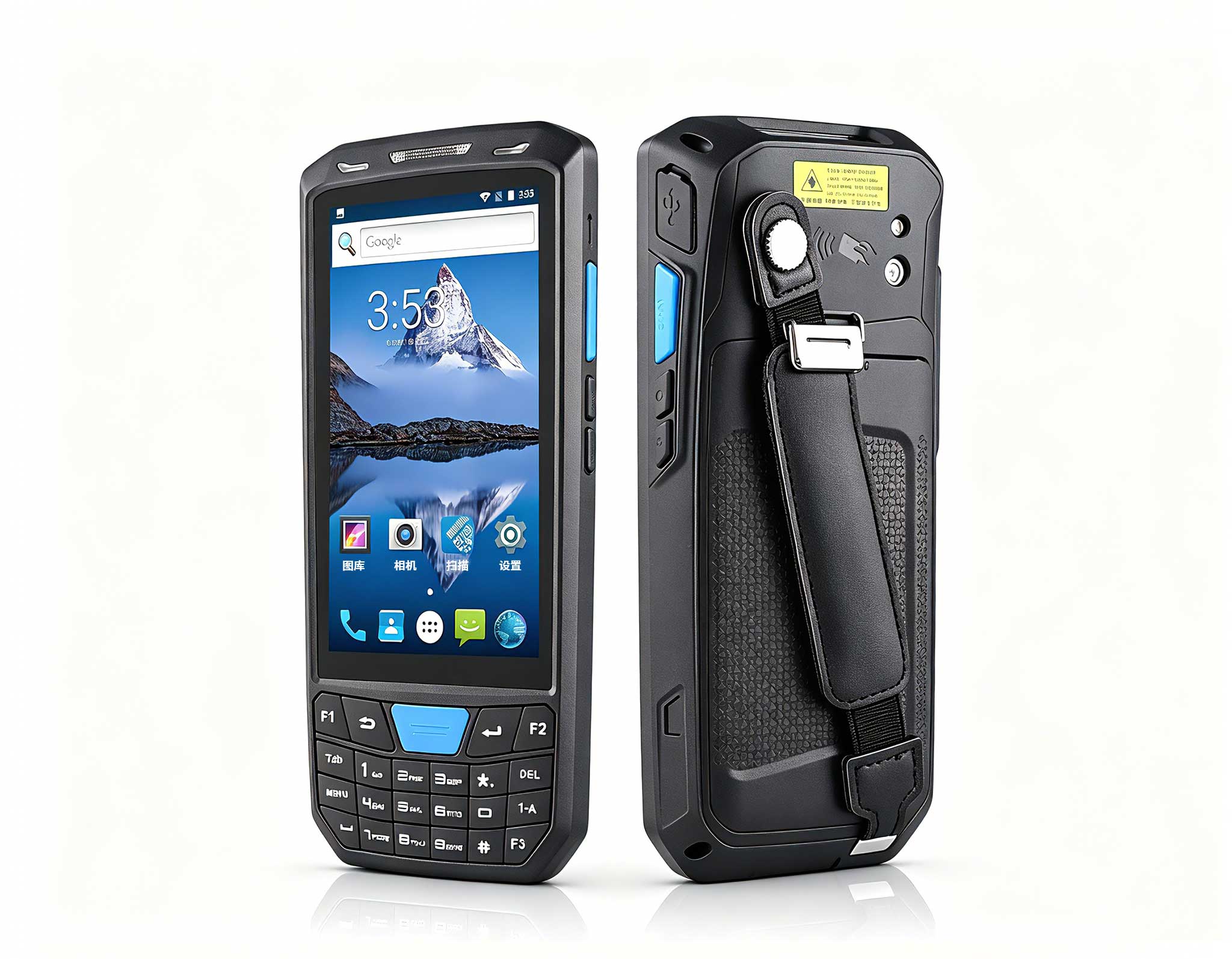
The T80 handheld PDA combines advanced barcode sca...
R530C 6.0-inch Industrial PDA | Qualcomm Octa-core...
Maintenance instructions: Store at room temperatur...
This dual touchscreen gaming laptop combines cutti...
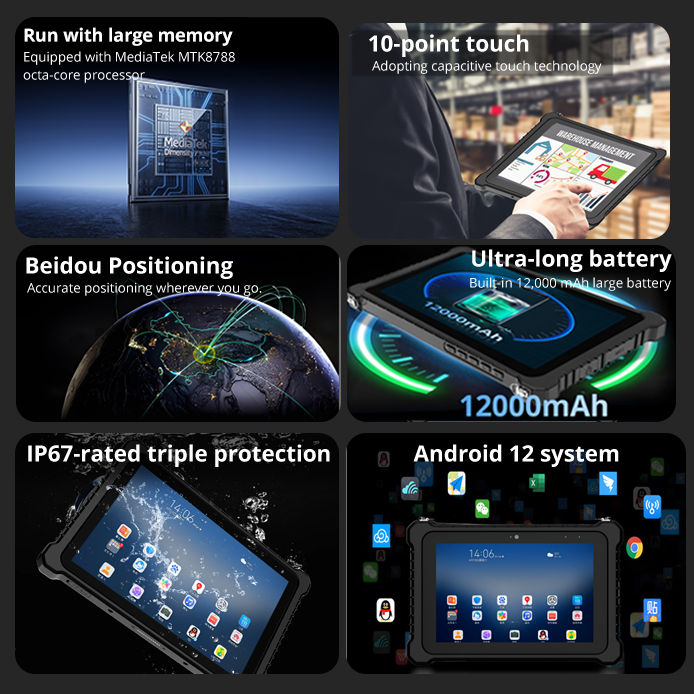
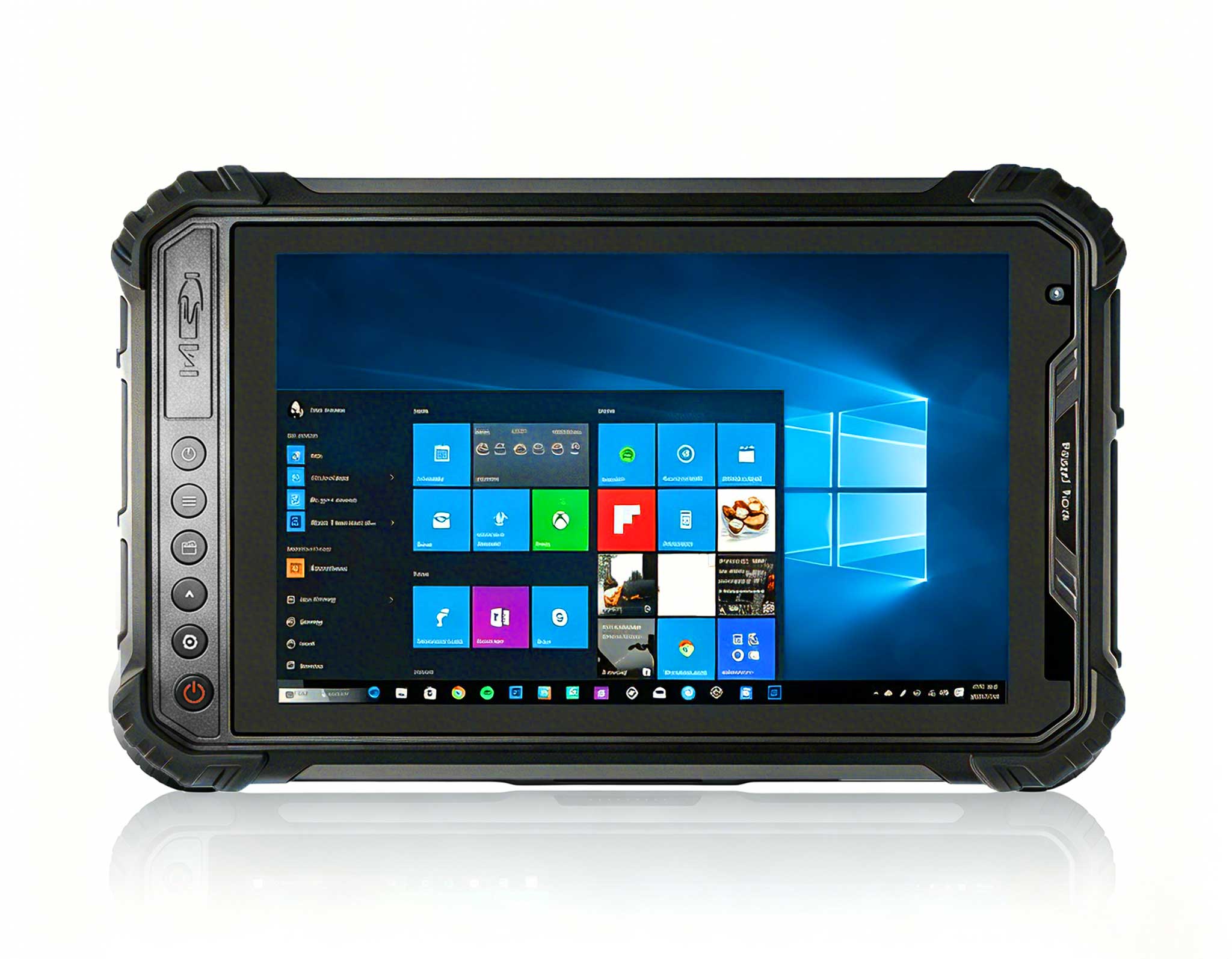
RT80 5G Rugged Tablet | 10.1" FHD 400nit | Un...
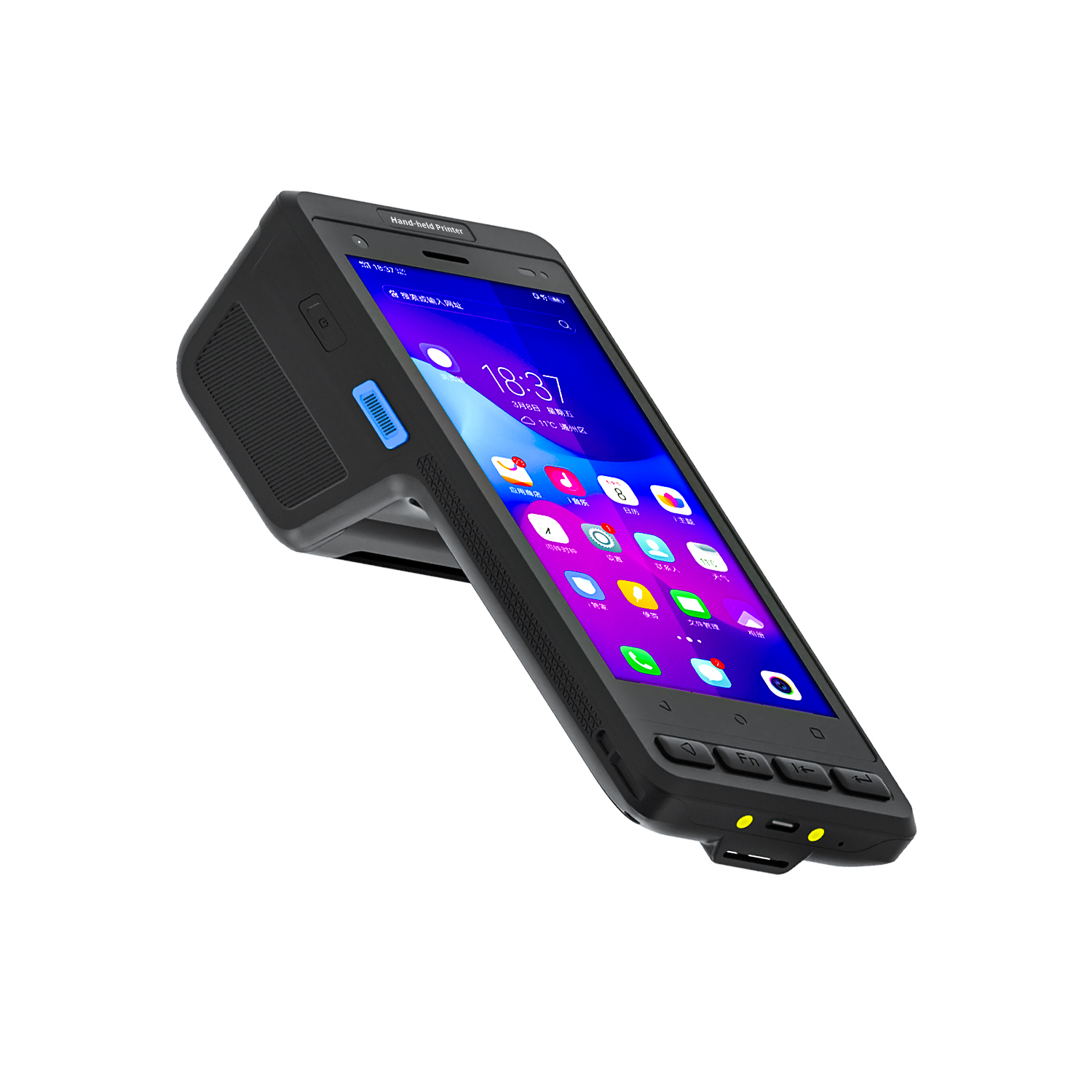
️ X8 Series Handheld Label & Thermal Printing ...
Buy the wrong handheld for a warehouse and the cost never shows up as a broken device. It shows up as overtime, as a second trip back to the label printer, as an arm that stops lifting the scanner at hour six. The Hotus X8 Series, R501 and F502 each answer one moment in the life of a label; the Chainway C71 and Nordic ID NUR-10W answer a different one.
A carton's paperwork and a carton's label are not the same thing. The paperwork exists in the warehouse management system the moment a truck is checked in; the label only exists after somebody prints it and sticks it on. Everything in that gap - the walk to a fixed printer, the queue behind it, the pallet waiting for its paper - is a cost that never appears on a specification sheet.
This comparison is therefore organised around three moments. Marking: goods arrive and data has to become a physical label. Bulk reading: a pallet moves and every carton on it has to be confirmed. Single confirmation: one carton comes off a shelf and one free hand has to record it. Both Hotus and the two benchmark brands sell terminals for warehouse logistics solutions, and on paper several look interchangeable. They are not. What separates them is where the vendor expects the work to happen.
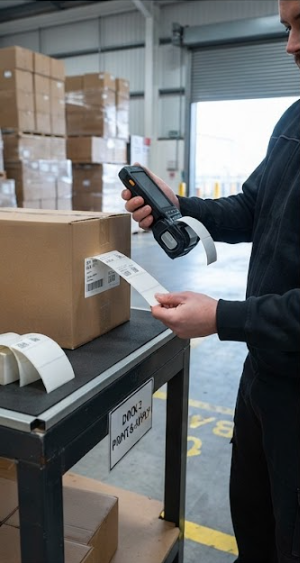
The X8 Series Printing PDA removes the walk by putting the printer in the hand. It carries a built-in high-speed thermal printer with a compartment built for 48mm to 50mm wide label rolls - wider than the narrow rolls mobile printers usually accept, which matters because a shipping waybill needs more label than a receipt does.
The rest is a current Android 14 enterprise handheld: a 5.5-inch IPS panel at 1440 by 720 with industrial capacitive touch tuned for wet hands and heavy gloves, an octa-core 64-bit processor, 4GB of RAM and 64GB of storage scalable to 8GB and 128GB, and a 7.6V 2750mAh dual-cell pack quoted as equivalent to 5500mAh at 3.8V, with the larger X8P taking a removable 5300mAh pack. Cameras are 5MP front and 13MP rear with autofocus and a flashlight. It is sealed to IP54 with an anti-drop housing rather than to a hose-down rating, and at under 500g it stays pocketable.
The R501 Tag RFID assumes the operator will hold the device at arm's length for a long time, aiming at a wall of cartons, so it is built as a pistol-grip unit: 179mm by 74.5mm by 150mm including the handle, with silicone side keys for power and volume, a dedicated handle scan key and two further scan keys on the body.
That grip is not cosmetic. Holding a flat terminal at arm's length through a full pallet count is a forearm exercise, and the second half of a shift is where counts go wrong. A neutral wrist and a trigger under the index finger is the difference between a count that finishes and one that gets finished later.
It runs a MediaTek MT6762 octa-core 64-bit processor at 2.0GHz on Android 10.0, with Android 13.0 available, sealed to IP65, with multi-touch and a 2MP front camera. A vibration motor lets a successful read be felt rather than watched, and Type-C 2.0 with OTG handles charging. At under 750g with the handle fitted it is the heaviest of the three Hotus units here, which is the price of the grip rather than a defect.

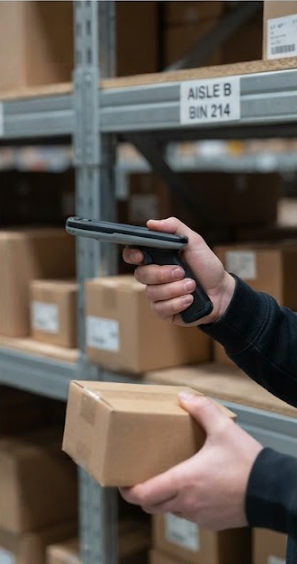
The RFID Barcode Scanner F502 is the picker's device, and its defining number is under 300g. That is light enough to hook with two fingers while the rest of the hand holds a carton - exactly the posture a shelf-level pick requires.
It runs the same MT6762 octa-core at 2.0GHz, with 2GB plus 16GB or 4GB plus 64GB expandable through Micro SD to 256GB. The 5.5-inch IPS display resolves 720 by 1440, positioning covers GPS, Galileo, Glonass and Beidou, and a single Type-C port handles OTG. The audio chain - a mono speaker, two microphones and a receiver - is what makes voice confirmation usable in a noisy aisle.
Two things the F502 does not publish are its operating system version and its ingress protection rating, which is a sign that Hotus positions this model by weight and handling rather than by ruggedness credentials.
The Chainway C71 attacks bulk reading directly: a UHF RFID reader integrated into a 5.5-inch handheld with a circular polarised antenna, quoting a 15-metre read distance and more than 900 tags per second. The rest is current-generation - an octa-core 2.4GHz processor, 6GB of RAM and 128GB of storage, Android 13, 5G cellular, a professional 2D scan engine and dual-band Wi-Fi 6. It is sealed to IP67 with a 1.5-metre drop rating and weighs 320g.
Chainway also sells the C70, the same host hardware without the UHF module. Side by side, the lesson is clear: the antenna, not the computer, is what you are paying for, and it decides whether a pallet is read in one pass or in sixty.
The Nordic ID NUR-10W takes the opposite commercial position, publishing up to 15 metres of read range, 2D scanning, 4G and enterprise management, and little else - because at its price band the buyer is purchasing read performance, not a screen. At roughly 1,000 to 1,500 US dollars it costs about twice what the C71 does.
| Device | Primary job | On-board printing | RFID | Display | Memory | OS | Protection | Weight |
|---|---|---|---|---|---|---|---|---|
| Hotus X8 Series | Print the label where the goods stop | Built-in thermal, 48-50mm roll | Variant dependent | 5.5in IPS 1440x720 | 4GB+64GB, scalable to 8GB+128GB | Android 14 | IP54 | Under 500g |
| Hotus R501 | Bulk tag reading with a pistol grip | None | Tag RFID, handle-mounted keys | Not published | Not published | Android 10.0 / 13.0 | IP65 | Under 750g with handle |
| Hotus F502 | One carton, one free hand | None | RFID and barcode | 5.5in IPS 720x1440 | 2GB+16GB or 4GB+64GB | Not published | Not published | Under 300g |
| Chainway C71 | Read a whole pallet in one pass | None | Integrated UHF, 15m, 900+ tags/s | 5.5in IPS 720x1440 | 6GB+128GB | Android 13 | IP67, 1.5m drop | 320g |
| Nordic ID NUR-10W | Read range as the specification | None | Integrated UHF, up to 15m | Not published | Not published | Not published | Not published | Not published |
Several entries are blank on purpose. Where a vendor does not publish a figure, inventing one is how buyers end up disappointed. The R501's screen and battery, the F502's ingress rating and almost the whole NUR-10W row are unpublished, and they should be requested from the supplier before a purchase order is raised.
Three limits belong in this article. The first is raw RFID throughput: Chainway publishes 900+ tags per second and Nordic ID publishes up to 15 metres, while Hotus publishes no comparable figure or maximum read distance for the R501 or the F502. A site that needs to read a fast-moving pallet at the far end of a 15-metre aisle should benchmark that case rather than assume parity.
The second is ruggedness. The C71 carries IP67 and a published 1.5-metre drop rating, while the X8 is IP54 and the F502 publishes no rating at all. For a dock apron in freezing rain, that difference is real, and the C71 is the safer specification.
The third is documentation. Chainway and Nordic ID document their platforms more completely than Hotus documents these three models, and the device that wins a tender is sometimes simply the one whose datasheet answers every line of the tender document.
| If the shift is mostly... | The real bottleneck is | Consider | Because |
|---|---|---|---|
| Receiving goods and marking them | The walk to a fixed label printer | Hotus X8 Series | A 48-50mm thermal roll on the device puts the label at the dock, not down a corridor |
| Counting a full pallet of tagged cartons | How long the arm holds up | Hotus R501 | Pistol grip, a handle-mounted trigger and two body scan keys, sealed to IP65 |
| Confirming one carton on a shelf | Getting a hand free | Hotus F502 | Under 300g, with dual microphones for voice confirmation in a noisy aisle |
| Reading a moving pallet at speed | Tags per second | Chainway C71 | Integrated UHF quoting 900+ tags per second and a 15m read distance |
| Buying read performance and nothing else | Maximum range | Nordic ID NUR-10W | Up to 15m published, enterprise fleet management, and a price to match |
Most warehouses do not need to replace a fleet. They need to stop the two walks that cost the most: the walk to the label printer after every delivery, and the walk back to the shelf after a miscount. The X8 Series removes the first, the R501 removes the second, and the F502 handles the picks in between.
Browse the full explore our handheld pda lineup to compare chassis options, read more device comparisons for adjacent warehouse roles, or send the Hotus team your receiving and stocktake workflow for a configuration recommendation against your actual read points.