When a regional convenience operator asked me to look at their store technology, the brief sounded simple: speed up checkout, cut inventory blind spots, and stop leaking member discounts at the counter. What I found was a stack of single-purpose cash registers that could not talk to the warehouse, could not scan a loyalty card without a separate reader, and forced every price change through a head-office visit. Over eighteen months I watched one pilot store become a twelve-store rollout built on three Hotus devices. This is the field story, with the numbers, of why a dedicated retail POS solution no longer needs to sit in a fixed box.
🔍 The Problem With Single-Purpose Terminals
The legacy registers did one job well and everything else badly. Price updates arrived on paper sheets. Stock counts happened after close, by hand, on clipboards. Loyalty redemption needed a standalone magnetic reader that jammed twice a week. Worst of all, the terminal held the sale hostage: if a customer wanted to check whether an item was in stock at another branch, the cashier had to phone the other store. Queue time at peak hours ran past four minutes, and the store lost the quiet sale because nobody could answer a stock question on the spot.
The fix was not a bigger register. It was to move the sale off the counter and into a handheld that already carried the catalogue, the scanner, and the member record. That single shift is what made the rest of the rollout possible.
💡 Why One Store Became Twelve
We started with a single format: a neighbourhood store doing roughly 900 transactions a day. The pilot ran on two Android units and one Windows tablet. After the first quarter the operator opened two more branches using the same kit, then a further nine over the following year. The reason it scaled was boring and decisive: the configuration lived in a profile, not in a wiring diagram. A new store received three boxes, signed in to the profile, and was trading inside an hour. No electrician, no network re-patch, no head-office truck roll.
That repeatability is the part most pilots miss. A clever one-store demo dies the moment the second store has a different layout. Ours survived because every device was commodity-shaped and the software did the binding.
Android Devices on the Sales Floor
On the floor we deployed two Android units with different temperaments. The Smart PDA N40 became the stock clerk's friend: lightweight, one-handed, built for the walk-and-scan loop through aisles at 6 a.m. before the doors open. Its barcode engine reads faded label stock that the old gun skipped, and the RFID side lets the clerk locate a tagged cage without pulling product. The X501 Handheld PDA took the customer-facing role: mobile payment, member check-in, and on-the-spot price lookup at the shelf. Because both run the same catalogue app, a clerk can hand a customer the X501 to self-verify a price and the sale still lands in the right till.
What changed behaviour most was mobility. A question that used to end in "I'll ask my manager" now ends at the shelf, with the answer on a screen the customer can see. That alone trimmed the awkward pause at the counter more than any new register ever did.
Windows Tablet for Back-Office Work
The third device is the quiet one. The operator's head-office reporting suite was Windows-only, written years ago and never ported. Rather than rebuild it, we put a rugged handheld tablet running full Windows in the back office. The SH5-W handles the end-of-day reconciliation, the supplier portal, and the label printer driver that no Android build could touch. It is not customer-facing and it is not glamorous, but it is the reason the Android units stayed simple instead of growing a fragile Windows-emulation layer they were never meant to carry.
Splitting the work by operating system sounds like a hassle. In practice it removed the hassle: each device does the job its OS is good at, and nobody asks a tablet to pretend to be a server.
📦 Inventory Counts That Finish Before Open
Before the rollout, a full store count took two clerks three hours after close. With the N40 walking the aisles, the same count finishes in under seventy minutes and the data is in the catalogue before the first customer arrives. The gains are not only speed. Because counts happen before open, the morning shift starts from a true number instead of yesterday's guess, and the perpetual inventory that feeds online stock checks stops lying by mid-afternoon.
The operator's rule now is blunt: if a count cannot finish before open, the format is wrong, not the clerk. The handheld made that rule affordable.
Mobile Payments and Member Check-In
The X501 turned the counter into a suggestion, not a bottleneck. A member walks up, taps the RFID reader, and the discount applies without the cashier hunting a number. Mobile payment runs through the same unit, so a basket that would have queued at the pin pad now closes wherever the clerk stands. In the pilot store, average checkout time dropped from four minutes to under ninety seconds, and the gap between "I'll think about it" and "ring it up" closed because the ring-up followed the customer instead of the other way round.
None of this needed new plumbing. The X501 used the store's existing wireless and the same payment gateway the register already had. The only new line was a setting.
What the Numbers Showed After Six Months
We measured three things the operator cared about: queue length at peak, count labour hours per week, and discount leakage. The table below is the pilot store against the same store in the prior year, before any handheld arrived.
| Metric | Before | After 6 months | Shift |
|---|---|---|---|
| Peak checkout time | 4 min 10 s | 1 min 25 s | -64% |
| Weekly count labour | 6 hrs | 2.3 hrs | -62% |
| Discount leakage rate | 1.8% | 0.4% | -78% |
| Counter phone calls to other stores | ~22 / day | ~3 / day | -86% |
The leakage number mattered most to finance. Every missed member discount was money out the door and a small betrayal of the relationship. Binding the discount to the RFID tap removed the human step where it leaked.
Picking the Right Mix for Your Format
The three-device shape is not sacred. A kiosk-heavy format might drop the Windows tablet and keep two Android units. A warehouse-format store might flip it and keep one Android scanner plus a Windows tablet for the receiving dock. The lesson from this rollout is to assign the device to the job and the operating system to the software, not to buy one box and hope it covers all three. If you want the longer version of how the same kit solved related retail problems, this breakdown of Hotus PDAs and mini PCs in real stores walks through a second format.
Start with one store. Prove the count finishes before open and the queue shrinks. Then let the profile, not the wiring, carry you to the twelfth.
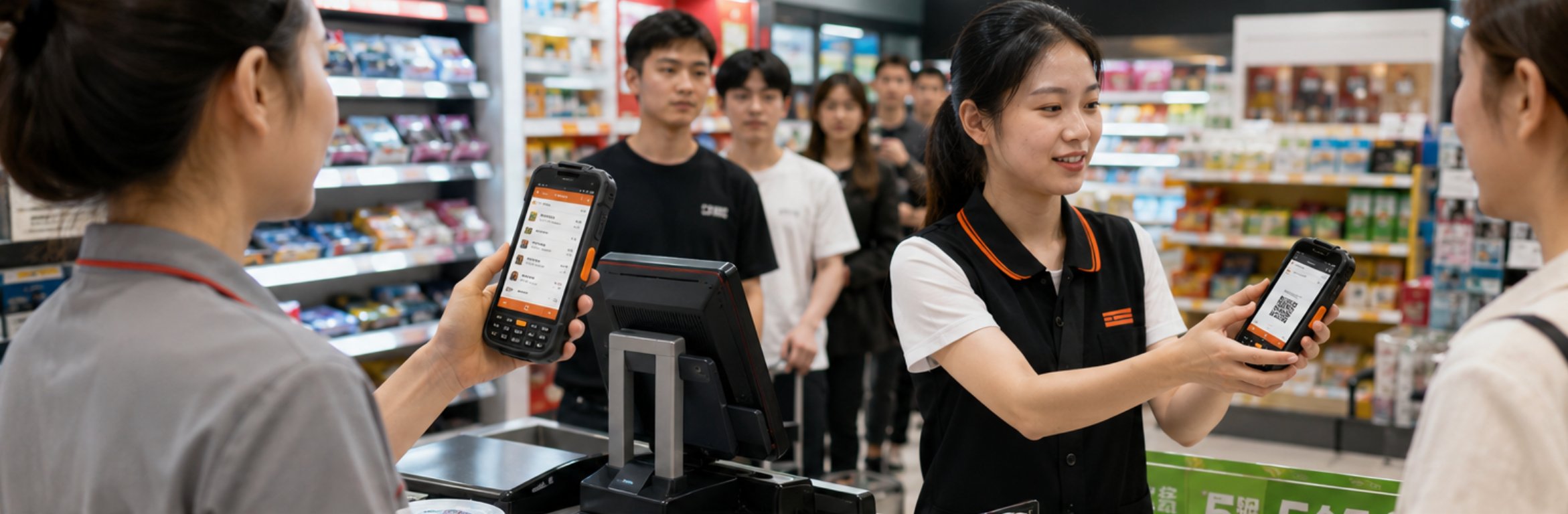
Smart PDA N40 and X501 at a convenience counter, running the shared catalogue app during a morning rush.
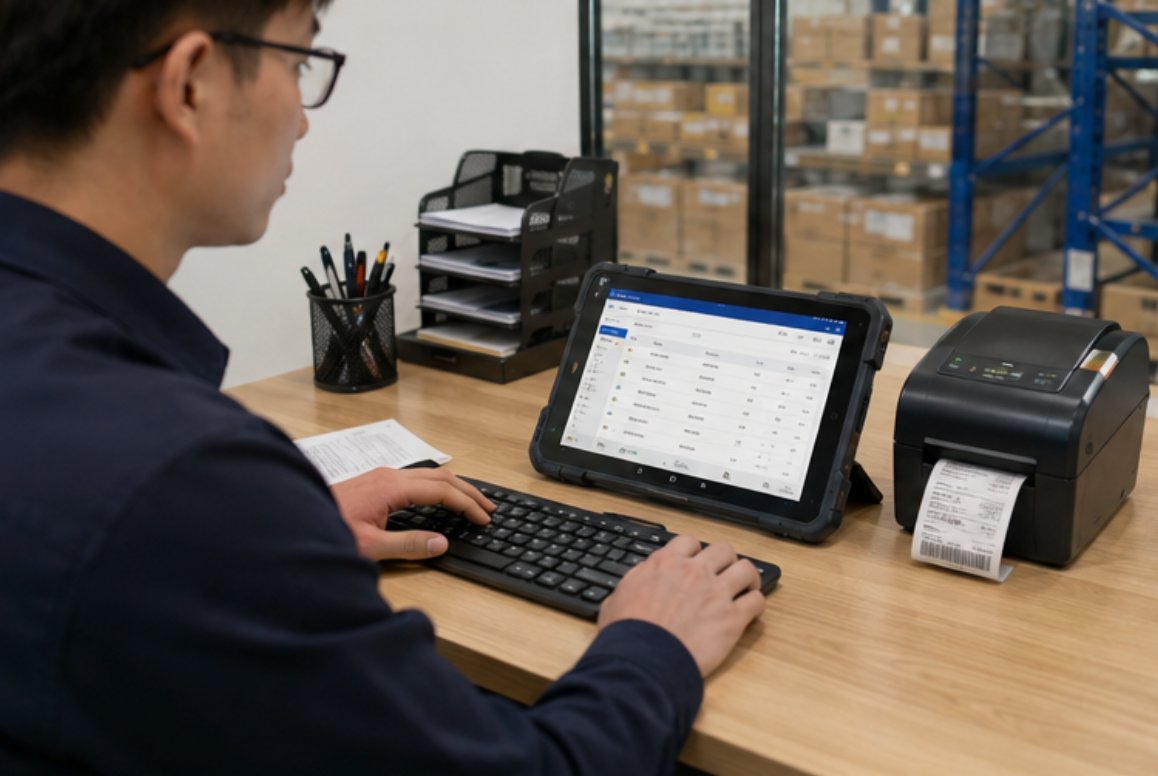
SH5-W rugged Windows tablet handling end-of-day reconciliation and the supplier portal in the back office.
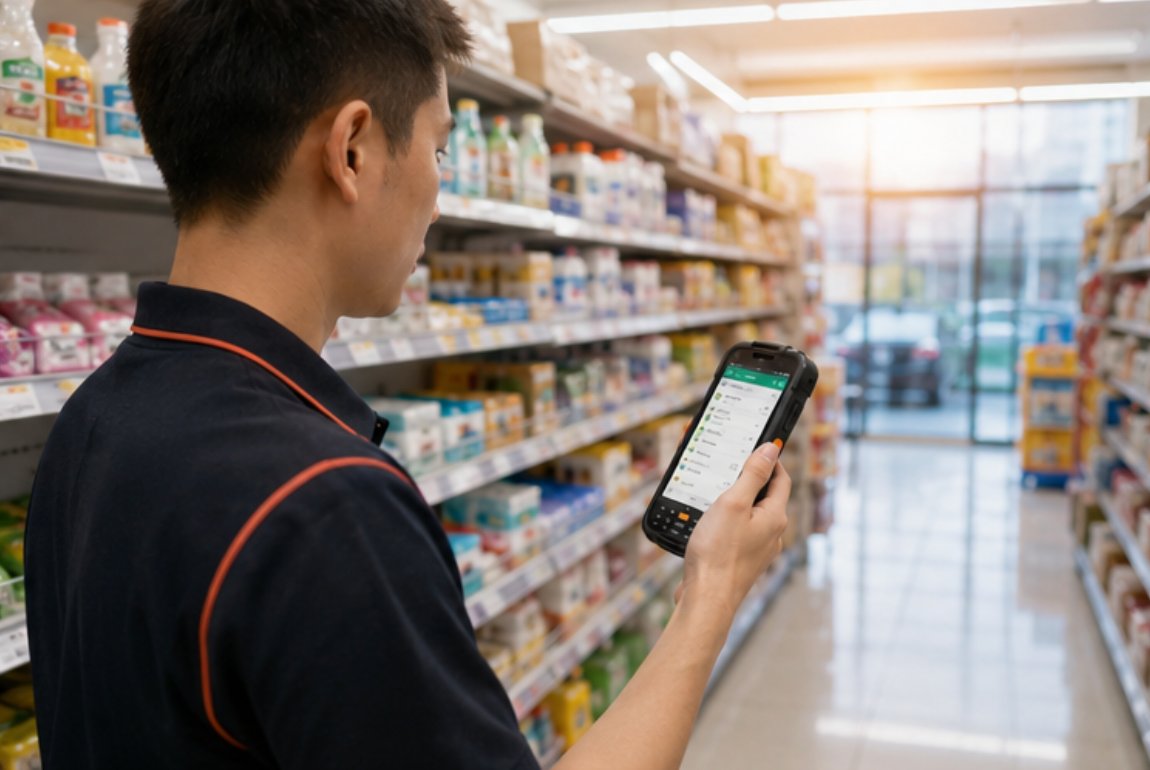
N40 on the pre-open walk-and-scan loop, reading faded label stock that the old gun skipped.