- Select Language
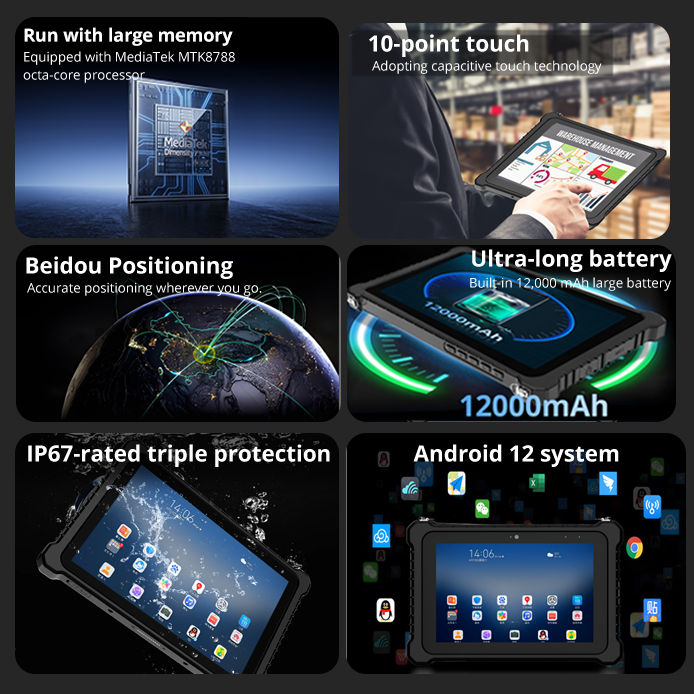
RT81 4G Rugged Tablet | 10.1" FHD 400nit | Qu...
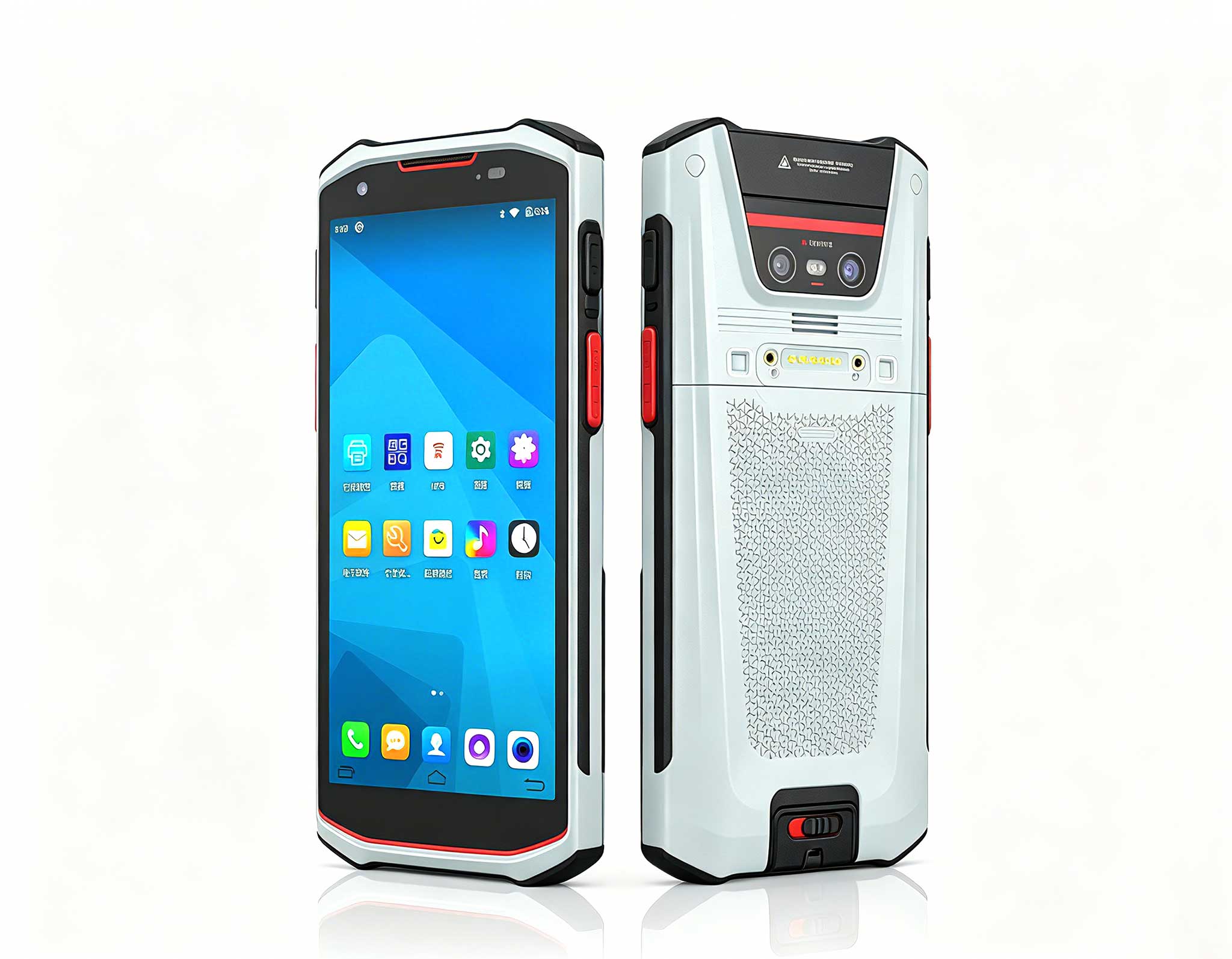
The N60 PDA is a cutting-edge device for inventory...
Technical SpecificationsModel: Palm-sized miniPCTy...
Explore our customized PDA designed for versatile ...
The X501 Handheld PDA combines advanced barcode sc...
Full SpecificationsModelHotus ST11‑MOSWindows 10/1...
The N60 PDA is a cutting-edge device for inventory...
A plant inspection round looks like a walking job. It is really a fitting-out job that was finished weeks earlier, out of sight. Someone had to choose where each unit sleeps, what feeds it overnight, and which way its readings leave the building. Decide those three badly and the round still runs on the first shift. It fails on the shift where a battery is flat, a cable is missing, or a reading has nowhere to go.
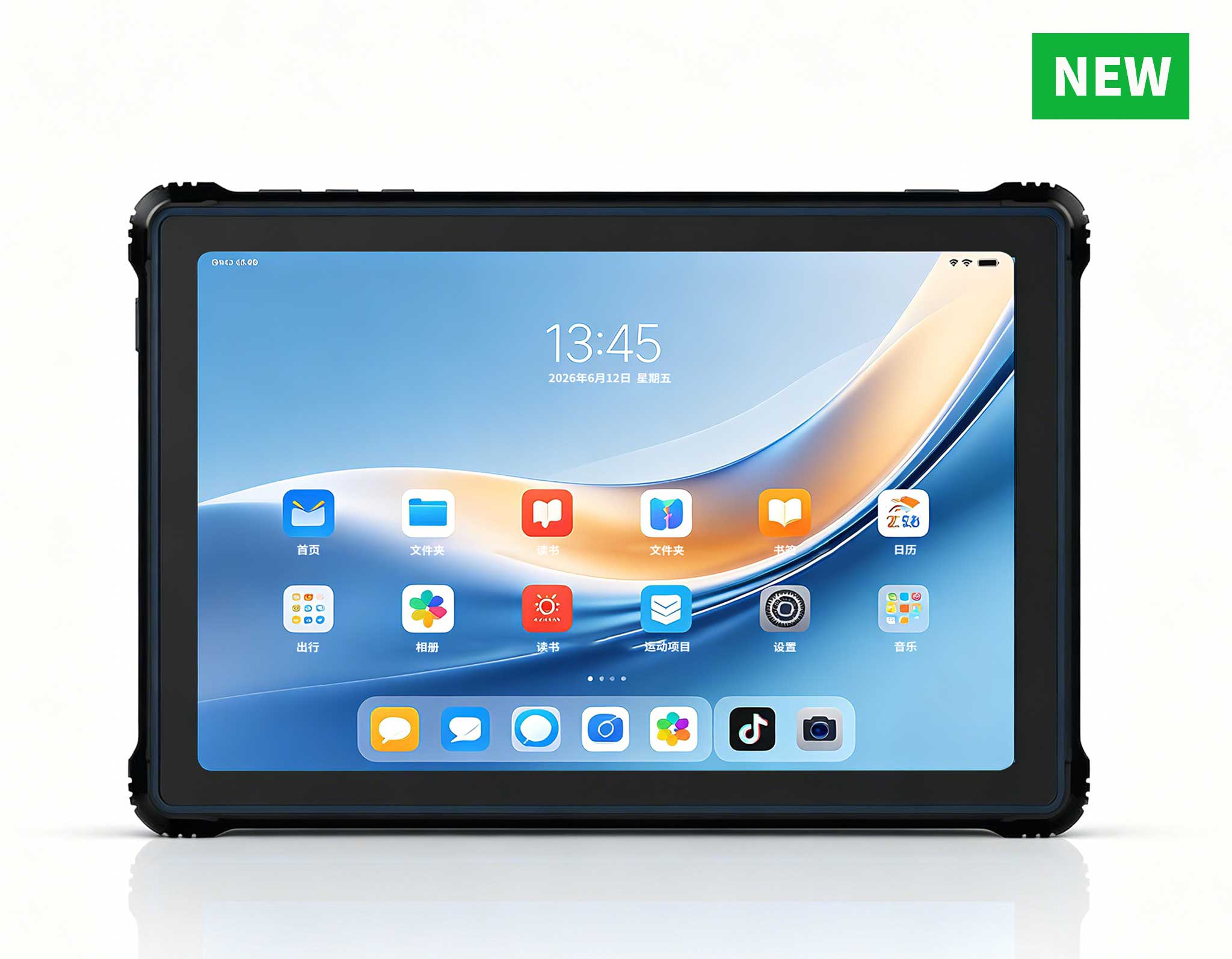
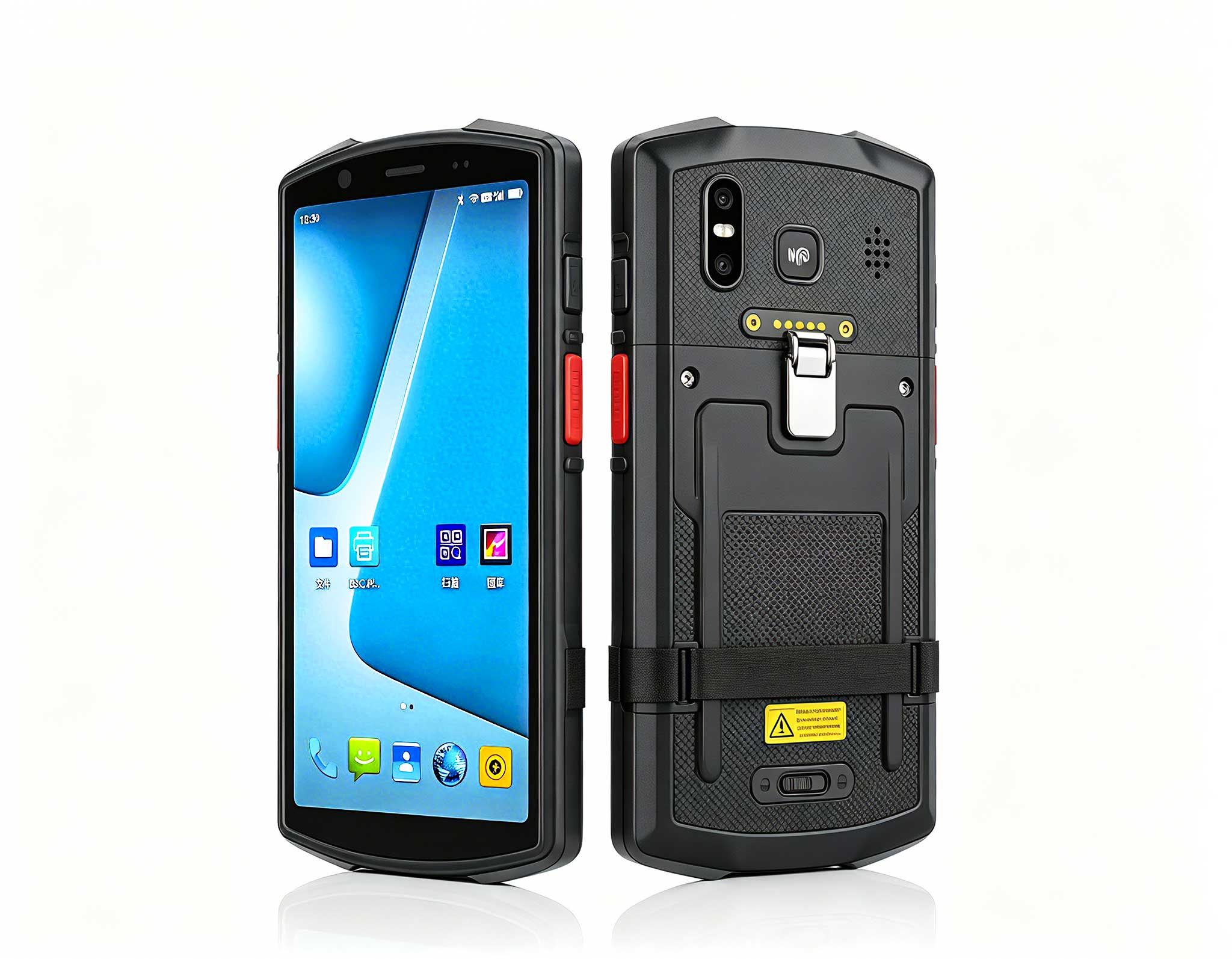
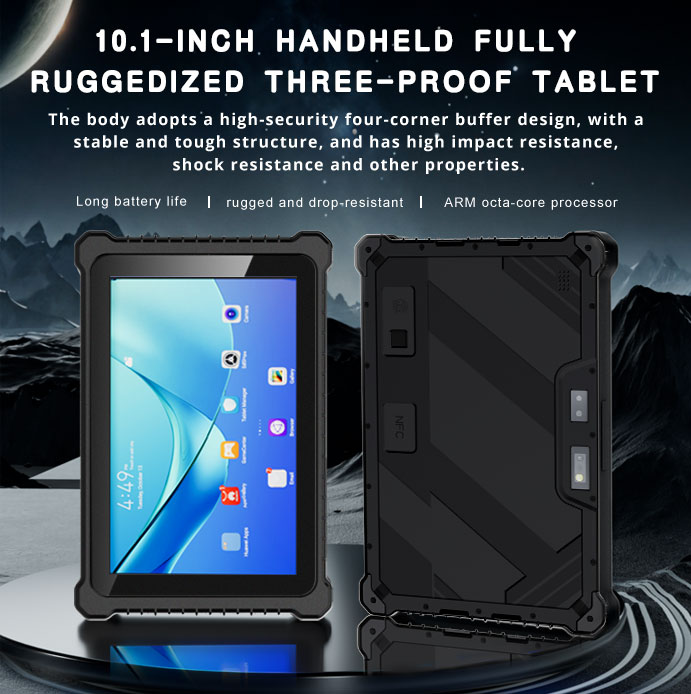
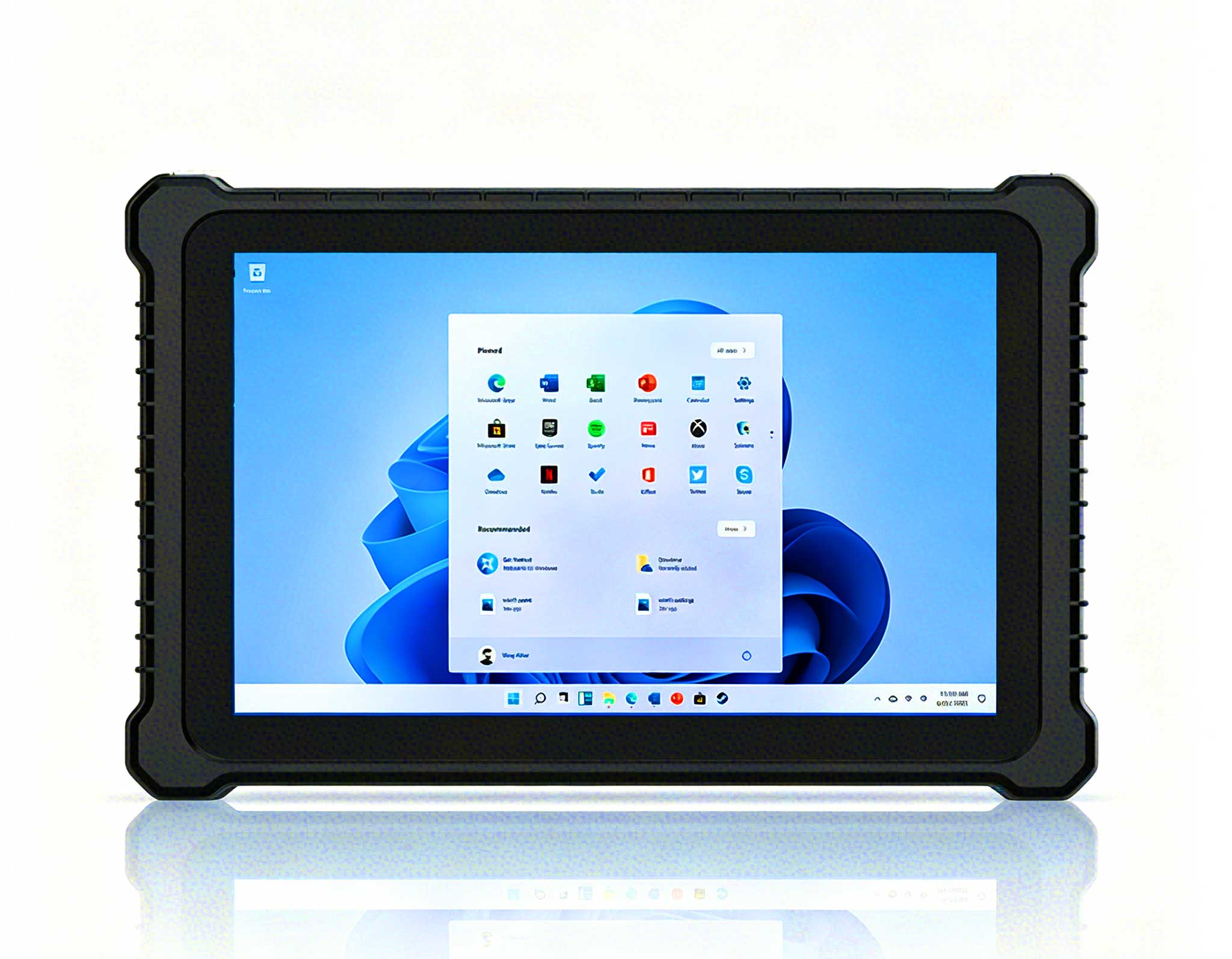
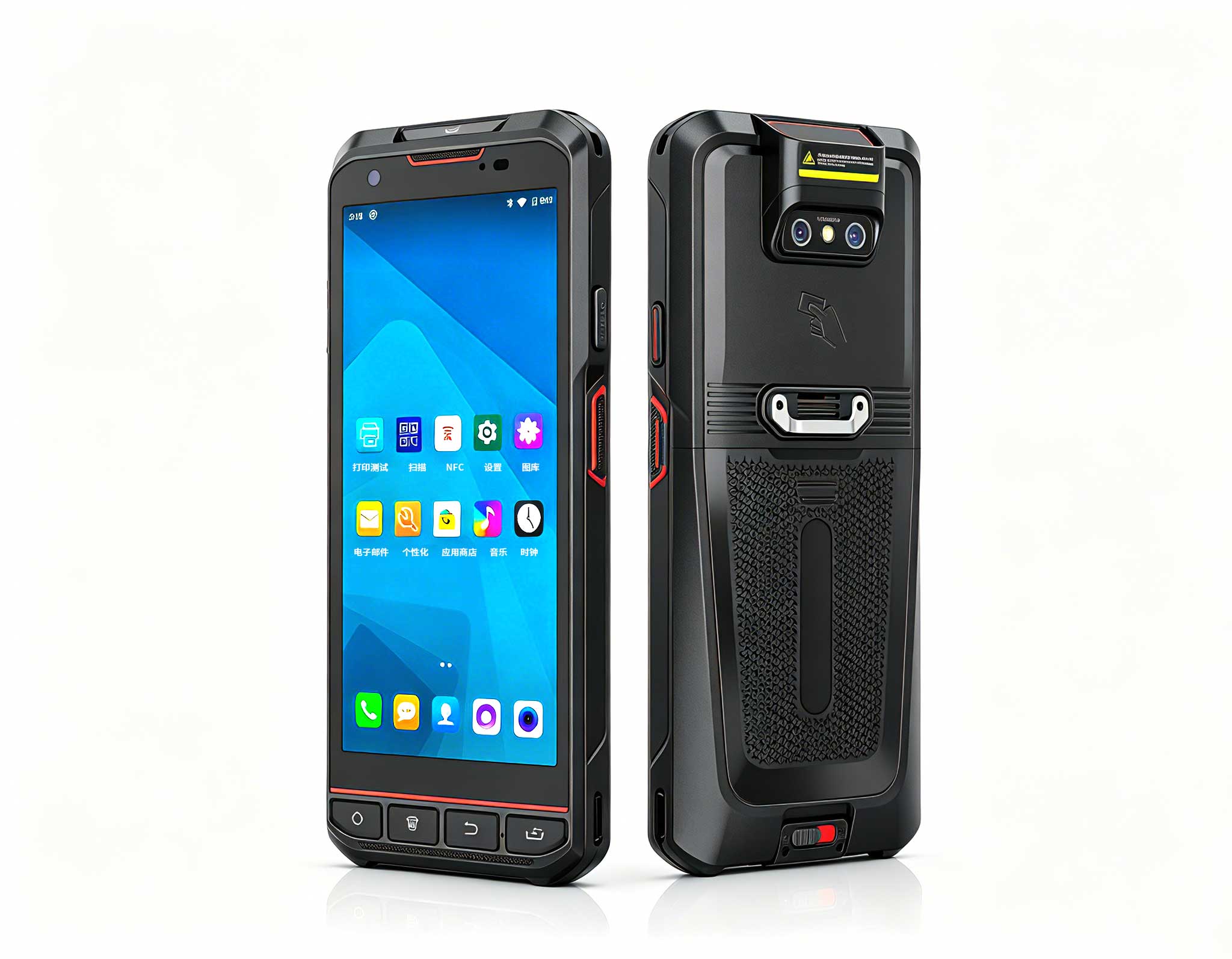
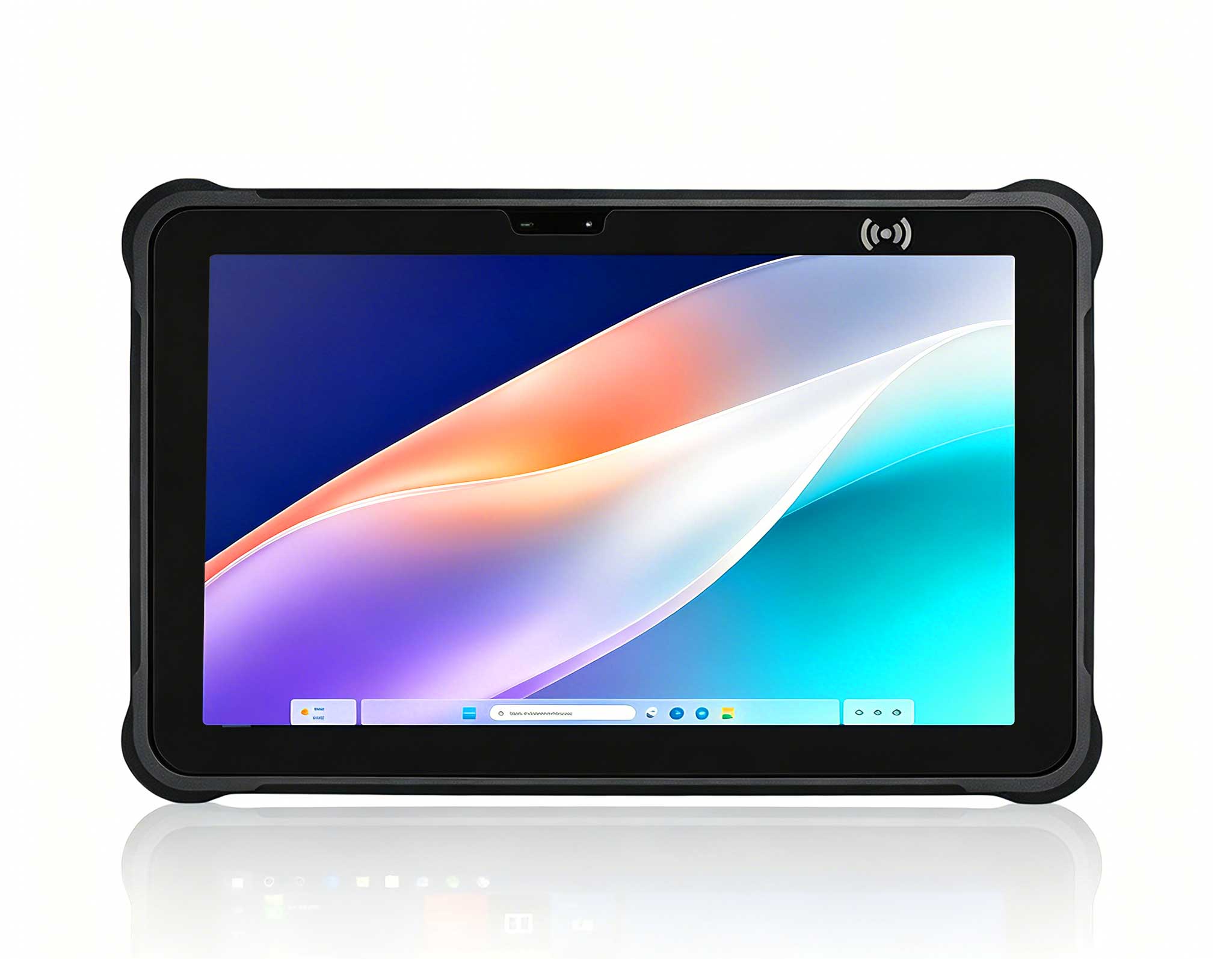
Three units cover this work with different assumptions about the building. An HTQ10A Android Rugged Tablet is the lightweight panel a new crew can be handed. An HTYJ10A Rugged Tablet is the heavier Windows-class machine that expects a fixed post. An N60 Inventory Management PDA is the pocket-sized reader that lives on the belt. The commissioning decisions differ for each, and the product pages are unusually explicit about where they diverge.
The failures that stop an inspection programme rarely happen at the asset. They happen in the office that placed the order, three weeks before. Two of the three units here publish a charging dock and a twelve-pin POGO connector as optional extras, not as standard parts. A buyer reading the specification body sees a rugged tablet and a price. A buyer reading the optional-function line sees that the mounting hardware arrives only if it was written down.
The same trap sits under the power figures. Each unit ships with its own adapter output, and no two are interchangeable. The accessories that make a round repeatable overnight - the dock, the right spare lead, the spare cell on one of the three - are all in the same optional column. Treat the order sheet as the first commissioning document, not a formality.
The HTQ10A and the HTYJ10A both publish a twelve-pin POGO connector on the body and a charging dock on the optional list. That combination is what makes a fixed post possible: the unit drops onto the dock at the end of a round, and the dock takes over the charging and the data handoff without anyone plugging a cable into a rubber-sealed port. For a bench that runs three shifts, that is the difference between a device that is always ready and one that is always being found.
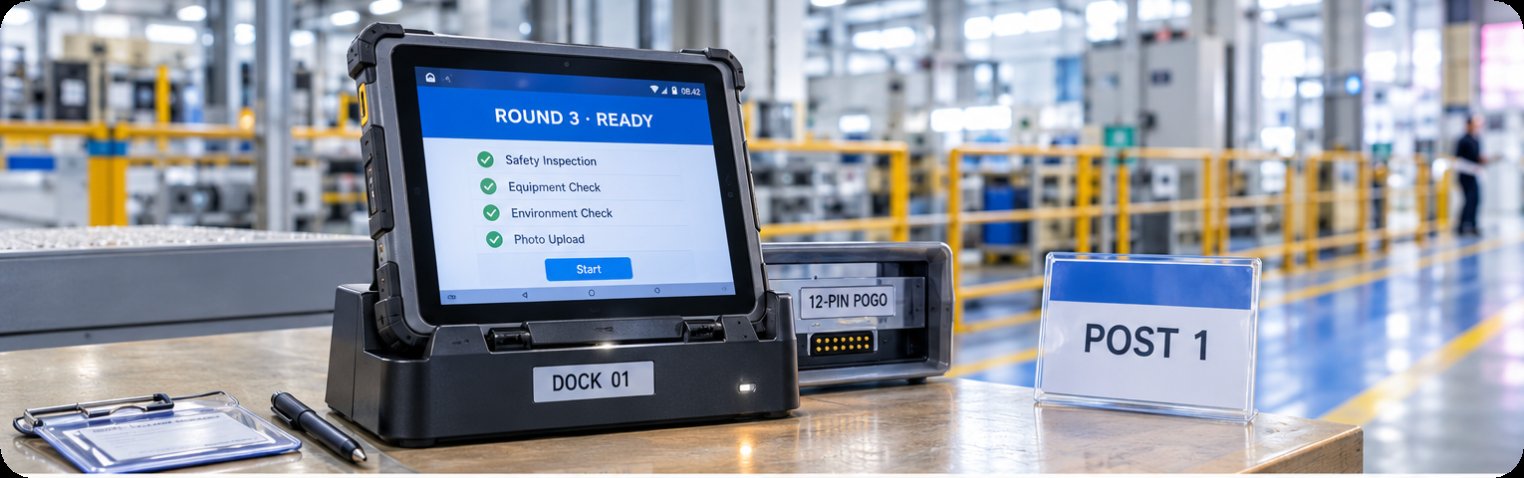
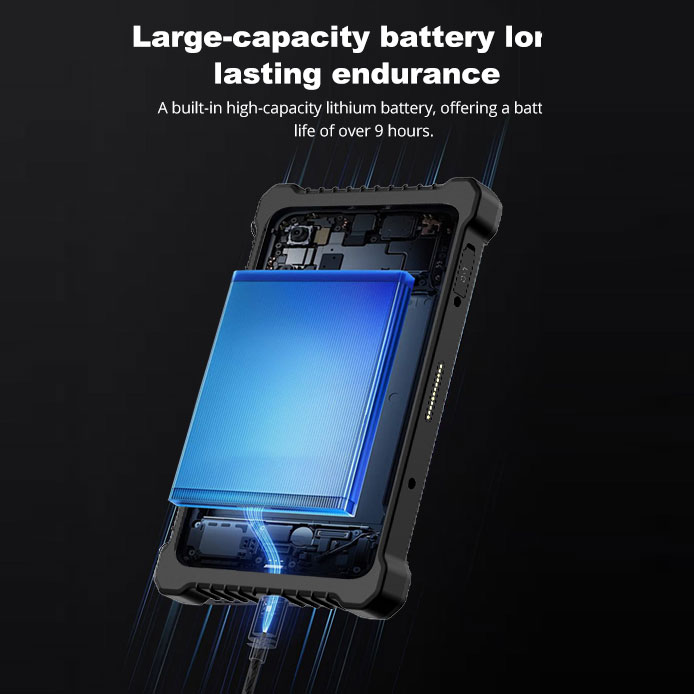
The handheld works the other way round. It carries a 4200mAh pack that is removable, and the page quotes a charge time under 1.5 hours on fast charging. Its overnight home is not a dock but a drawer of charged cells, because swapping a battery takes seconds where charging one does not. The design intent is legible from the parts list: the two tablets are mounted, and the PDA is fed.
Three adapters, three separate drawers. The HTQ10A asks for DC 12V at 3A and holds a 7000mAh cell that is sealed into the body, so its charging happens where the unit sits. The HTYJ10A takes DC 19V at 3.42A on a 3500mAh pack at 7.6V, a higher-voltage feed that will not run from the tablet's own lead. The N60 charges over USB Type-C and publishes a working time above 12 hours against a standby figure above 350 hours.
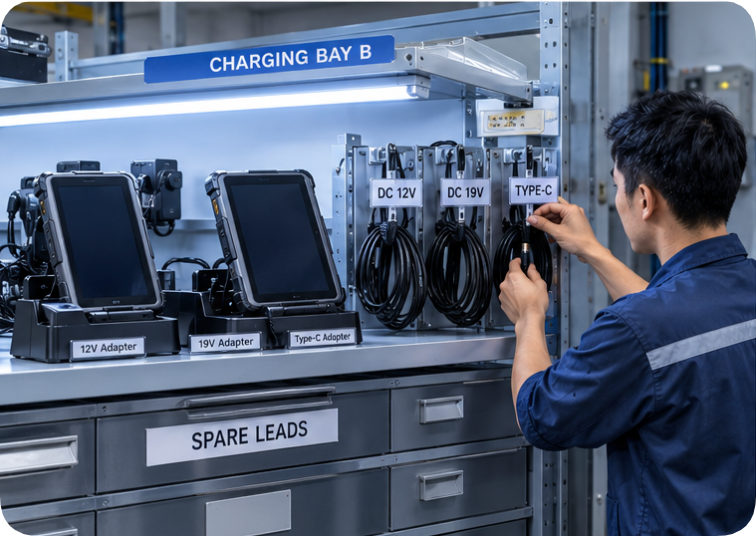
Read that as a stores problem rather than a technical one. A site running all three needs a labelled lead for each voltage, and the lead cannot be borrowed across units. The sealed 7000mAh cell buys the longest single-shift margin but cannot be swapped mid-round. The removable 4200mAh cell buys the fastest recovery but expects a discipline of putting the flat one back on charge the moment it comes out.
This is the row that decides the cabling budget. The HTYJ10A publishes an RJ45 port alongside WIFI6 and Bluetooth 5, which means a fixed post can be wired and stay online even when the plant wireless is saturated or barred. It is the only one of the three with a copper option, and a fitting-out drawing should show a data point at its position.
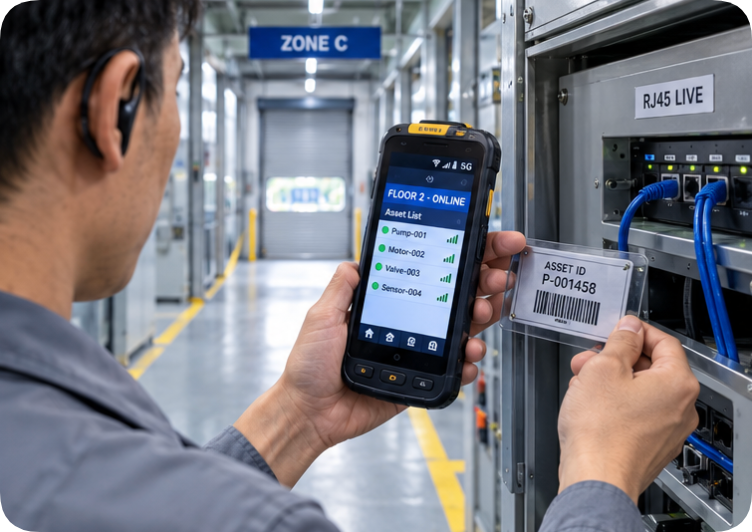
The HTQ10A carries WIFI5 and Bluetooth 4.2 with no wired fallback, so its coverage has to be proven before the round is handed over. The N60 goes the other direction entirely: 5G, 4G, 3G and 2G on two SIM slots, dual-band 2.4GHz and 5GHz wireless, and satellite positioning on four constellations. In a plant with no guest network and no spare data point, the handheld is the one that still reports from the far end of the floor.
The N60 carries two readers that a commissioning walk should be asked to demonstrate. The first is an optional two-dimensional imager built on a Honeywell N6703 engine, reading the composite and matrix codes a plant prints on asset plates rather than the simple linear barcodes a supplier might assume. The second is an optional 13.56MHz NFC module following ISO14443A/B and 15693, quoted at a read distance between 2cm and 5cm.
That second figure is the one to test on site. A two-centimetre floor means the tag has to be approached deliberately, which is a feature rather than a fault on an inspection route: it stops a reader from collecting the neighbouring asset by accident. Both are listed as optional, so both belong on the order sheet next to the dock.
The dimensions are the practical constraint, because a dock footprint and a cable run both come from them. The 10-inch tablets sit at 284mm wide, with the lighter unit 15mm thick and the Intel machine 25mm, while the handheld is a 164.5mm body at 12.3mm. Display brightness is quoted at 560 nits on both tablets, against 1080x2160 on the 5.99-inch handheld panel.
| Item | HTQ10A | HTYJ10A | N60 |
|---|---|---|---|
| Display | 10in LCD, 1920x1200, 560 nit | 10in LCD, 1200x1920, 560 nit | 5.99in IPS, 1080x2160 |
| Processor | MTK8788, 8 cores, 2.0GHz | Intel Core 10th Gen i5-10210Y or i7-10510Y | Cortex-A76/A53 octa-core, 2.0GHz |
| Operating system | Android 12 | Not published | Android 10.0 |
| Memory | 8GB RAM, 128GB storage | Not published | 4GB RAM, 64GB storage (6GB and 128GB optional) |
| Battery | 3.8V, 7000mAh, sealed | 7.6V, 3500mAh | 3.8V, 4200mAh, removable |
| Charger output | DC 12V, 3A | DC 19V, 3.42A | USB Type-C, under 1.5 hours |
| Sealing and drop | IP67, 1.22m drop | IP67, 1.22m drop | Not published |
| Ports | Mini HD, USB, Type-C, DC IN, 12-pin POGO | Mini HDMI, Type A, Type-C, DC IN, RJ45, 12-pin POGO | Type-C with OTG |
| Body size | 284 x 175 x 15mm | 284 x 190 x 25mm | 164.5 x 79.4 x 12.3mm |
| Box weight | 1.7kg gross | 2.1kg gross | Not published |
Two differences in that table are documentation rather than hardware, and a fit-out team should ask about them rather than assume. Neither the operating system, the memory nor the sealing on the handheld appears on its published specification, while the two tablets leave the operating system and memory of the Intel model unstated. The two weights are gross box figures, so they describe what arrives on a pallet, not what sits on a dock.
All three pages end with the same line, and it is the most important one for a rollout. The optional column lists 4G, NFC, scanning, fingerprint reading and a charging dock. That means the mounting hardware, the wireless wide-area module and both short-range readers on the handheld arrive only when they were requested. A site that ordered on the strength of the headline figures will discover the gap during installation, not before it.
The safest approach is to write the commissioning plan first and the purchase order second. Name the post each unit occupies, name the voltage each post delivers, and name the reader each route depends on. Whatever remains unlisted is a decision that has already been made by omission.
Walk the installation before the first real round, with the units in their posts. Confirm the correct lead is at each post, because the three adapter outputs do not interchange. Confirm the dock arrived if it was ordered, and that the twelve-pin connector seats without force. Confirm the data point is live where the wired post was drawn. Confirm the SIM or the wireless coverage reaches the far end of the floor.
Then run one route in anger, with the asset reads the round will actually use, and watch where the units come back to. A shortlist of rugged tablets and industrial handhelds is the place to match each of the three shapes to a post before the order closes, and a set of side-by-side product comparisons settles the rows the specification tables leave unstated.