- Select Language
The R501 PDA combines a powerful MT6762 Octa-Core ...
RT82 5G Rugged Tablet | 10.1" FHD 400nit | Qu...
R366-S 5.5-inch Industrial PDA | Qualcomm Octa-cor...
Maintenance instructions: Store at room temperatur...
One Device, Dual Functions – A Projector and a Com...
The X501 Handheld PDA combines advanced barcode sc...
The F505 Handheld PDA is a compact, high-performan...
Remote support usually gets planned around bandwidth. The link is the part teams budget for — the hotspot, the tunnel, the uplink that has to survive a basement or a steel shed. The part that actually decides whether a call succeeds is simpler and much harder to buy: whether the person at the far end can read anything on the screen being held up to a camera.
Three Hotus rugged computers run Windows and are built for field work, and they arrive in three different sizes — a 6.5-inch handheld, a 10-inch tablet and a 13.3-inch tablet. This comparison is not about which one is fastest. It is about how many people can look at the same panel at the same moment, and what each of the three can therefore carry into a support call.
A support call moves through four stages: something fails, someone on site records it, someone off site recognises it, and a decision travels back. The recording stage is where most deployments quietly break. Teams running remote assistance and technical support at scale tend to find this out on the third or fourth call rather than on the first. A sealed unit can survive the drop, run in the cold and hold charge for a full shift, and still hand the far side an image in which the part number is too small or the panel is too dim to photograph. The device rarely fails. The gap between what the unit shows and what a camera can pass on is the thing that fails.
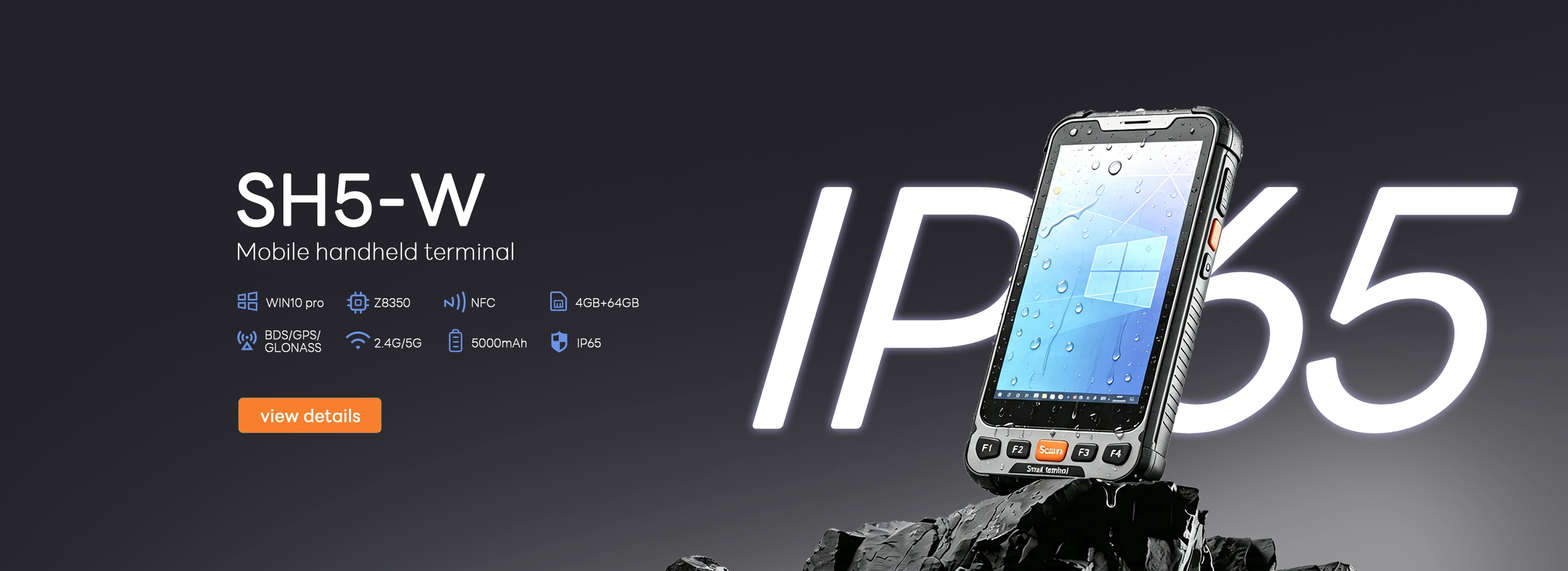
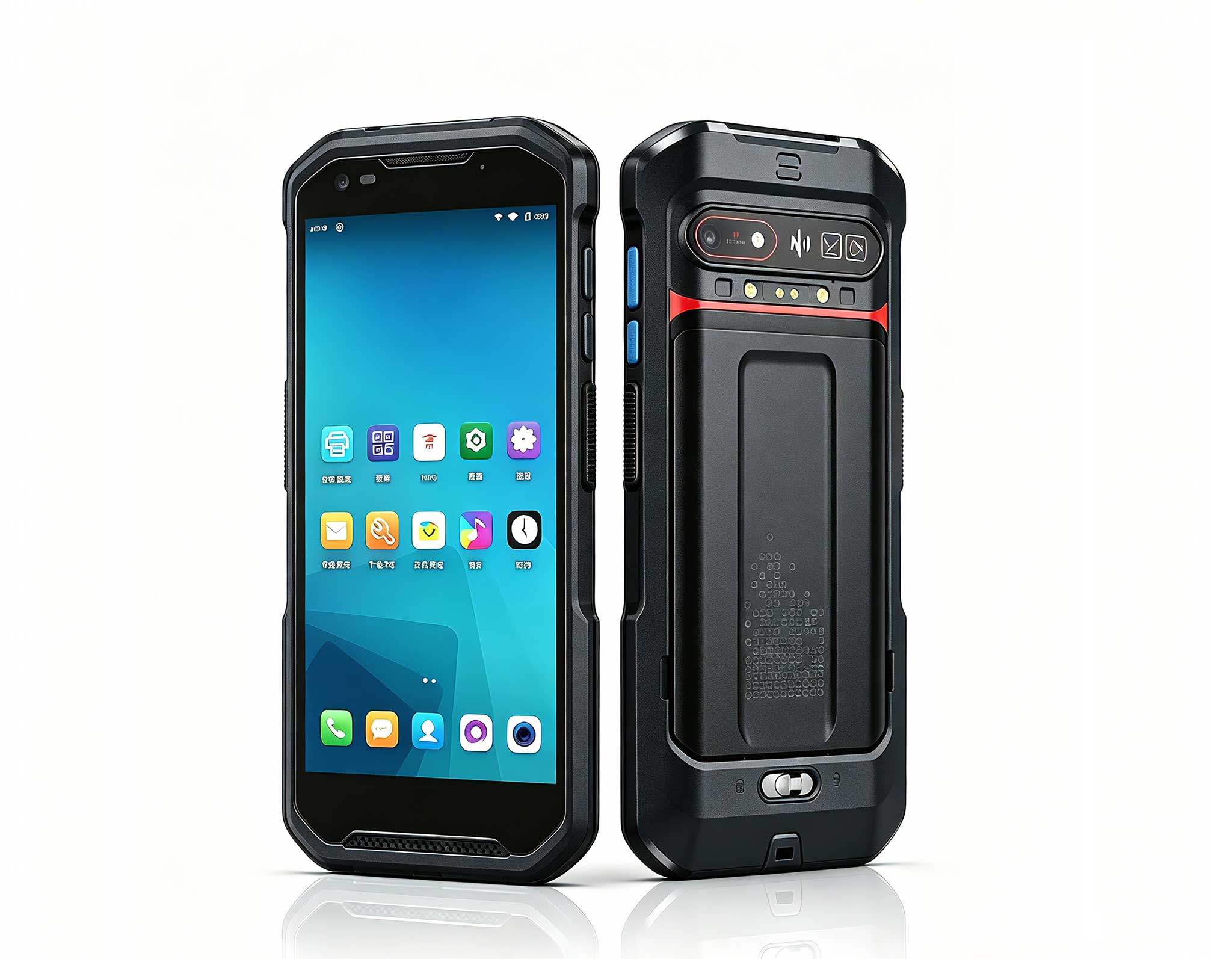
The Hotus SH6 is the smallest of the three, and its role in a call is to be the one that keeps moving. It carries a 6.5-inch HD+ panel at 380 nits behind a 10-point capacitive layer, driven by an Intel N100 quad-core processor with 8GB of memory and a 256GB drive. A 5000mAh battery at 7.6V is quoted at up to 4.5 hours, which is the honest figure for a body this size — the unit is 178.3 × 83 × 23mm and weighs 460±20g.
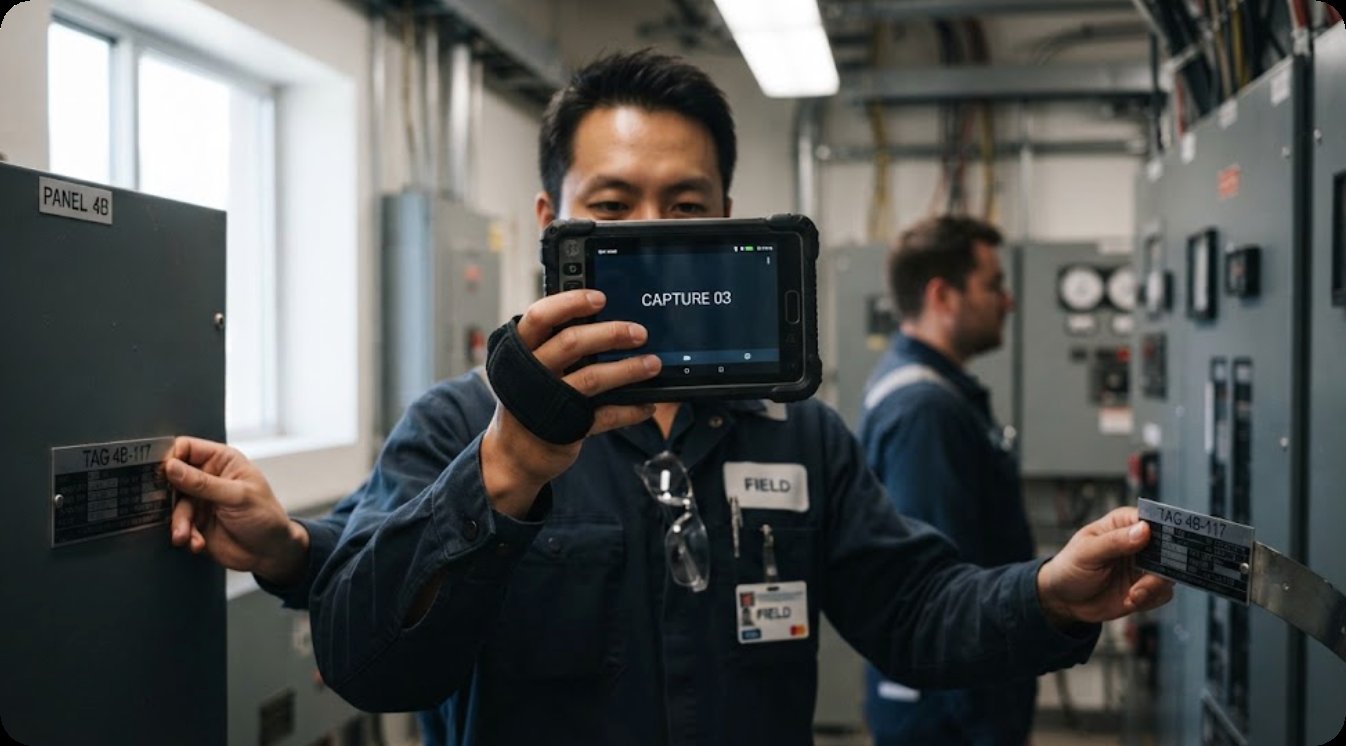
What makes it useful in a call is not the specification list but the fact that it fits one hand. A technician can hold it against a control cabinet, keep the other hand free for a meter or a spanner, and photograph a terminal block without setting anything down. The trade is that the panel serves one pair of eyes. Nobody else in that room can read it, so everything the far side learns has to arrive through the camera and the LTE link, and the accuracy of the call depends entirely on how steady that hand is. WiFi 6 and Bluetooth 5.2 handle the local side; 4G LTE on global bands handles the rest; GPS, BDS and GLONASS place the record on a map afterwards.
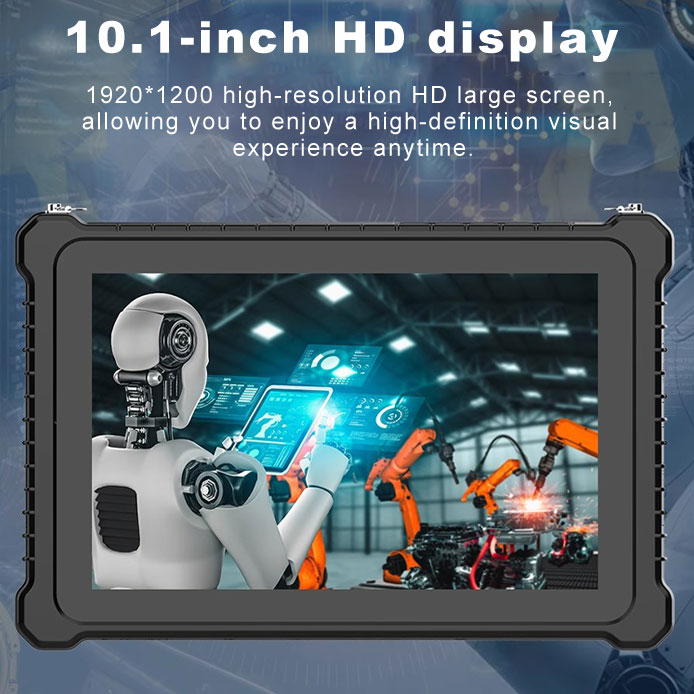
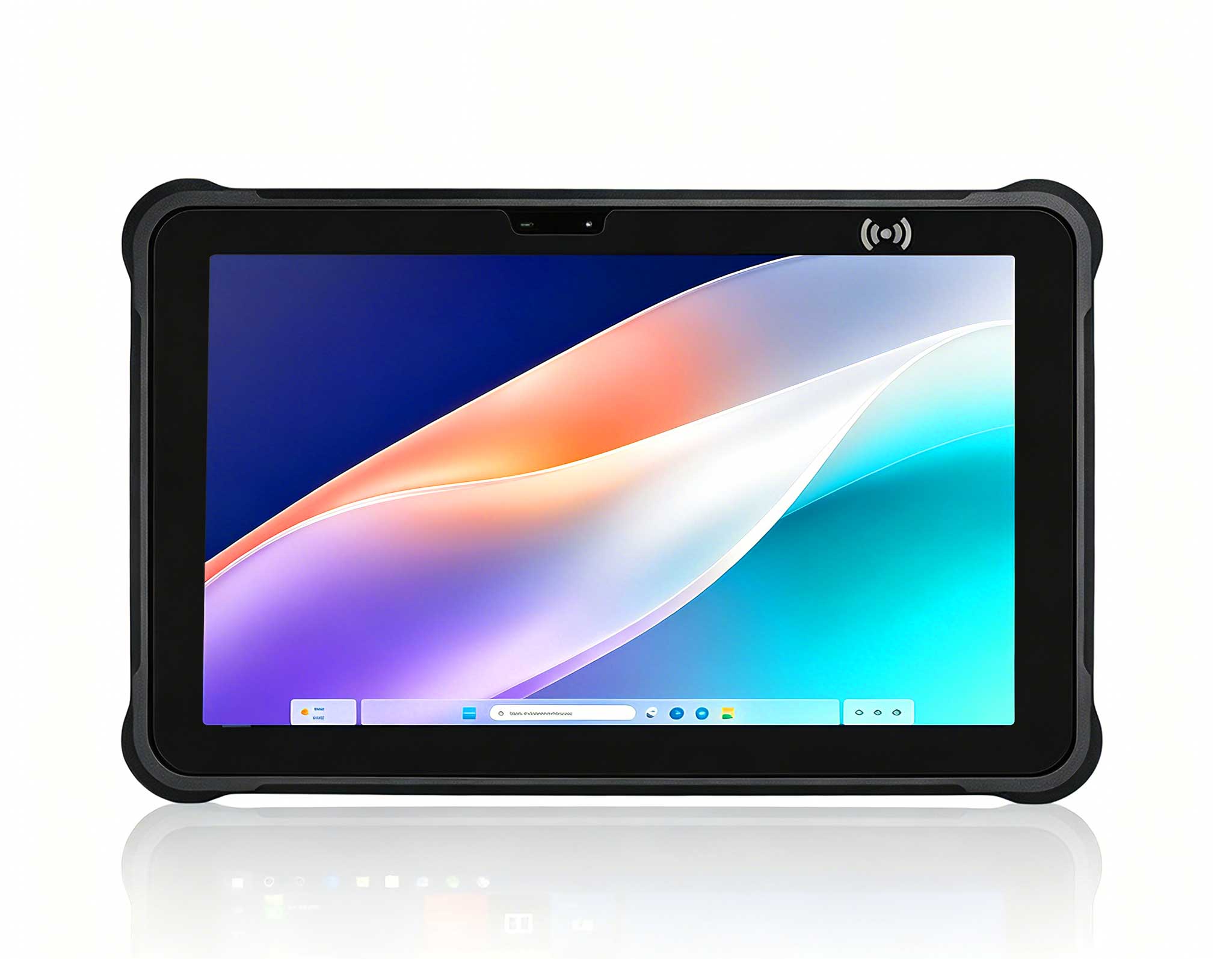
The 10-inch member of the set is the HTNJ10C, and it changes the shape of a call by being large enough to put down. Its LCD runs 1200 × 1920 at 560 nits — the brightest of the three — behind a 10-point capacitive layer rated at 7H hardness. Inside sits an Intel N100 with four cores and four threads at up to 3.4GHz, and the battery is 7.6V at 3500mAh.
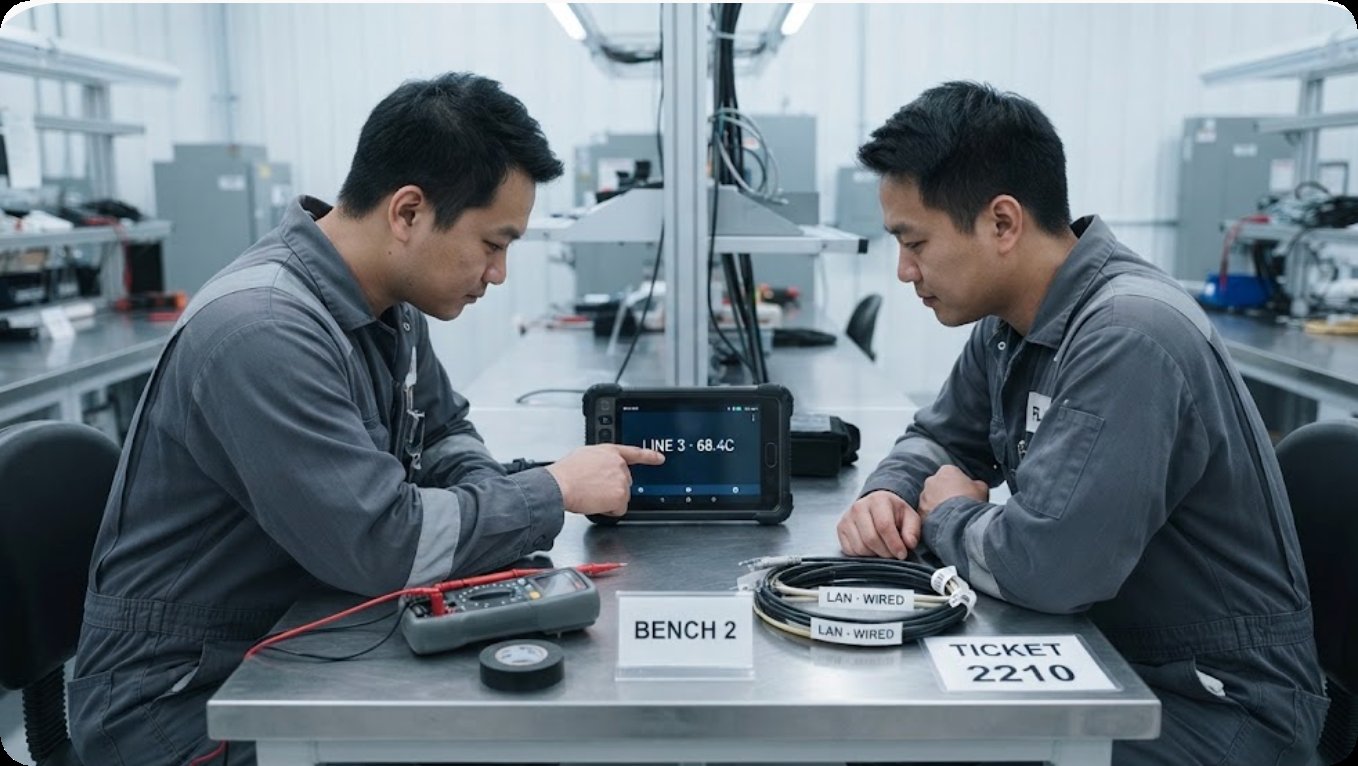
The interface row is where this unit separates itself for support work: audio, Mini HDMI, Type A, Type C, DC input, RJ45, TF, SIM and a 12-pin POGO connector. A wired network port on a rugged tablet is rare, and on a call it matters, because a unit that can be plugged into the plant network is no longer dependent on the same cellular signal that may be the thing being diagnosed. Sealing is IP67 with 1.22m drop resistance, the strongest of the three, and the chassis measures 284 × 190 × 25mm. Placed on a bench between two people, a 10-inch panel at this brightness can be read by both without leaning in, which turns a one-way report into a conversation on site.
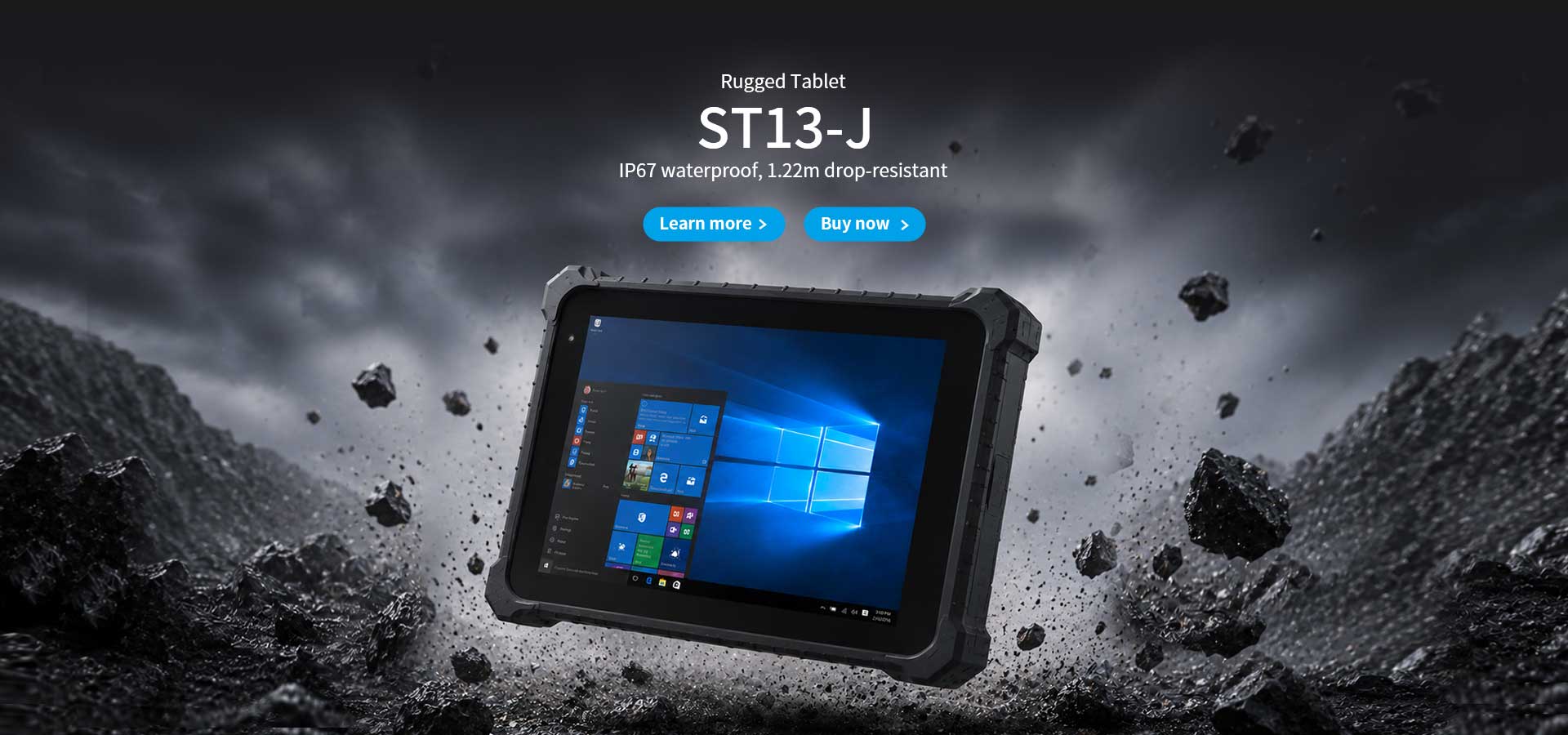
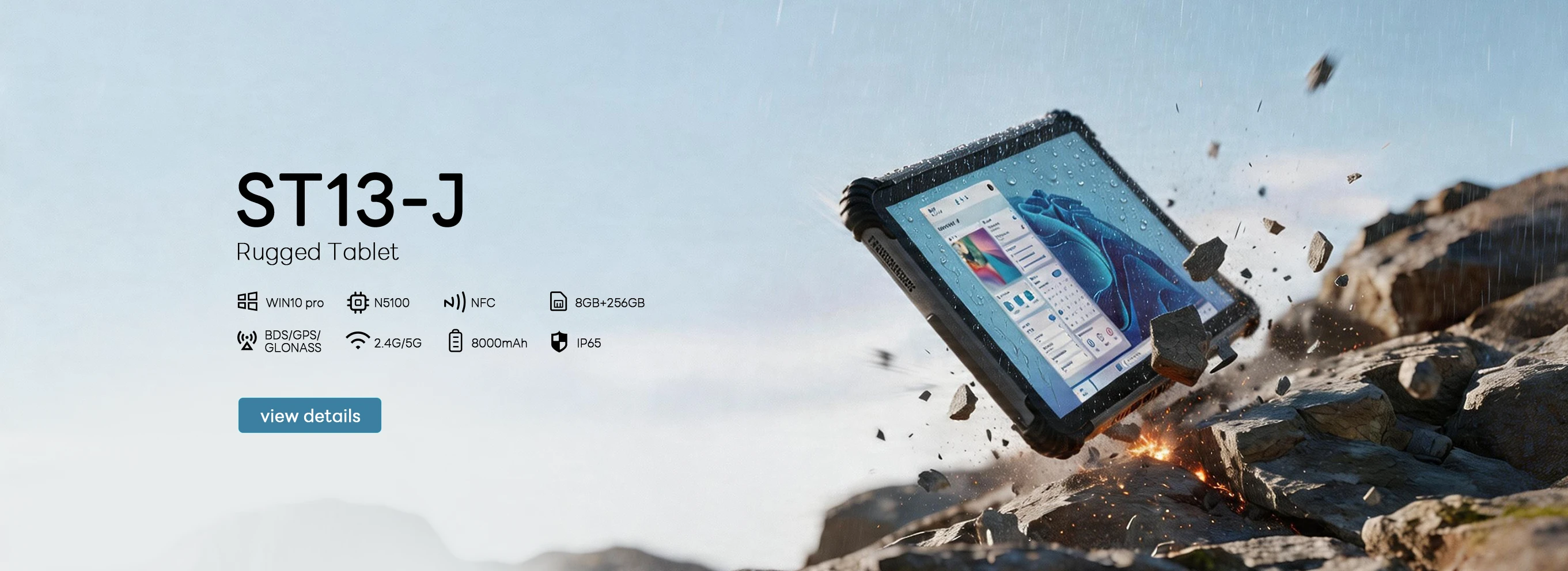
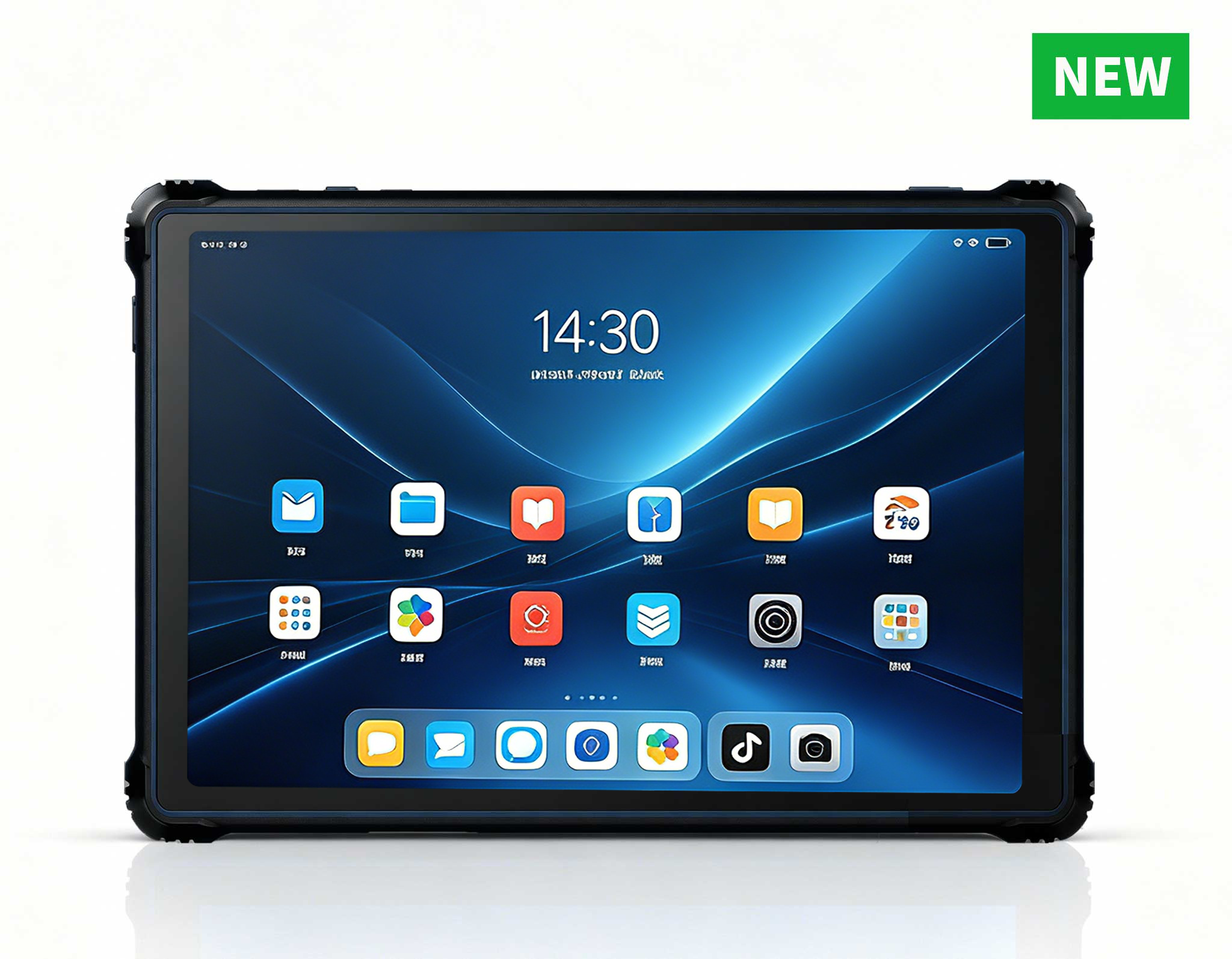
The third unit is the ST13-J, a 13.3-inch tablet that is not meant to be carried through a call so much as to be waiting at one end of it. The IPS panel runs 1920 × 1080 in a quoted 260 or 400 nits, with a 10-point layer that accepts a stylus and a wet hand. An Intel Celeron N5100 quad-core sits behind 8GB of memory and a 256GB drive, and the 8000mAh battery at 7.6V is the largest in the set.
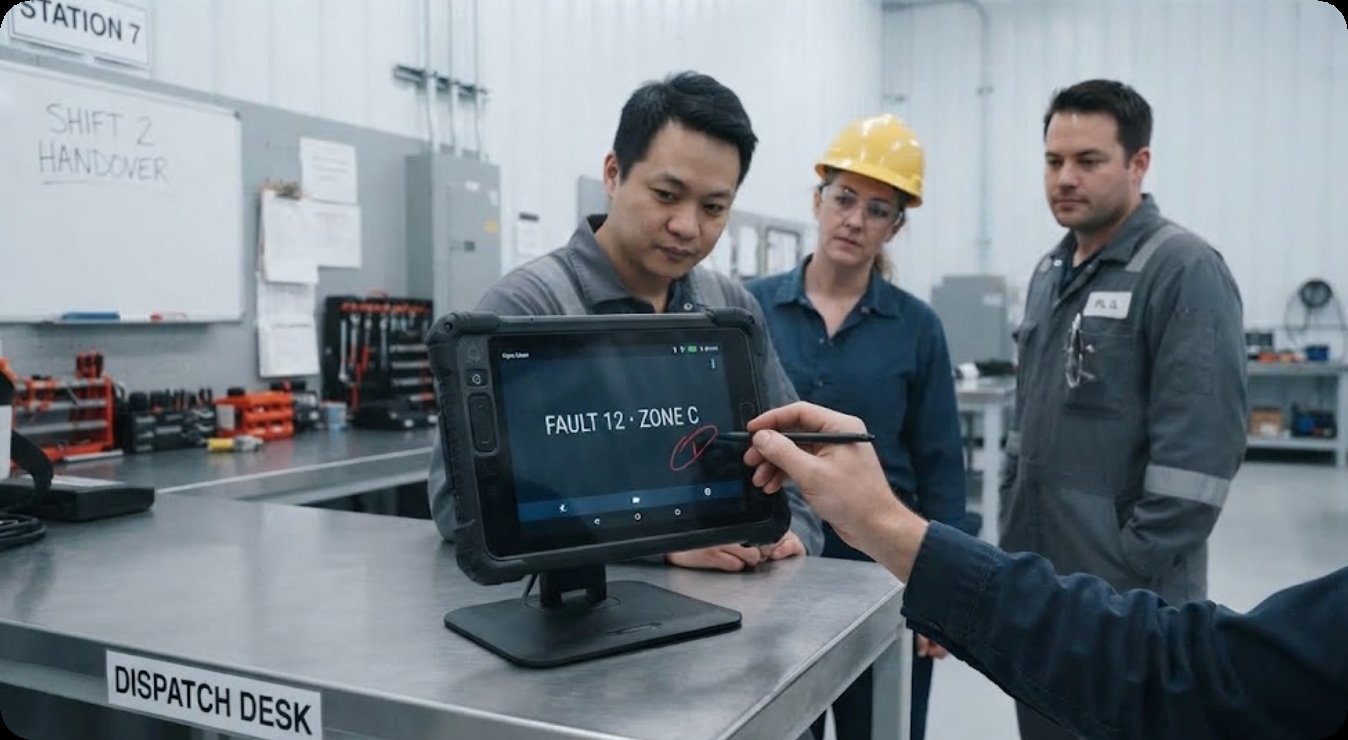
Pull that unit out of the comparison and two details stand apart. The first is the stylus-and-wet-hand support: annotating a drawing on the same surface the remote engineer is describing removes a whole round of verbal description. The second is TPM 2.0 as an option, which matters when the screen is showing plant data to a room rather than to one operator. Sealing is IP65 at 1.2m drop, the dimensions are 331.7 × 203.2 × 19.5mm, and the quoted weight is 1450±50g — light enough for a vehicle mount, heavy enough that it gets mounted rather than held. Its own datasheet points at vehicle-mounted command and dispatch, which is precisely the position it occupies in a support call: the far end of the link, where several people are looking at the same problem.
Line the three up and the useful boundary is not resolution or processor class. It is the distance at which a second person stops being able to read the panel. At 6.5 inches that distance is effectively zero — the holder is the only reader, and anyone else has to wait for the image to travel. At 10 inches and 560 nits, two people can share the screen on a bench with the unit flat and still pick out small text. At 13.3 inches the panel is large enough that a third person can follow along from behind a shoulder, which is what makes it work as a fixed point.
Reading a screen through a camera imposes its own requirements, and they are not the ones a datasheet is organised around. Brightness has to defeat whatever is behind the technician — a 380-nit handheld held toward a doorway and a 560-nit tablet lying on a bench are photographed very differently. Rear cameras matter more than front ones here: the rear modules across the set are quoted at 8MP on two units and 13MP on the largest, and it is the rear camera that photographs a nameplate, a meter face or a wiring loom. Positioning matters too, but only after the fact, when the record has to be tied to a place — two of the three list GPS, BDS and GLONASS, while the 10-inch unit does not publish a positioning figure.
| HTNJ10C | ST13-J | SH6 | |
|---|---|---|---|
| Panel | 10in LCD, 1200 x 1920, 560 nits | 13.3in IPS, 1920 x 1080, 260/400 nits | 6.5in HD+, 380 nits |
| Touch layer | 10-point capacitive, 7H | 10-point, stylus and wet hand | 10-point capacitive |
| Processor | Intel N100, 4 cores / 4 threads, 3.4GHz | Intel Celeron N5100, quad core | Intel N100, quad core |
| Memory and storage | Not published on the product page | 8GB / 256GB | 8GB / 256GB |
| Battery | 7.6V / 3500mAh | 7.6V / 8000mAh | 7.6V / 5000mAh |
| Wireless | WiFi 6, BT 5 | WiFi 5, BT 4.2, 4G LTE | WiFi 6, BT 5.2, 4G LTE |
| Cameras | 5MP front, 8MP rear | 5MP front, 13MP rear | 5MP front, 8MP rear |
| Sealing and drop | IP67, 1.22m | IP65, 1.2m | IP65, 1.2m |
| Chassis | 284 x 190 x 25mm | 331.7 x 203.2 x 19.5mm | 178.3 x 83 x 23mm |
Two rows are deliberately absent. Weight is left out because the figures are not the same quantity: the 13.3-inch and 6.5-inch pages quote a bare unit at 1450±50g and 460±20g, while the 10-inch page publishes 2.1KG under a gross-weight label that includes the carton. Placing those side by side would mislead. The operating system is left out because the 10-inch page does not state one, and it is not something to be inferred from the processor, even where that inference would be reasonable.
The published memory figures also carry a caveat. The 10-inch unit lists 8GB/256GB as a supplier option rather than a shipping figure, so a buyer comparing the three on storage alone is comparing two datasheets and one configuration list.
The practical sequence runs backwards from how most buyers approach it. Decide who has to see the screen — one person moving, two people at a bench, or a group at a fixed point — and the panel size follows. Only then does the question of which processor, which battery and which sealing rating become worth arguing about. Across this set, that single decision already points at the answer: the handheld for the technician who is walking, the brightest of the three for the bench, and the largest for the room that ends up watching. Hotus builds its rugged mobile computing solutions across all three formats, and the full set of side-by-side write-ups sits under product comparisons and competitor analysis for anyone still weighing a fourth option.