- Select Language
P11 Series Next-Gen Enterprise Rugged Industrial ...
R350C 4-inch Industrial Handheld PDA | Qualcom...
RS50 5G Rugged Handheld Terminal | 6.3" FHD+ ...
R860-S 5.5-inch Industrial PDA with Thermal Printe...
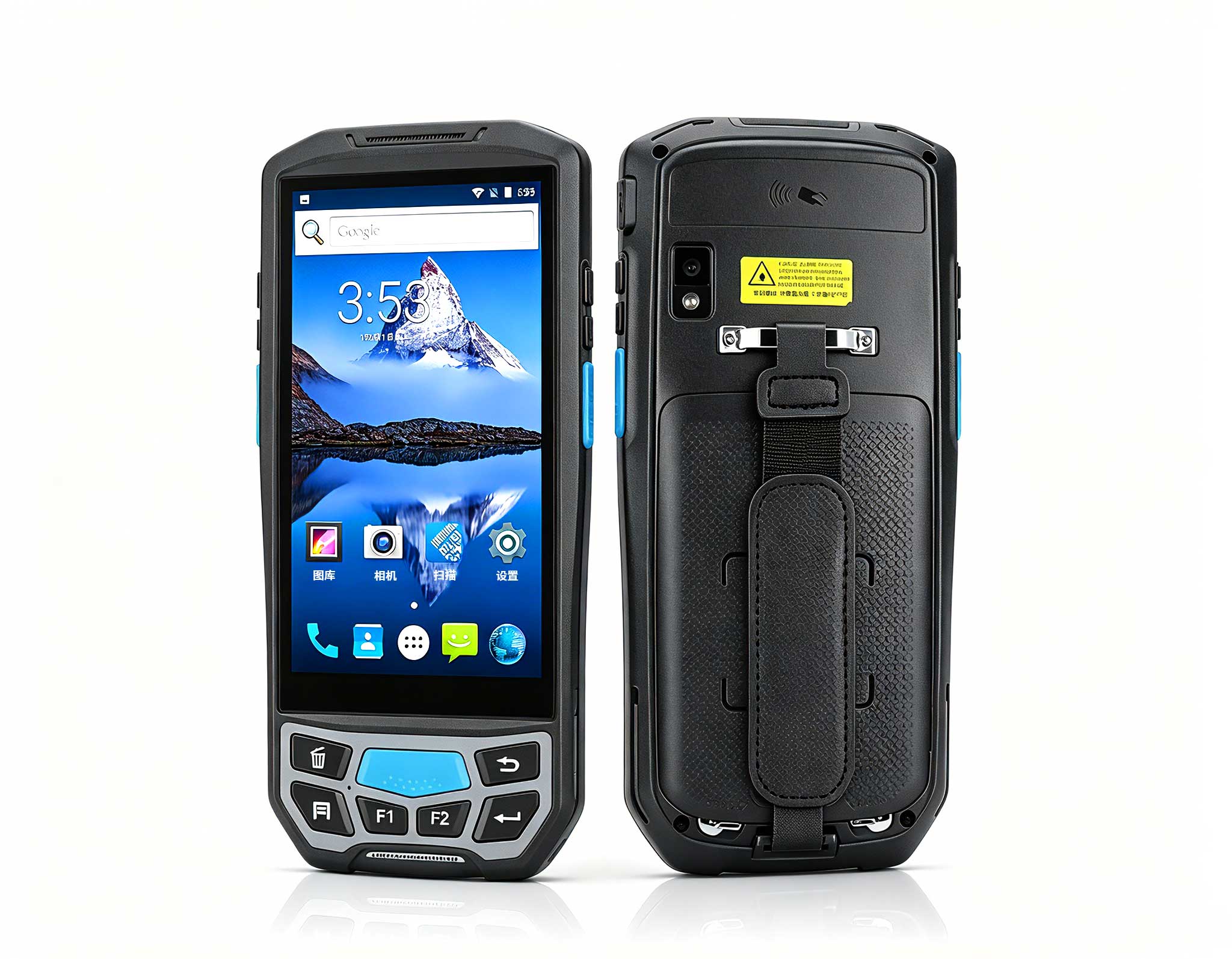
The U9000 handheld PDA combines advanced barcode s...
The PM133-2 is a 13.3-inch portable monitor featur...
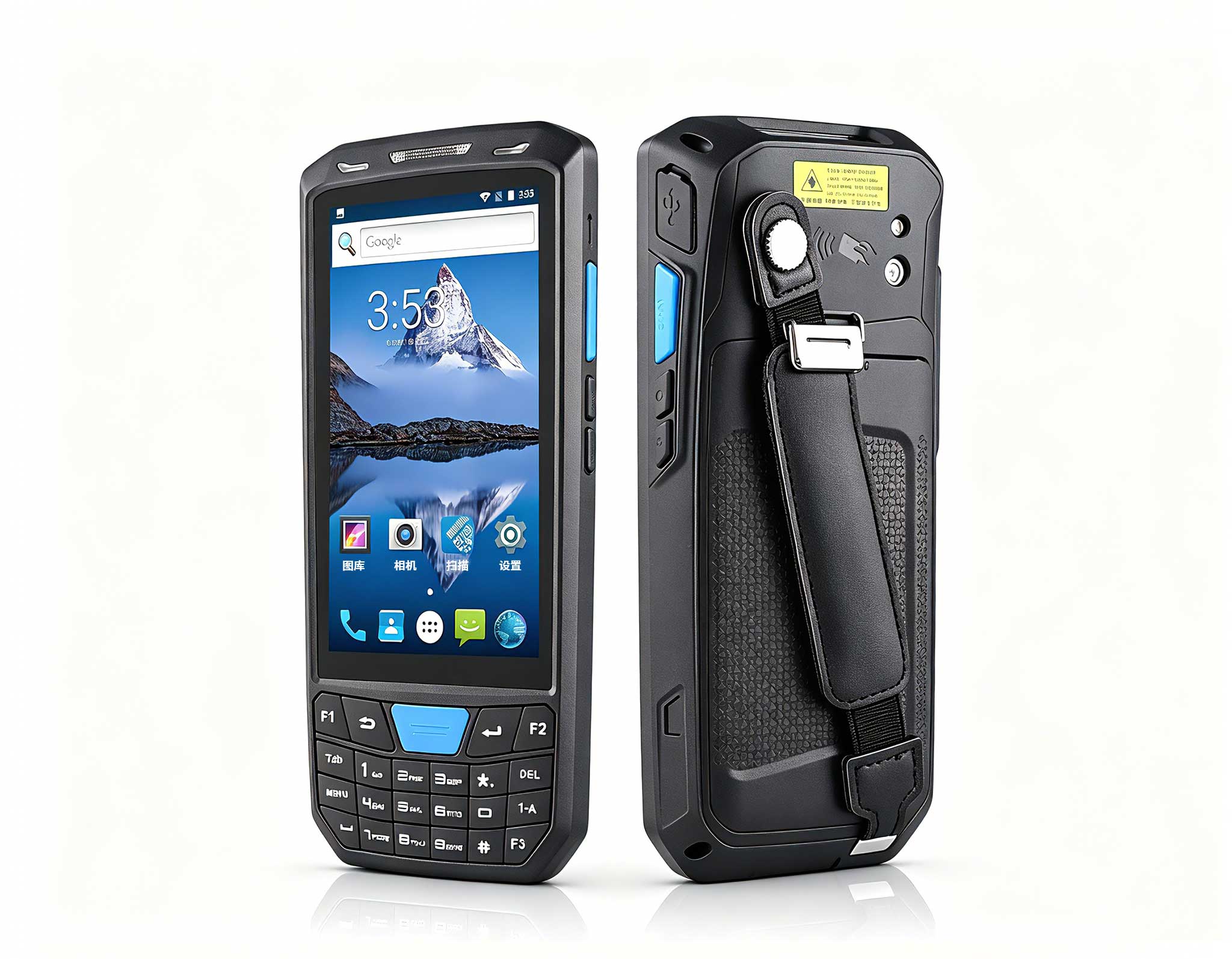
The T80 handheld PDA combines advanced barcode sca...
A completed inspection round leaves behind a single sheet, and on that sheet every figure looks equally trustworthy. A temperature sits beside a completion rate, a scan count sits beside a battery percentage, and nobody reading it three weeks later can tell which of those numbers a machine produced on its own and which one a tired person typed at the end of a shift. The confusion is not caused by bad hardware. It is caused by four different sources of measurement being printed in the same column.
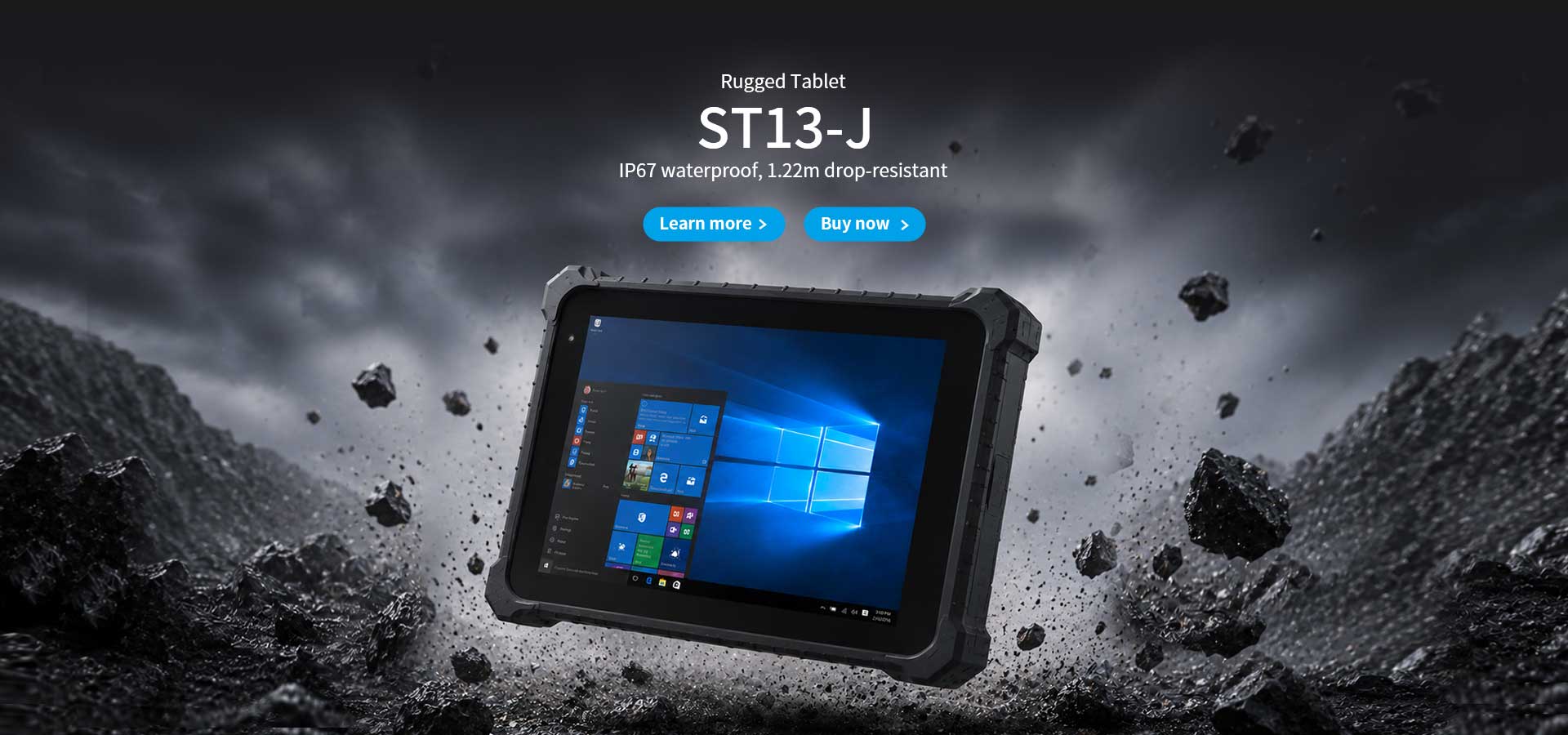
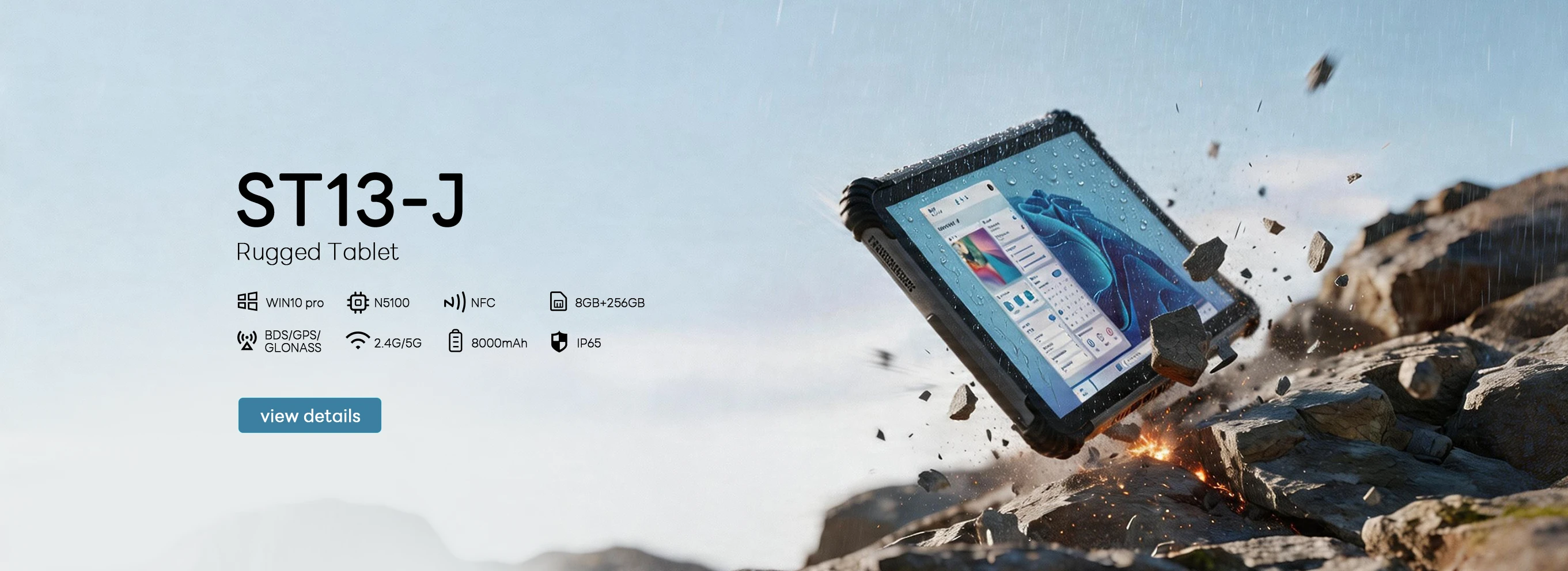
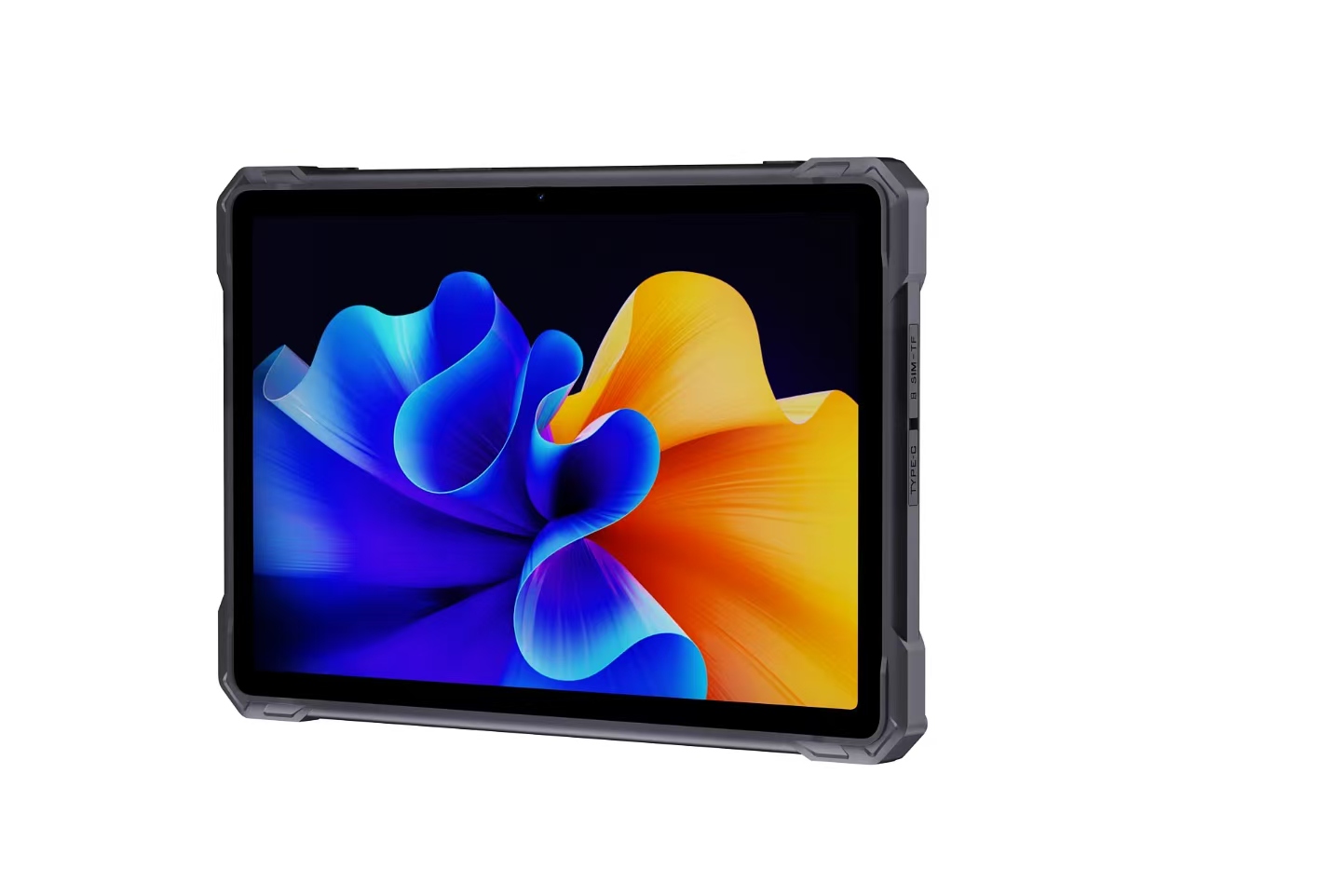
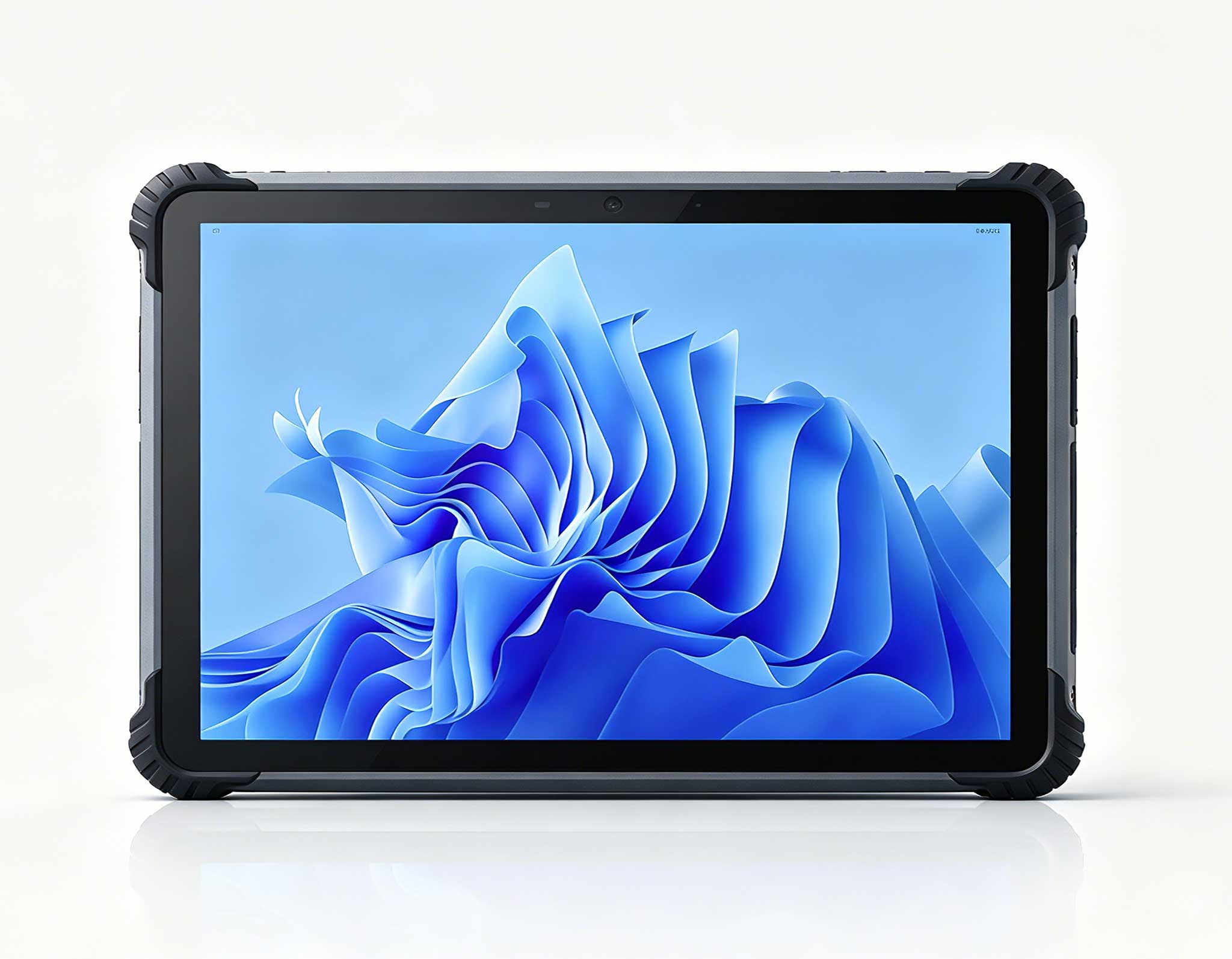
The three tablets here make that separation easy to see, because they differ in exactly the ways that decide who ends up holding the pen. An eight-inch unit stays in one hand while the other hand works. A ten-inch unit needs two hands or a trolley, which changes how often anyone stops to record anything. The third shares the same ten-inch frame but carries a different processor, which matters for how much of the round is logged automatically. For the plant-floor deployments these units sit in, the practical starting point is factory inspection applications rather than a specification table.
A workbench run happens in one place, at one temperature, with a known power source and nobody interrupting. A walk-through happens across several halls, some of them warm, some of them loud, with a device that spends the whole time being carried or set down on whatever surface is free. The same hardware produces two sets of figures under those conditions, and the gap between them is not an error. It is the measurement telling you which environment it came from.
Anyone comparing a published figure against what their own round produced should first ask where that figure was taken. If the answer is a bench, it describes the hardware. If the answer is a hall, it describes the shift. Both are useful, but a purchasing decision made on one while expecting the other will not survive the first quarter of use.
Some numbers appear on a device whether or not anyone is in the mood to write them down. A battery at 7.6V with 3500mAh has a discharge curve that the unit tracks continuously, and the remaining capacity at the end of a round is recorded even if the inspector forgets the device in a locker. Screen-on duration accumulates the same way. Neither figure needs a decision from the person carrying the unit.
This layer is the cheapest to trust and the easiest to defend afterwards, because nothing human touched it. That layer also tells you most about wear. A pack that used to finish a full round with headroom and now finishes with nothing left is reporting degradation before any maintenance ticket exists. That is a reading worth keeping even when nobody asked for it.
The second layer exists only because a person chose to act. Scans are the clearest case: a unit with an optional scan module and a 12-pin POGO connector can read a barcode or a tag, but it reads nothing while it stays in the hand. Photographs behind the camera pair, a 500W front sensor and an 800W rear sensor with autofocus, are the same story. The device is capable at any moment; the record only exists at the moment someone presses the shutter.
This is where an inspection log starts to diverge from reality, and it diverges quietly. A skipped scan does not raise an error. It simply leaves a gap that looks identical to a checkpoint that was never scheduled. The count at the end of the round is complete in form and incomplete in substance. The only defence is to make the action cost almost nothing to perform, which is why the eight-inch frame holds its value against its larger relatives.
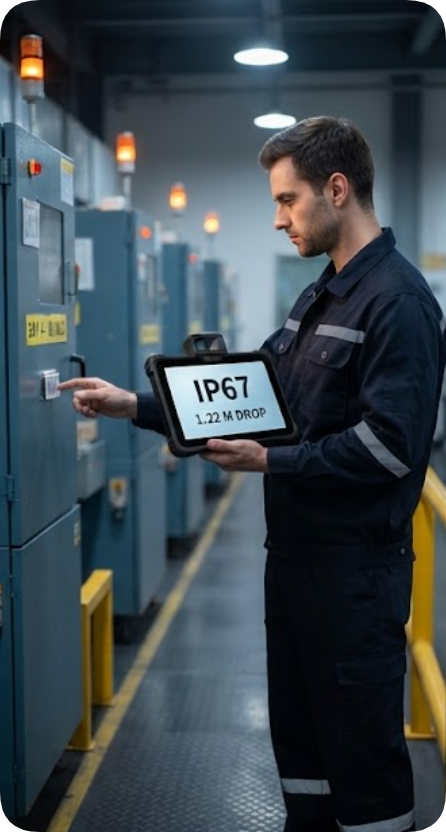
The third layer is produced by the building rather than by the tablet or the operator. A 560-nit panel with 1200 by 1920 resolution reads cleanly at a desk and struggles at the mouth of a furnace bay in the middle of the afternoon. The same logic applies to the radio: WIFI6 and BT5 hold well in an office corridor, and behave differently in a hall full of steel racking and running conveyors. None of these figures can be improved on the day.
Environmental readings are the ones most often mistaken for hardware faults. A unit that reports poorly is usually measuring an environment that no tablet would report well. An IP67 body rated to survive a 1.22-metre drop and a wash-down hose is built for that environment, and part of its job is to make the difference between a bad site and a bad device visible before the next round starts.
The eight-inch unit measures 23.8 by 16 by 2.5 centimetres at 1.8 kilograms, and the two ten-inch units measure 28.4 by 19 by 2.5 centimetres at 2.1 kilograms. The three hundred grams and the two extra inches of diagonal are not a rounding difference once a round lasts several hours. One hand free or two hands busy is the whole question, and it decides how many of the second-layer readings actually get captured.
The decision between the two larger units is narrower and easier to get wrong, because their published figures match almost line for line. Both carry the 10-inch 1200 by 1920 panel at 560 nits, the 7.6V 3500mAh pack, the same 12-pin POGO connector and the same IP67 rating. The HTYJ08A and the HTYJ10A run a tenth-generation Core i5 or i7, while the HTNJ10C runs an N100 at 3.4GHz. If the workload is forms and photographs, that gap rarely shows. If it is on-device analysis of images taken at the panel, it will.
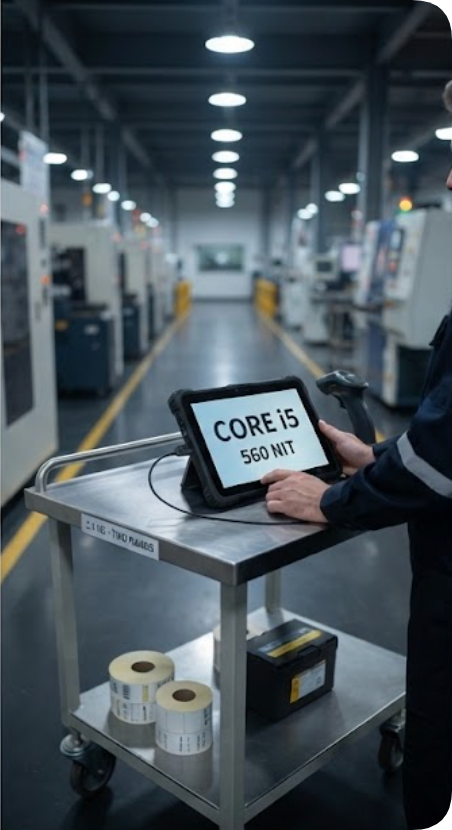
Four figures travel well, because each belongs to one source and cannot be confused with another. Anything outside this short list tends to arrive at the morning meeting as a mixture that has to be argued about rather than read.
| Reading | Source | HTYJ08A | HTYJ10A | HTNJ10C |
|---|---|---|---|---|
| Panel the round is read on | Environment | 8in LCD, 1200×1920, 560 nits | 10in LCD, 1200×1920, 560 nits | 10in LCD, 1200×1920, 560 nits |
| Mass carried for the whole round | Environment | 1.8 kg | 2.1 kg | 2.1 kg |
| Compute driving on-device work | Unit | Core i5-10210Y / i7-10510Y | Core i5-10210Y / i7-10510Y | Intel N100, 4 cores, 3.4GHz |
| Energy the round draws | Unit | 7.6V / 3500mAh | 7.6V / 3500mAh | 7.6V / 3500mAh |
| Scans and images captured | Operators | Optional scan module, 12-pin POGO | Optional scan module, 12-pin POGO | Optional scan module, 12-pin POGO |
| Condition the site has to survive | Site | IP67, 1.22 m drop | IP67, 1.22 m drop | IP67, 1.22 m drop |
The table is deliberately short. Every row names the party responsible for the figure, so a reading that looks wrong can be traced to the unit, to the shift or to the building without a second visit to the hall.
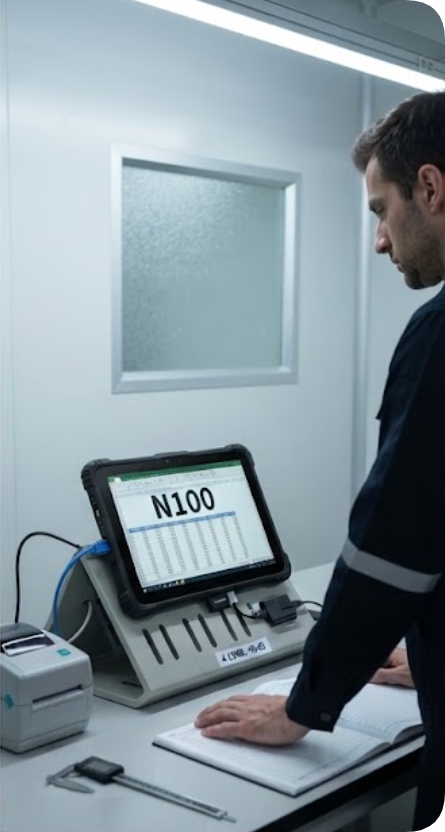
A single round produces a snapshot and nothing more. A second round produces something far more valuable, but only if it repeats the parts that can be repeated. The unit layer repeats on its own, since the pack discharges along the same curve and the screen accumulates time the same way. The hall layer repeats only if the round visits the same bays at roughly the same hour, which is a scheduling decision rather than a hardware one.
The operator layer is the one that needs help. A scan count only compares against a previous scan count if the checkpoints were the same, in the same order, with the same rule about what counts as complete. Write that rule once, keep it to a single page, and the second round becomes a comparison. Leave it implicit and the second round becomes a second snapshot, which is a very expensive way to learn nothing.
When a customer or a regulator asks how a batch was checked, the answer that holds up is not the most impressive number in the file. It is the one whose origin is obvious. A pack voltage that the unit wrote itself, a scan count that matches the checkpoint list, a panel brightness that was specified before the site was surveyed: each of these can be defended in one sentence, because nobody has to be asked what it meant at the time.
That is the reason to separate the four layers before the round begins rather than after the report is written. Choose the frame by how many hands it frees, choose the processor by what the round does with the images it captures, and decide in advance which columns belong to the building. The rugged mobile computing range covers all three shapes, and product comparisons and competitor analysis set out where the neighbouring models sit if a fourth option is worth pricing.