- Select Language
The F505 Handheld PDA is a compact, high-performan...
R366C-S 5.5-inch Industrial UHF RFID Reader | Qual...
RS51 4G Rugged Handheld Terminal | 6.3" FHD+ ...
R350C 4-inch Industrial Handheld PDA | Qualcom...
Most parking arguments start at a sign. A driver photographs the tariff board and claims the machine charged more than the number on the wall. Another parks across two stalls painted with the wheelchair symbol and says nobody told him the aisle rules. A third returns eleven minutes past the limit and finds a notice already under the wiper, insisting the extra ten minutes were never posted anywhere. Operators lose these arguments not because the rules are wrong but because nothing behind the sign can prove what actually happened. A deck that keeps the right record at the right station settles all three conversations in under a minute.
The equipment that produces those records usually sits in three places: a PC bolted under the counter in the booth, a console tablet at the attendant's window, and a terminal clipped to the patrol supervisor's belt. This guide treats the three stations as one compliance chain and matches each to a unit — the mini PC chosen as a parking booth business host, a ten-inch console tablet, and a positioning-grade handheld. The point is not owning more hardware; it is that every sign on the wall has a machine that can back it with a timestamp, a receipt line, or a coordinate.
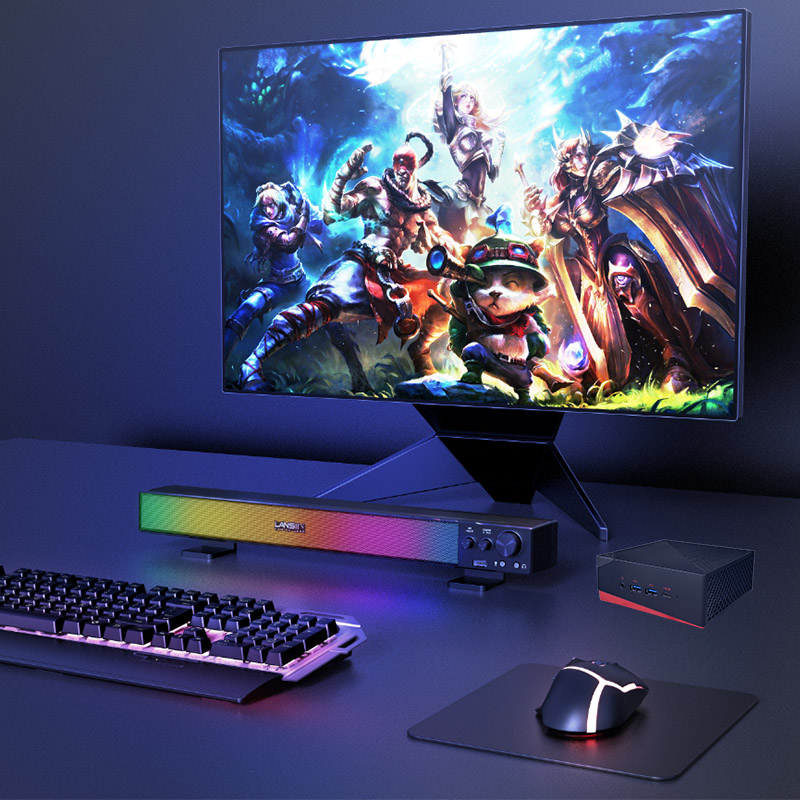
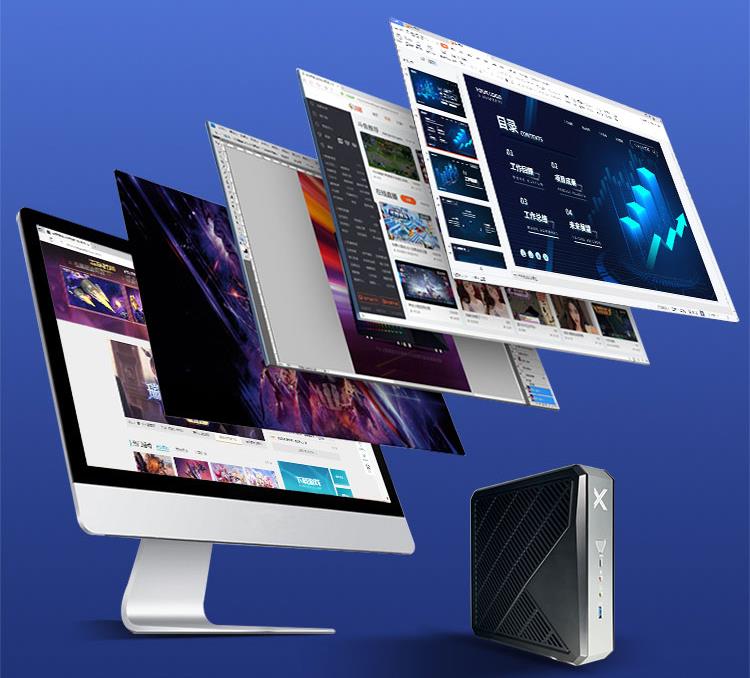
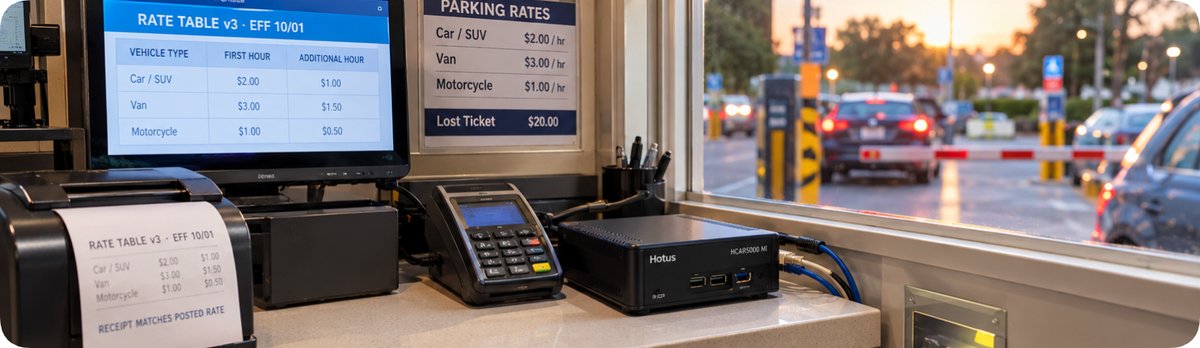
The first sign a deck owes its drivers is the tariff schedule itself: the hourly rate, the daily cap, the evening flat fee. What turns that sign into compliance is agreement — every printed receipt has to itemize charges against exactly the rates on the wall. The HCAR5000 MI mini PC takes this job at the booth. Its AMD Ryzen 5000H platform (5900HX, 5800H or 5600H) runs the rate engine and the receipt printer at once, with up to 64GB of DDR4-3200 memory and SSD storage up to 1TB, so the rate table, the transaction log and the printer spooler never compete for headroom during the evening rush.
The detail that makes it a compliance tool rather than a plain computer is versioning. When the operator files a new rate sheet effective the first of the month, the host stores the old table alongside the new one, tagged with its effective dates, so a January receipt can always be explained by the January rules. The port layout keeps the chain wired: RJ45 into the gate controller's switch, three USB 3.0 ports carrying the printer, the barcode scanner and the keypad, and DP 2.0b plus a video-capable Type-C driving the window-facing rate display. The 202×212×65mm chassis disappears under the counter, and at 2455g nobody ever moves it — which is exactly what a fixed station wants.
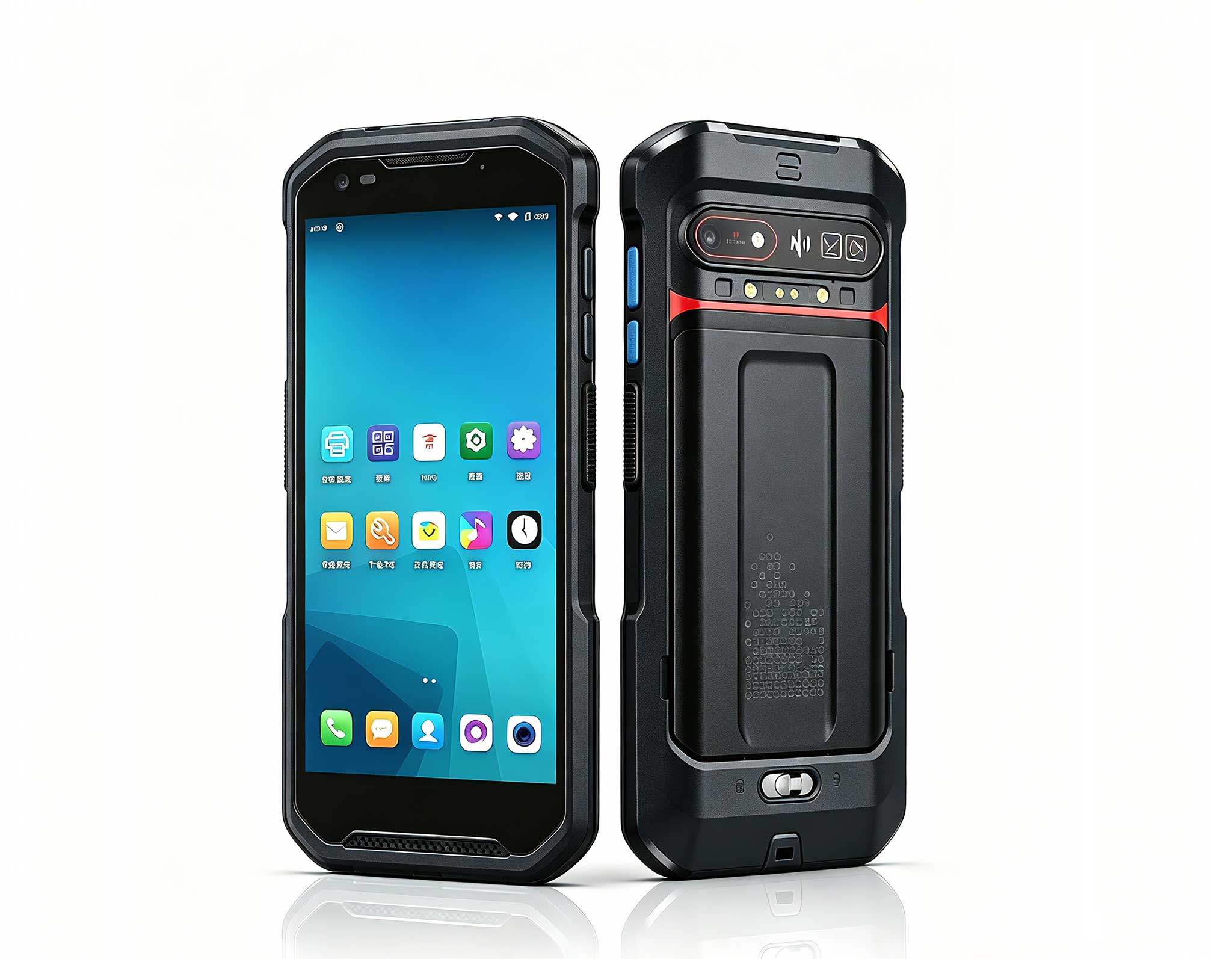
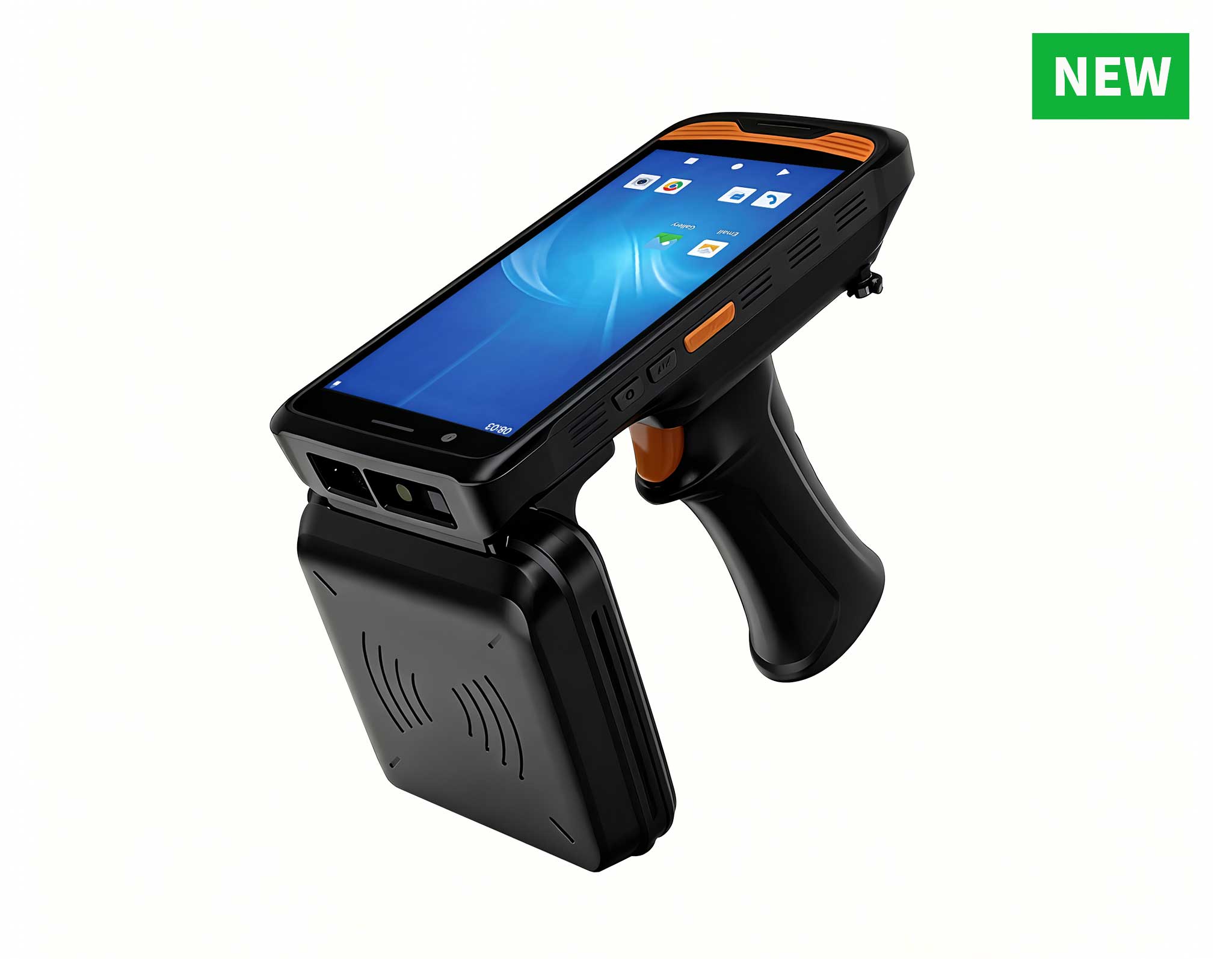
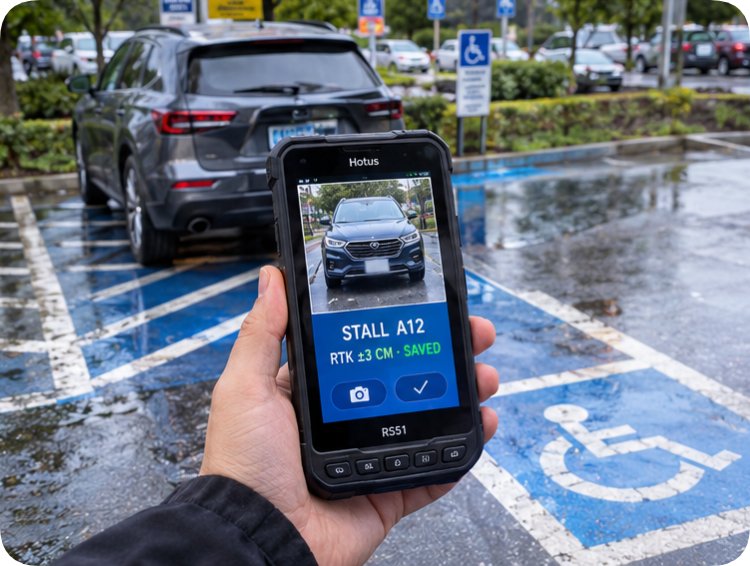
The second sign marks the stalls the law sets aside. Accessible parking rules typically fix both a minimum number of spaces and the painted access aisle beside them, and enforcement only holds up if the record can state precisely where the vehicle stood. The RS51 rugged handheld terminal earns this assignment on positioning alone: its optional independent Beidou module with RTK support reads horizontal accuracy of 2–5 centimeters without an external receiver, which is accurate enough to name the stall number, not just the row.
The rest of the kit supports the same record. The 16MP rear camera with LED flash captures the plate and the pavement markings in one frame, and the timestamp and coordinate attach to the file automatically rather than relying on the officer to note them later. IP67 sealing and a 1.2-meter drop rating survive curb-level work in the rain, and the detachable 5000mAh battery swaps hot, so a patrol loop that finds a violation at minute five of a shift does not stall at minute five hundred waiting for a charger.
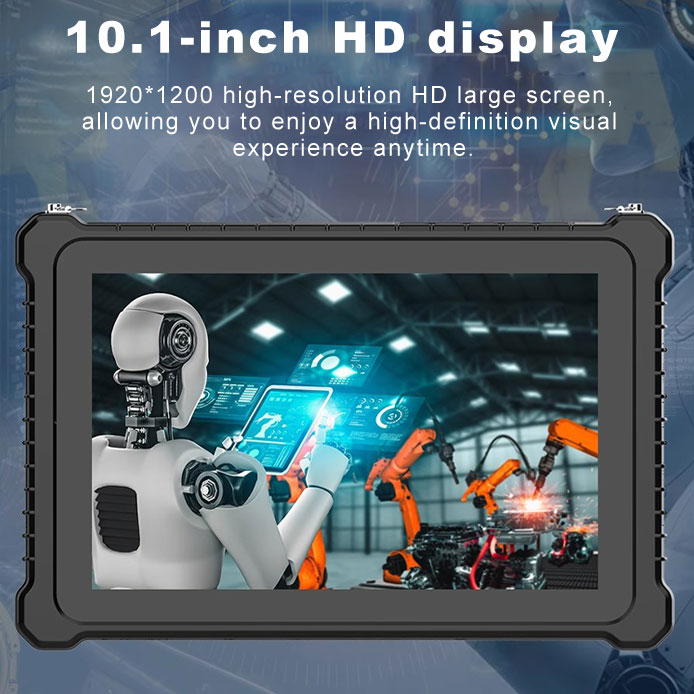
The third sign is the time limit, and it is unenforceable without an entry minute. The ST11-J rugged industrial tablet sits at the window as the attendant's console, tied to the entry records the booth host forwards. On its Intel N5100 quad-core (1.10GHz, turbo to 2.80GHz) with Windows 11 Pro, 8GB of RAM and 256GB of storage, the stay-length application computes elapsed time the moment a driver walks up, displays the minutes still inside the posted grace window, and marks the exact second a notice becomes issuable.
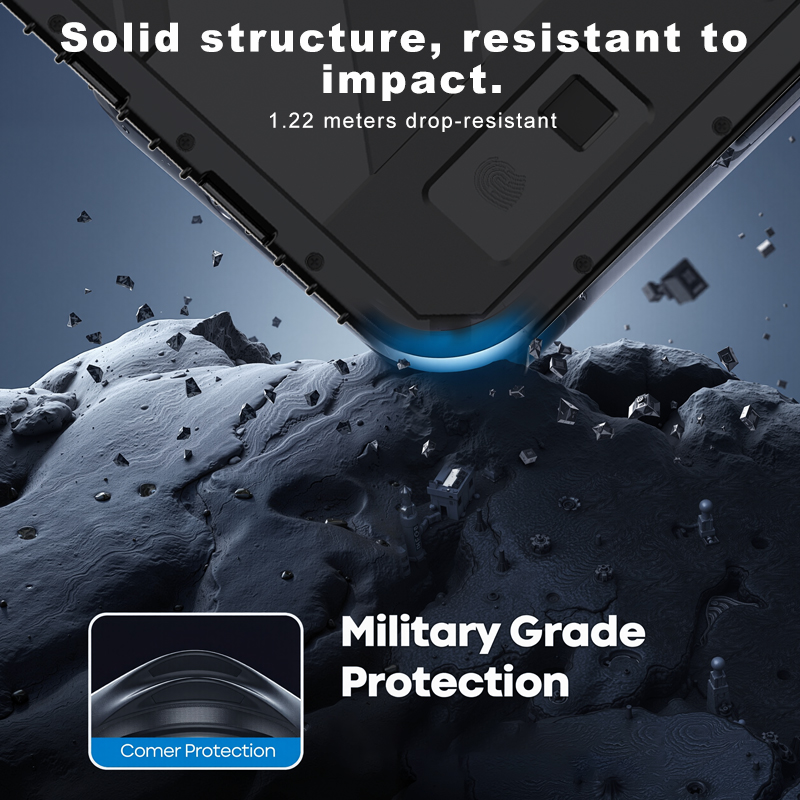
Booth conditions justify the chassis. The 10.1-inch IPS panel runs 1200×1920 at 450 nits, with a 1000-nit option for decks where the afternoon sun hits the window square on. IP65 sealing and MIL-STD-810G certification absorb the dust, the door slams and the occasional coffee, the 6000mAh 7.6V battery rides through power dips without rebooting the queue, and the 4G LTE module uploads the entry log the moment the wired link to the office is cut.
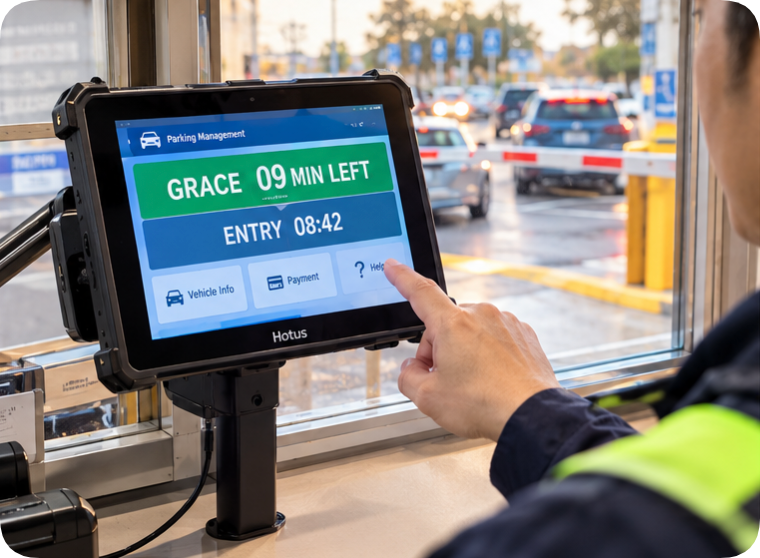
Annual or surprise inspections compress all three signs into a checklist, and the walkthrough goes faster when each line has a machine behind it. The tariff check asks for the current rate table and its effective date — the host exports both in one file. The stall check counts the accessible spaces and measures the aisle — the handheld's coordinate history shows every documented visit to those stalls for the past year. The time-limit check samples recent notices and compares them against entry minutes — the console produces the pairing in a single query. One attendant with the three units can walk a mid-size deck in an hour and leave with the checklist already filled.
Disputes are where the chain pays for itself. A driver contests an overcharge; the attendant pulls the receipt line items from the host and lays them beside the rate version that was effective that day. A driver contests a notice; the console supplies the entry minute and the grace arithmetic, and the handheld's photo shows whether the vehicle occupied the stall in question. If the three artifacts disagree, the fee is waived on the spot and the discrepancy is logged; if they agree, the driver usually sees it before the manager is called. Either way the outcome no longer depends on which employee happened to be on duty that afternoon.
Plate photographs are personal data, and keeping them forever is its own compliance failure. The working rule is a retention window tied to the dispute period: photos sync from the handheld to the booth host, sit in a folder accessible only to supervisor logins, and expire automatically once the window closes. The deck keeps the stall coordinates and the outcome codes long-term for planning, but the images themselves are treated as short-lived evidence rather than an archive.
The table below compresses the comparison for procurement teams balancing a booth retrofit against a patrol upgrade.
| HCAR5000 MI | ST11-J | RS51 | |
|---|---|---|---|
| Station | booth business host | window console | patrol terminal |
| Compute | AMD Ryzen 5000H (5900HX/5800H/5600H) | Intel N5100 quad-core, 1.10–2.80GHz | Qualcomm SM6225 octa-core 2.4GHz |
| OS | Windows 10/11, Linux | Windows 10/11 Pro | Android 13 |
| Memory | up to 64GB DDR4-3200, SSD/HDD | 8GB / 256GB | 4GB / 64GB, TF to 256GB |
| Display | drives booth monitor via DP 2.0b / Type-C | 10.1" 1200×1920, 450 nits (1000 opt.) | 6.3" 1080×2340 FHD+ |
| Protection | fixed under-counter placement | IP65, MIL-STD-810G | IP67, 1.2m drop |
| Power | mains, 2455g | 6000mAh / 7.6V | 5000mAh hot-swap |
| Positioning | RJ45 wired to gate LAN | 4G LTE, Wi-Fi/BT, NFC | 4G LTE, Beidou RTK 2–5cm, NFC opt. |
No column is a strict upgrade over another, because each station fails differently. The host never leaves the wall socket; the console never leaves the window; the handheld never gets a desk. Specifying one device to do all three jobs usually means the pocket unit carries a desktop workload or the booth PC inherits a battery problem nobody priced.
Deck operators rarely get the luxury of a closure for upgrades, and the three stations can be installed in sequence without shutting a lane. The host goes first, because its rate versions and transaction log start accruing value on day one even while the old console still runs beside it. The window console follows once the entry records flow; its 4G fallback means the cabling job does not have to be perfect before it goes live. The handheld joins last and needs no infrastructure at all beyond its charging cradle. A three-visit retrofit spreads the cost across quarters and keeps every gate arm moving throughout.
Whether a facility needs a single booth host or the full three-station chain, the Hotus product line spans the range from fixed mini PCs to IP67 handhelds. For teams still weighing these units against third-party alternatives, the published comparison notes put the specification differences side by side before the purchase order is drafted.