A courier depot rarely needs one scanner model in equal numbers across every post. The door where parcels arrive, the wall where they are sorted into routes, and the counter where exceptions get photographed all burn scanning hours at different rates, and paying the same hardware price for each seat is where depot budgets quietly leak. This breakdown walks through the Smart PDA N40, the K401 Handheld PDA and the R350C PDA as three cost layers inside one depot, using only the figures Hotus publishes on each courier and express logistics application page. Prices are not listed publicly, so the arithmetic below compares what each specification buys rather than quoting figures no page confirms.

💰 Three Devices, Three Cost Layers in One Depot
The N40 is the entry model of the three on paper, and its sheet explains why: a Cortex-A53 quad-core 2.0GHz processor, Android 10, and 2GB of RAM with 16GB of storage. The K401 sits at the capability top with an MT6769 octa-core chip, Android 13, 6GB plus 64GB, an integrated RFID reader and a 20MP rear camera. The R350C takes a third position entirely — a Qualcomm QCM2290 unit with a physical numeric keypad, built for operators who sort in gloves and cannot afford miskeys. Treating them as good-better-best misses the point; each one prices out a different job description.
Purchase Tier: What Each Price Bracket Actually Buys
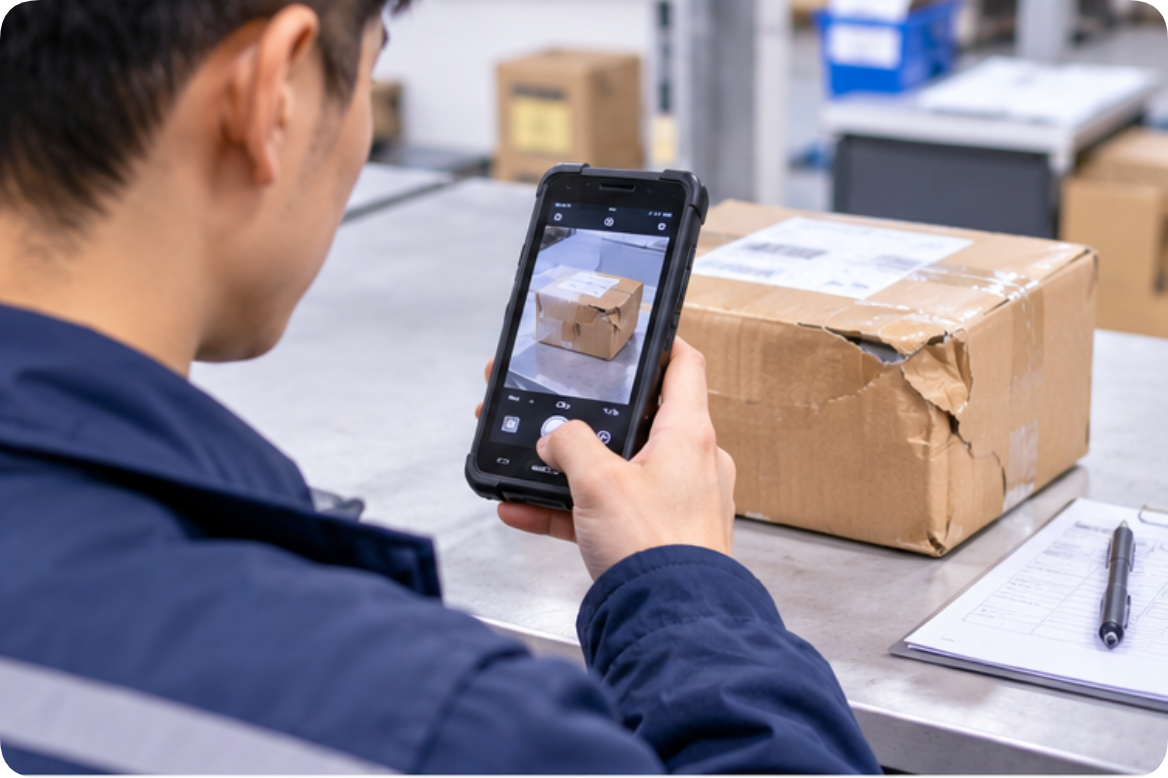
Per scan, the hardware only has to match the complexity of the scan. Arrival work is repetitive: one parcel, one barcode, next. The N40's optional 1D and 2D scanning module handles QR Code, Aztec Code and Data Matrix symbologies, which covers the label mix a depot actually receives. Where cost rises is capability the depot may never trigger — the K401's RFID reads tags that barcodes cannot, useful when a franchisee also runs asset audits, and its 20MP camera documents damaged parcels at the counter without issuing a second device to anyone. Buying RFID for a seat that only scans parcel labels is the classic overspend this two-tier split is designed to prevent.
🔋 The Battery Line: Removable Packs Stretch Every Purchase
All three terminals take removable batteries — 5200mAh on the K401, 4500mAh on the N40 and a 3.8V 4000mAh pack on the R350C — and that shared trait is the strongest cost lever in the depot. A sortable battery means the fleet outlives its cells: chargers and spare packs rotate through the charging dock while worn batteries are replaced individually instead of scrapping whole terminals. The N40's page adds published endurance figures of over 12 hours of working time and more than 350 hours on standby, which lets a depot plan a full shift on one pack and hold chargers at the desk rather than at every post. Shift change is where the arithmetic pays out: an afternoon crew swaps packs at the desk in under a minute and takes the same terminals the morning crew used, so a thirty-unit depot can run on thirty terminals and ten spare packs instead of buying a charging cradle for every seat.
💾 Storage and Data Plans: Where TF Slots Cut Monthly Fees
Monthly data plans are the quiet recurring line in a scanner budget. The N40 accepts a micro SD card up to 128GB and the R350C up to 256GB, so scan logs, photos and route manifests can stay on-device and sync on schedule instead of streaming continuously over 4G. The K401 ships 64GB onboard; its page lists no card slot, so its storage planning is fixed at purchase. On a fleet of dozens of units, the difference between streaming every scan record and syncing once per shift shows up on the carrier invoice every month, and the two slots that accept cheap TF cards pay for themselves there.
🛡️ Downtime Math: Protection Ratings and Repair Reality
Depot floors drop things; the honest cost model prices the drop. The K401 is rated IP67 against dust and water with an impact-resistant build under 300g, which is the only published protection figure among the three. The N40 and R350C pages publish no IP or drop rating, so this breakdown does not project one onto them — buyers who need that number written into a tender should request it from Hotus directly. What the pages do confirm is removability everywhere: batteries detach on all three, the R350C measures 155 x 70 x 20.5mm at under 300g so it survives glove work without bulk, and spare units can be staged cheaply because the entry tier costs less per seat. Staging works in practice: a depot holding one spare N40 per ten active units covers a failed charger or a cracked screen without a route going dark, and the seat cost difference is what makes that spare ratio affordable in the first place.
Matching the Model to the Scan Volume
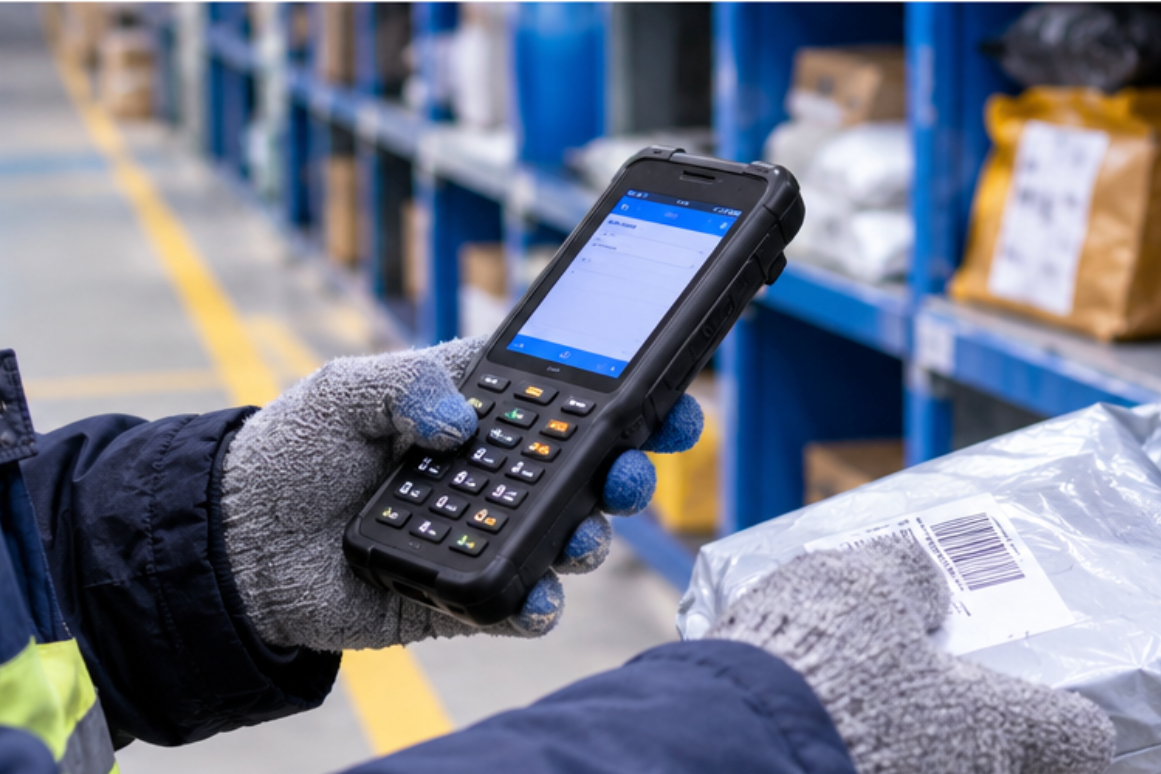
Per scan, the assignment writes itself once volumes are counted. The arrival door and the route wall — the two highest-volume, lowest-complexity posts — run on the N40 and the R350C, with the R350C's keypad taking the glove-heavy winter lanes where touchscreens slow operators down. The counter and any RFID-backed audit work go to the K401, whose octa-core headroom and camera earn their keep in low-volume, high-judgment moments. A depot that scans 4,000 parcels a day does not need forty flagship units; it needs the count per post, which is exactly what this per scan matching is for. The count also exposes seasonal drift: a campaign peak that triples door volume can be absorbed by moving counter units to the wall for the week and letting the K401 cover the counter alone, because photo documentation is a one-operator job on most shifts.
💰 Specification and Cost Comparison Table
| Item | Smart PDA N40 | K401 Handheld PDA | R350C PDA |
|---|---|---|---|
| Processor / OS | Cortex-A53 quad-core 2.0GHz / Android 10 | MT6769 octa-core 2.0GHz / Android 13 | QCM2290 quad-core 2.0GHz / Android 13 |
| Memory + Storage | 2GB + 16GB, TF to 128GB | 6GB + 64GB (no slot published) | 4GB + 64GB, TF to 256GB |
| Display | 4.0" TN 480x800 | 4.2" IPS 720x1280 | 4.0" IPS 480x800 + numeric keypad |
| Scanning / Capture | Optional 1D/2D module | Barcode + RFID + 20MP rear / 5MP front | Optional 2D engine (≥3mil) + 8MP AF |
| Battery | 4500mAh removable, 12h+ work / 350h+ standby | 5200mAh removable | 3.8V 4000mAh removable |
| Protection | Not published | IP67, impact-resistant,<300g | Not published; 155x70x20.5mm,<300g |
| Cellular / Wireless | 2G/3G/4G, GPS/Galileo/GLONASS/Beidou | 4G LTE, dual-band Wi-Fi, BT 5.0 | 4G LTE, dual-band Wi-Fi, BT 5.0 |
Two gaps in the table matter to buyers. Neither the N40 nor the R350C publishes drop or ingress figures, and no page among the three lists a price — both belong in a written quote from the factory rather than in an article's guesswork. The Smart PDA N40 product page, the K401 product page and the R350C product page carry the current specification sheets this comparison is built on.
Frequently Asked Questions
1. Which of the three should a small depot standardize on?
A depot running simple arrival and route scanning can standardize on the N40, whose published endurance — over 12 hours of working time from a 4500mAh removable pack — covers a full shift. Depots that also photograph damage claims or read RFID tags should hold the K401 at the counter instead of upgrading every seat, since those functions are concentrated in one or two posts per depot.2. Are spare batteries compatible across the three models?
No. Each model takes its own pack — 4500mAh on the N40, 5200mAh on the K401 and a 3.8V 4000mAh on the R350C — so a mixed fleet needs charging docks sorted per model. All three batteries are removable, which keeps the replacement cost per pack far below the replacement cost per terminal.3. Does the R350C's keypad justify its place in a touchscreen fleet?
For glove work it does. The R350C pairs a 4.0-inch 480x800 touchscreen with a physical numeric keypad including dedicated SCAN and ENT keys, and its page positions it for cold-chain and high-density sorting where gloves are constant. Touch-only units slow down in exactly those lanes, so the keypad model earns its seat by scan speed rather than by specification rank.4. What should a buyer do about the figures these pages do not publish?
Put them in the quote request. Drop ratings, IP figures for the N40 and R350C, and unit pricing are all absent from the public pages, and Hotus supplies them on request for tender documents. Guessing at any of these numbers — or accepting a reseller's invented figure — is how depot budgets end up funding hardware that fails its first audit.Depots ready to price a mixed fleet can start from the Hotus product family page to confirm current configurations and request depot-volume quotes in one pass. More product comparisons and competitor analysis across courier, warehouse and field scenarios are published on the same news channel, including prior breakdowns of scanner staffing and shift design.