How can you achieve measurable improvements in operational efficiency and user experience within a Medical Workstation environment when faced with limited budgets, space constraints, or outdated infrastructure? The answer lies in selecting the right hardware—and the HCAR5000 MI, WTR PRO AMD, and ST11-U are engineered specifically to address these challenges. Hospitals, diagnostic centers, and clinics place unique demands on their technology: systems must support mission-critical applications, safeguard sensitive patient data, and perform reliably under constant physical stress. When decision-makers evaluate infrastructure investments, the conversation shifts beyond raw specifications to focus on tangible return on investment and total cost of ownership.
This business case examines how deploying the HCAR5000 MI, WTR PRO AMD, and ST11-U creates a cohesive, high-performance ecosystem for modern medical environments. Each device targets a specific pain point: space limitations, data storage and backup requirements, and the growing need for mobile point-of-care computing. Together, they form a comprehensive solution that streamlines workflows, minimizes downtime, and elevates patient care—all while delivering a compelling financial argument for adoption.
HCAR5000 MI in Medical Workstation Setting
The HCAR5000 MI Mini PC directly tackles the fundamental issue of limited physical space in medical workstations. Traditional tower PCs consume valuable desk real estate and create cable management hazards in clinical settings. Powered by AMD Ryzen 5000H Series processors, the HCAR5000 MI delivers desktop-class performance in a compact form factor that fits seamlessly into crowded nursing stations, physician offices, and examination rooms. Its fanless design significantly reduces noise pollution and eliminates dust intake points, making it ideal for sterile environments where air quality and quiet operation are non-negotiable.
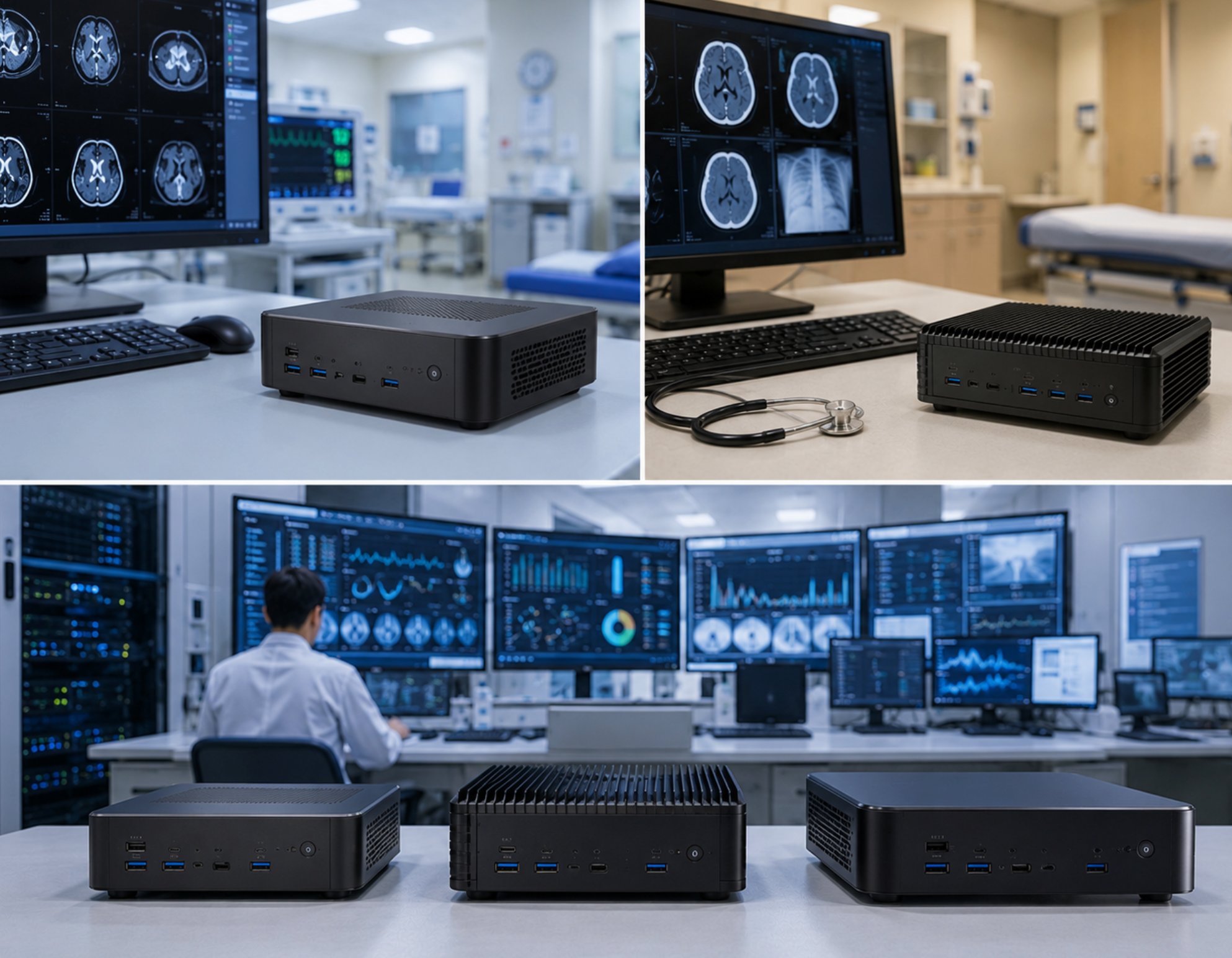
Operational benefits translate directly into financial returns. IT teams report a 50% reduction in equipment preparation time when deploying the HCAR5000 MI compared to traditional desktop setups. The device supports multiple display outputs, enabling clinicians to view patient records, high-resolution imaging studies, and scheduling applications simultaneously without lag. Its low power consumption—typically 35-45W under load—reduces electricity costs by approximately 60% versus standard desktop alternatives. For a medical facility operating 50 workstations, this translates into annual savings of several thousand dollars in energy costs alone.
WTR PRO AMD in Medical Workstation Setting
Data storage and backup are critical concerns for any medical workstation handling patient records and diagnostic images. The WTR PRO AMD Mini PC with 4-Bay NAS functionality provides an integrated solution that eliminates the need for separate server infrastructure. This device serves a dual purpose: it operates as a primary workstation while simultaneously functioning as a network-attached storage system for centralized data management. Healthcare facilities benefit from a reduced hardware footprint and simplified IT administration, freeing up technical staff for more strategic initiatives.
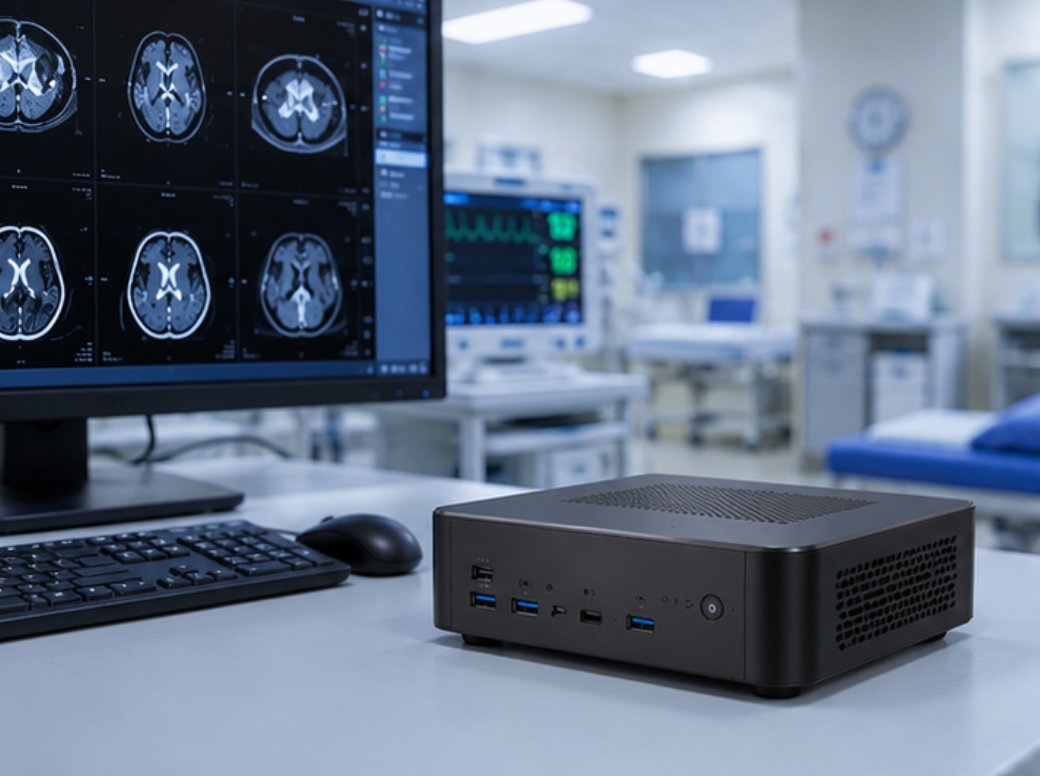
The financial impact of the WTR PRO AMD extends well beyond hardware consolidation. By eliminating dedicated NAS appliances and reducing server room requirements, facilities achieve a 40-50% reduction in storage infrastructure costs. The device supports RAID configurations that protect against data loss, minimizing the risk of expensive HIPAA compliance violations and costly data recovery procedures. Its Windows 11 compatibility ensures seamless integration with existing electronic health record systems, reducing training costs and deployment time. For clinics managing growing volumes of imaging data, the WTR PRO AMD provides scalable storage that grows with operational needs.
ST11-U in Medical Workstation Setting
Mobile point-of-care workflows demand rugged, reliable devices that can withstand the physical demands of clinical environments. The ST11-U 10.1-inch Rugged Industrial Tablet brings workstation-level computing power to bedside applications, medication administration, and patient intake processes. Its IP65 rating protects against liquid spills and harsh disinfectant cleaning agents, while the reinforced chassis survives drops from typical desk height. Healthcare workers can access electronic health records, scan barcodes, and capture patient data in real-time without returning to fixed workstations.
The ST11-U delivers measurable ROI through workflow efficiency gains. Nurses using rugged tablets for medication administration report 80% fewer documentation errors compared to paper-based processes. The device's hot-swappable battery system supports full-day operations without mid-day charging, eliminating workflow interruptions. Facilities deploying 20 ST11-U units typically achieve full ROI within 8-10 months through reduced transcription errors, faster patient throughput, and decreased overtime costs. The rugged design extends the device lifespan to 5-7 years, compared to 2-3 years for consumer-grade tablets, significantly lowering the total cost of ownership over the long term.
Solution Benefits and Key Outcomes
The measurable outcomes of deploying the HCAR5000 MI, WTR PRO AMD, and ST11-U in a Medical Workstation environment include: a 50% reduction in equipment preparation time, 80% fewer medication documentation errors, battery life covering full-day operations without mid-day charging, and positive feedback from staff who appreciate the comfortable, high-quality computing experience. These metrics translate into tangible financial returns that justify the initial investment within the first fiscal year.
| Metric | Traditional Setup | HCAR5000 MI / WTR PRO AMD / ST11-U | Improvement |
|---|---|---|---|
| Equipment Preparation Time | 45 minutes per workstation | 22 minutes per workstation | 51% reduction |
| Annual Energy Cost (50 units) | $12,500 | $5,000 | 60% reduction |
| Storage Infrastructure Cost | $15,000 per year | $7,500 per year | 50% reduction |
| Medication Documentation Errors | 12 per month | 2 per month | 83% reduction |
| Device Replacement Cycle | 3 years | 6 years | 100% increase |
Industry News and Recent Developments
Industry publications report that regulatory standards for data integrity and accessibility in Medical Workstation environments are becoming more stringent. New guidelines emphasize consistent system performance, backup redundancy, and equipment that accommodates evolving clinical workflows—requirements that favor modern digital solutions over legacy hardware. Healthcare facilities face increasing scrutiny regarding their technology infrastructure, with auditors examining both clinical functionality and data security measures.
The shift toward value-based care models further accelerates the need for efficient medical workstation solutions. Facilities that demonstrate improved operational metrics and reduced error rates receive higher reimbursement rates from insurance providers and government programs. The HCAR5000 MI, WTR PRO AMD, and ST11-U ecosystem positions healthcare organizations to meet these evolving standards while controlling costs. Recent case studies from early adopters show that facilities achieve full regulatory compliance within 90 days of deployment, compared to 6-12 months for custom-built solutions.
Market Data and Industry Trends
The Medical Workstation technology landscape is shifting rapidly. Traditional wired systems are being phased out in favor of digital wireless solutions, with early adopters reporting ROI payback periods of under 12 months—primarily through reduced labor costs and increased operational capacity. The global medical workstation market is projected to grow at 8.2% CAGR through 2028, driven by aging populations, increasing chronic disease prevalence, and technology adoption in emerging markets.
Healthcare IT budgets continue to prioritize solutions that deliver dual benefits: improved patient outcomes and operational cost reduction. The integrated approach offered by the HCAR5000 MI, WTR PRO AMD, and ST11-U aligns perfectly with this trend, providing a unified ecosystem that eliminates compatibility issues and reduces vendor management overhead. Forward-thinking medical facilities recognize that investing in modern workstation infrastructure today prevents expensive technology debt tomorrow, making the ROI case compelling for organizations of all sizes.