Edge business cases are usually argued on the wrong axis. The pitch says the hardware saves cloud spend, the finance team compares that against the capital cost, and the project stalls because the bandwidth bill was never the real problem.
The returns that actually show up in a manufacturing or field-service environment come from somewhere else: fewer truck rolls, faster fault detection, and decisions made at the machine instead of after the shift. This article breaks the payback down by device class, because each class earns its money differently. Our rugged mini PC solutions range covers the fixed layer, and the handheld and wearable layers attach to it.
💰 💸 The Cost Line Everyone Budgets
Start with the honest part. An edge layer has four cost lines, and three of them are not hardware:
Hardware per node. The visible number, and usually the smallest of the four across a three-year life.
Installation. Mounting, power, network drops, and enclosure work. In a brownfield plant this regularly exceeds the hardware cost, because someone has to run cable through an occupied building.
Software and integration. Getting data out of a machine controller and into something a human reads. This is where edge projects genuinely fail - not on the box, on the protocol.
Operations. Updates, monitoring, and the person who drives out when a node goes dark.
Any ROI model that only counts the first line is going to disappoint someone in month nine.
💡 🏭 Why the Cheapest Node Is Not the Saving
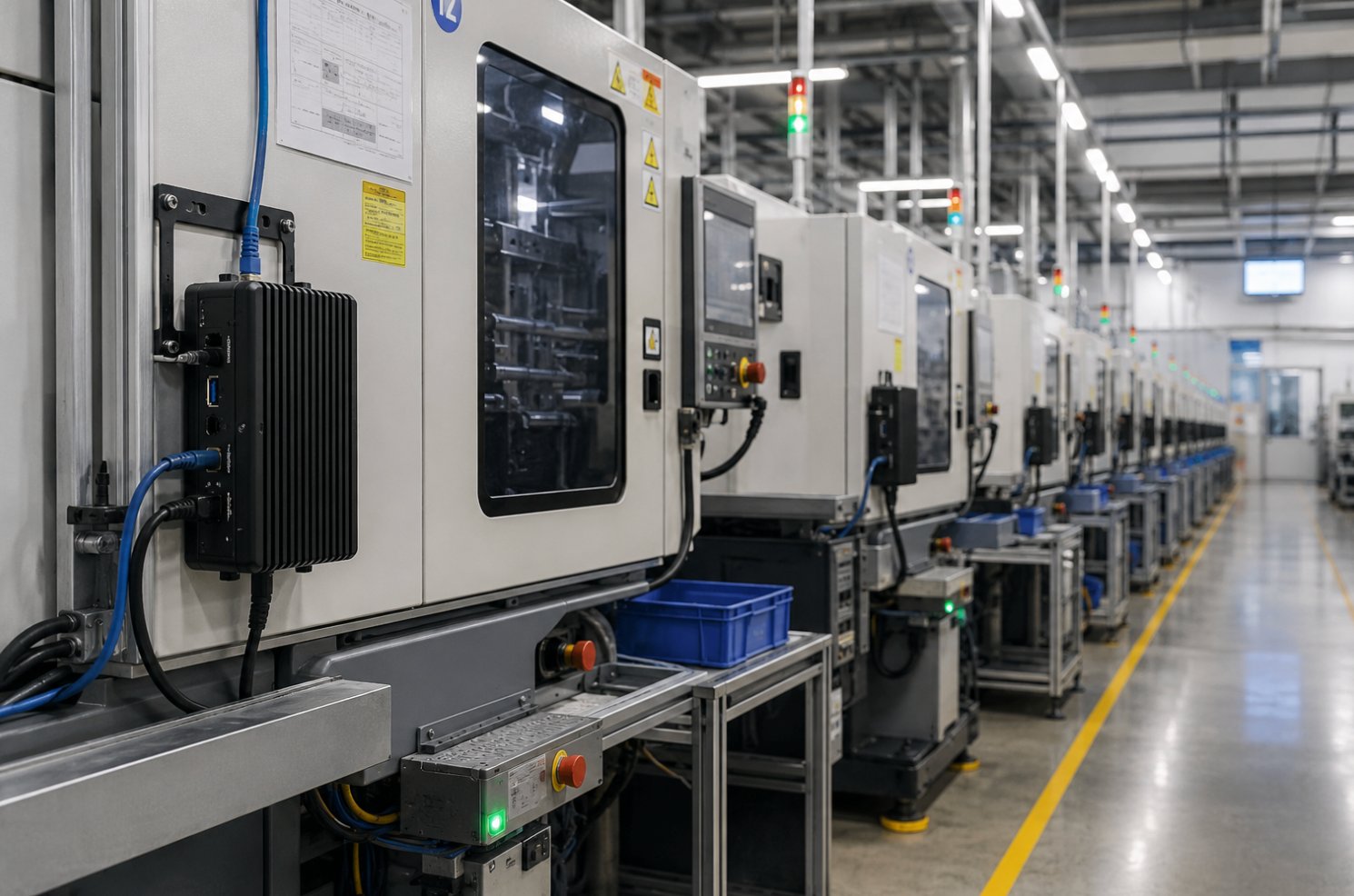
The fixed layer is where most deployments begin, and the instinct is to buy the largest box that fits the budget and install fewer of them. The economics usually point the other way.
The Palm-sized miniPC makes the opposite trade affordable: a low-power fanless node small enough to mount at each station rather than one shared unit at the end of the line. That changes what the deployment can see. With one node per station, a fault is attributable to a station. With one node per line, a fault is attributable to a line, and someone spends the afternoon walking it.
The saving is not the price difference between two boxes. It is the diagnostic time that disappears when granularity improves - and it scales with the number of stations, which is why this layer usually pays back first.
📋 What the Handheld Replaces
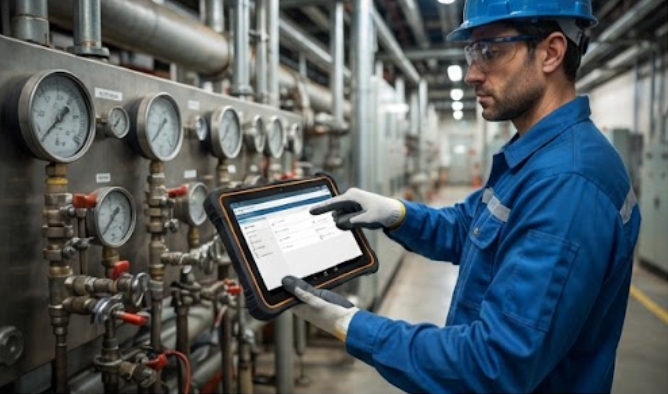
The mobile layer has the simplest business case in the set, because what it replaces is paper and travel rather than another computer.
The HTQ10A Android Rugged Tablet sits in this slot. A technician running a round sheet spends the round writing and then spends the end of the shift transcribing. replace the sheet with a device that submits as it goes and two things happen: the transcription step disappears entirely, and the data is available the moment the round finishes rather than the next morning.
Quantifying it is straightforward. Take the number of rounds per week, the minutes spent transcribing each one, and the loaded hourly cost. Then add the value of the lag - a reading that arrives the same shift can trigger a work order the same shift. This layer typically shows the clearest payback of the three because the baseline is manual labour with a known cost.
🥽 Where the Wearable Justifies Itself
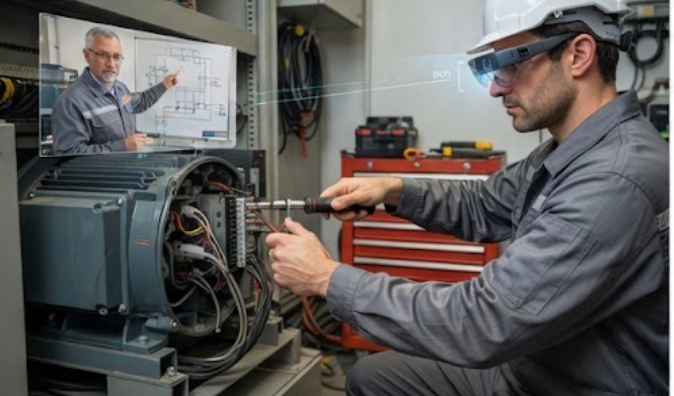
The wearable layer is the one that needs the most discipline, because it is the easiest to buy for the wrong reason. Hands-free remote support pays back under two conditions: the expert is genuinely scarce, and the travel to get them on site is genuinely expensive.
When both hold, the arithmetic is compelling. A specialist flying to a remote site costs airfare, accommodation, and two days of a scarce person's time. A remote session costs an hour of the same person's time and nothing else. Ten avoided trips a year covers a meaningful fleet.
When neither holds - the expert sits fifty metres away and the "site" is across the plant - the same hardware earns very little, because the alternative was a short walk. Being honest about which situation applies is the difference between a wearable programme that survives its second year and one that does not. Our AR smart glasses page has the specifications for teams that have already established the case.
🧮 Putting Numbers on Each Layer
The useful way to model this is per layer, with the same three columns: what it costs, what it removes, and how long the payback takes.
| Layer | What drives the cost | What it removes | Typical payback |
|---|---|---|---|
| Fixed node per station | Hardware + install + integration | Diagnostic walk time, unattributed faults | Fastest - scales with station count |
| Handheld rounds | Hardware + app + enrolment | Transcription labour, reporting lag | Fast - clear manual baseline |
| Wearable remote support | Hardware + training + content | Expert travel, repeat visits | Conditional - depends on travel cost and expert scarcity |
| Network and backhaul | Connectivity, VPN, monitoring | Almost nothing on its own | Not a saving - treat as overhead |
Read across the rows and the pattern is consistent: the layers that pay back are the ones that remove a human step, not the ones that move data around. Bandwidth, notably, appears nowhere in the savings column.
⚠️ The Two Ways the Model Breaks
Two failure modes account for most disappointing edge business cases, and both are avoidable at the planning stage:
Counting savings that were never costs. If nobody was paying for cloud egress in the first place, eliminating it saves nothing. Model against the process that exists today, not against a theoretical worse one.
Ignoring the integration line. A node that cannot talk to the controller produces no data, and a deployment producing no data has no payback at all. Budget the protocol work before the hardware, and confirm the interface exists before ordering.
🎯 🔮 How to Run a Pilot That Answers the Question
A pilot should be sized to produce a number, not a demonstration. Three rules make that happen:
Pick one layer and one line. A pilot spanning all three classes produces enthusiasm and no arithmetic.
Measure the baseline before installing anything. Time the current process for two weeks. Without a baseline there is nothing to compare against, and the project ends up arguing from impressions.
Set the review date at the start. Ninety days is enough for the handheld and fixed layers. Write the criteria down before the hardware arrives, so the decision is not made by whoever is most enthusiastic in the room.
If you are building the case now, our industrial hardware solutions overview covers the full range, and the product pages for the three classes carry the specifications you need to cost against. Send us the station count, the round frequency, and the current process timing - those three numbers are enough to tell you which layer pays back first, and which one to leave for next year.