Most retail technology advice starts from the device and works outward, which is backwards. The better question is which counter, which shift, and which pair of hands the hardware ends up in. A regional grocery chain learned this the expensive way after buying one uniform fleet for every role in the store, then watching the stockroom crew tape five-inch slates to pallet jacks while the service desk staff squinted at scanning guns. This is a format comparison rather than a spec sheet duel, and it starts from the floor plan. If you are weighing the same choice, begin with dedicated retail POS solutions and then work counter by counter instead of starting from a catalog page.
💡 Why One Store Floor Ends Up With Three Different Devices
A store is not one workplace, it is four or five sharing a roof. The loading dock needs one-handed scanning and gloves. The aisle needs something light enough to carry for six hours and bright enough to read under fluorescent tubes. The service desk needs a screen big enough to show a return, a loyalty lookup, and a signature box at the same time, plus the ports to drive a receipt printer and a cash drawer. When one device tries to cover all three, it ends up mediocre at all three. The operators who get this right buy per role, not per store, and they stop arguing about which single model wins.
The Scanning Crew at the Back Door
Rank the tasks at the receiving door and scanning dominates everything else. Deliveries arrive on pallets, the dock is cold or hot depending on the season, and the person doing the work has one free hand at best. The Handheld PDA F505 is built for exactly this: a dedicated scan engine that reads damaged and poorly printed labels, a body shaped for a pistol grip, and a drop rating that survives the occasional slide off a pallet. The screen is deliberately small because nobody at the dock is reading paragraphs. Battery is the spec that matters, and the F505 clears a full receiving shift without a mid-day swap, which is the difference between a dock that clears by noon and one that backs up into the afternoon.
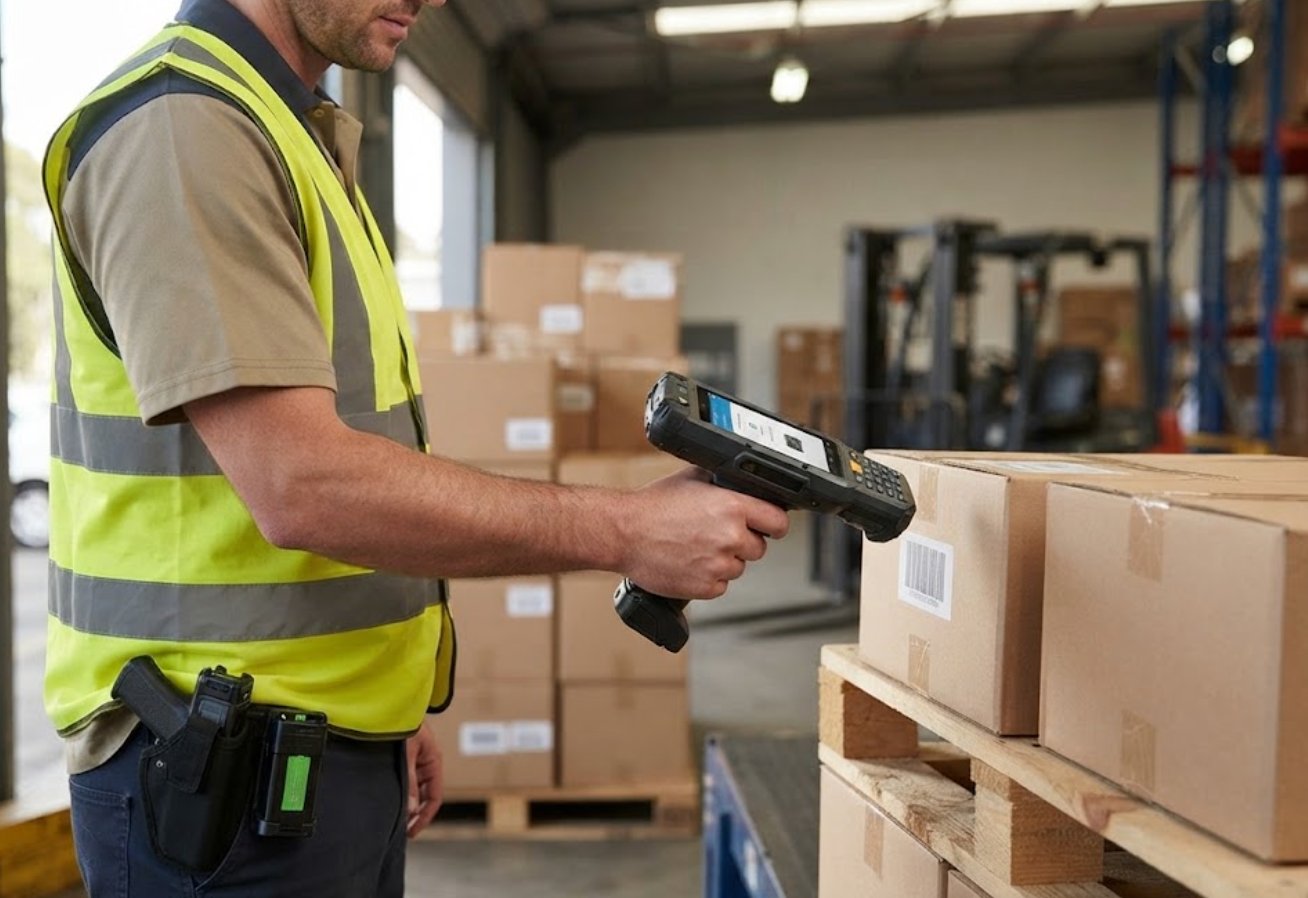
Stockroom staff scanning inbound pallets at the receiving door with the Handheld PDA F505.
A Five-Inch Panel for the Aisle Runner
Out on the floor the job changes shape. The aisle runner is checking shelf gaps, verifying price changes, and hunting down the one item a customer asked about, often while holding a clipboard or a box. The 5.5-inch SH5-W rugged tablet fits that rhythm: slim enough for a pocket or an apron, with a screen big enough to show a planogram or a stock lookup without scrolling. It runs the same Windows build as the rest of the estate, so the inventory app behaves identically to the one on the back office PC, and the scanning engine still handles the occasional barcode check. For a shift spent walking rather than standing, the weight difference between this and a larger slate is the whole argument.
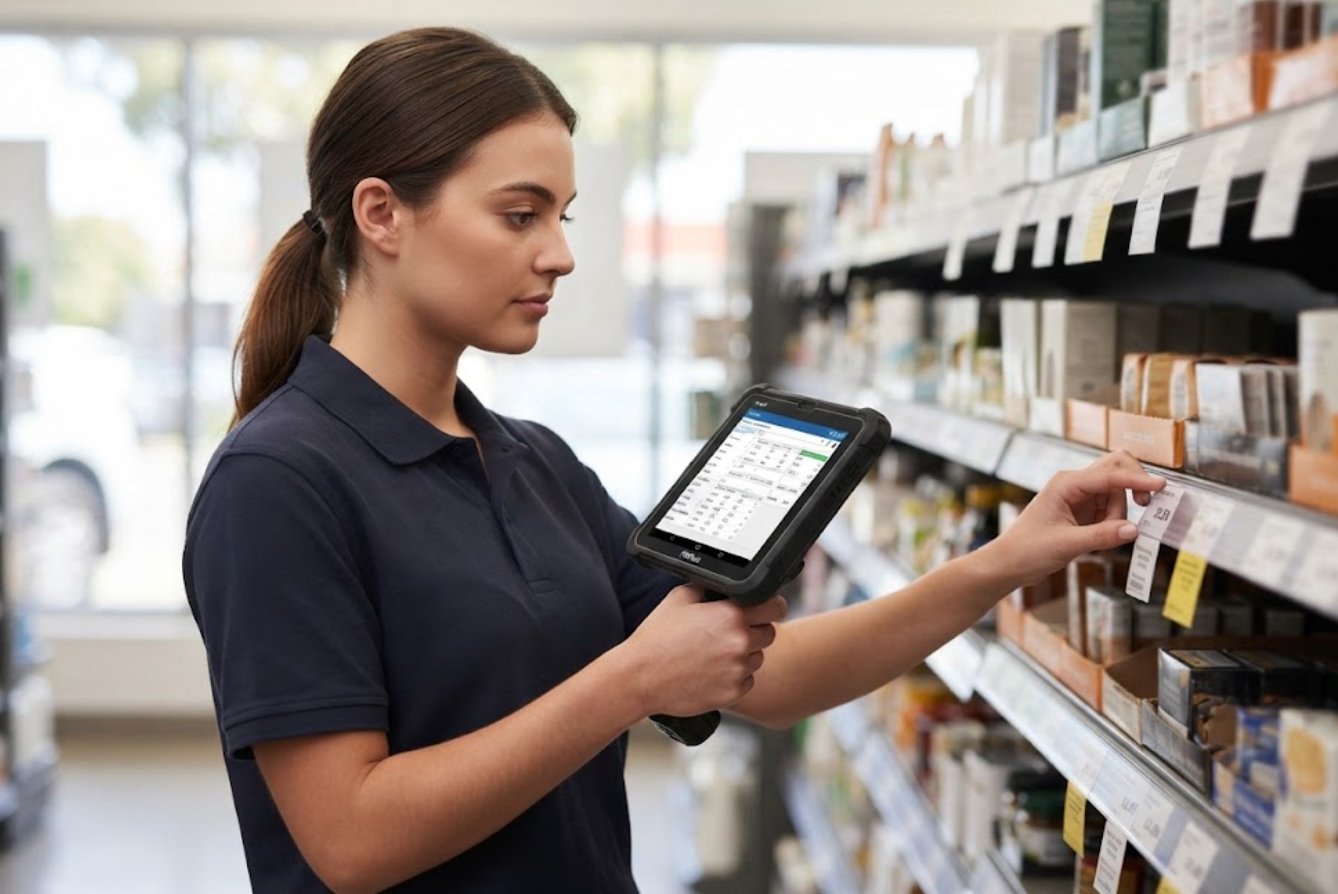
An aisle runner checks shelf stock with the 5.5-inch SH5-W rugged tablet during a store walk.
When Six Inches Beat Five at the Service Desk
The service desk is where the small-screen compromise finally breaks. Returns, exchanges, loyalty lookups, and signature capture all want room, and a member of staff apologising for zooming in on a five-inch panel is a queue forming in real time. The 6.5-inch SH6 rugged tablet gives that counter the extra inch and a half without pushing the unit into laptop territory, and it keeps the same Windows base so the POS application needs no rework. The bigger panel also means virtual buttons big enough for a gloved thumb, which matters more than any benchmark when the store is busy and the lighting is bad.
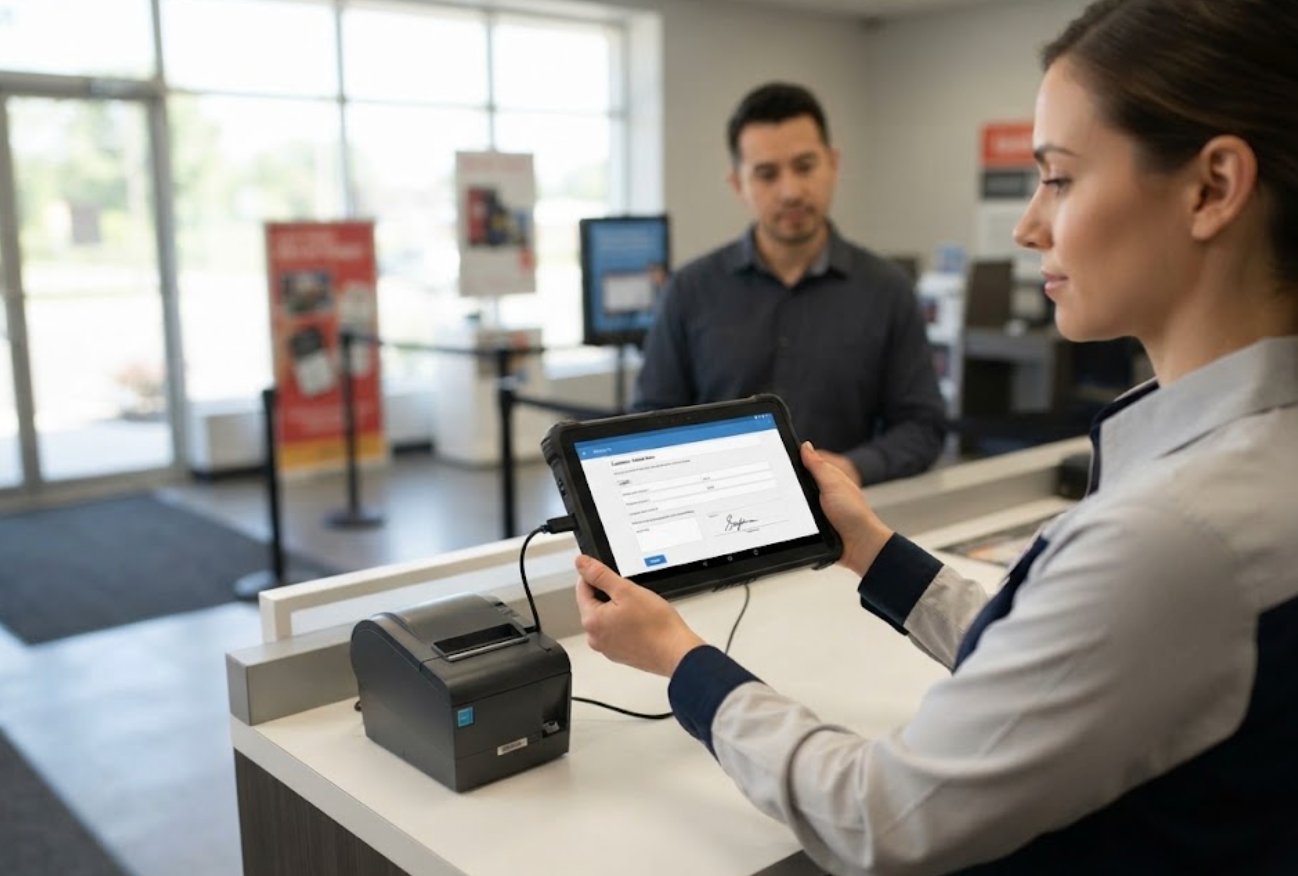
Service desk staff processing a return on the 6.5-inch SH6 rugged tablet beside a receipt printer.
🎯 Connectivity, Ports, and the Peripherals That Decide the Winner
Peripherals quietly decide most of these purchases. A scanning gun that cannot trigger a cash drawer is a very expensive barcode reader, and a tablet that needs a dongle for every attachment becomes a cable management problem at the counter. The practical checklist is short: does it drive the receipt printer directly, does it hold a stable connection on the store network at the far end of the building, and can it pair a handheld scanner for the odd oversized item that will not fit on the counter. Both rugged tablets cover the printer and scanner side comfortably. The F505 trades port count for scan performance, which is the right trade at the dock and the wrong one at the till.
🛡️ Rugged Ratings by Where the Device Actually Lives
Protection ratings only mean something once you attach them to a location. A dock unit faces concrete drops, dust from cardboard, and the occasional forklift encounter. An aisle unit faces waist-height falls onto tile and the drink someone spills near the endcap. A service desk unit mostly faces static, cleaning spray, and the slow grind of a dozen shifts a week. Buying one protection level for all three either overspends at the desk or under-protects the dock. Match the rating to the worst realistic event at that station, and the insurance math stops being mysterious.
💰 Total Cost Per Station Across a Three-Year Rollout
The honest comparison is per station over a realistic window, not per unit on the invoice. The table lines up what each format costs to run for three years, including the accessory and repair spend that usually shows up in year two and never appears in the quote.
| Station | Handheld PDA F505 | SH5-W (5.5-inch) | SH6 (6.5-inch) |
|---|---|---|---|
| Primary role | receiving dock | aisle and floor walks | service desk and till |
| Strength | dedicated scan engine | weight and carry comfort | screen room and ports |
| Weak spot | small display | screen too small for returns | heavier for all-day walking |
| Typical add-ons | holster, spare battery | strap, scanner sled | printer cable, stand |
| 3-year cost incl. accessories | lowest | mid | highest |
| Expected repair events | 0 to 1 | 1 | 1 to 2 |
| Best fit quantity per store | 4 to 6 | 6 to 10 | 2 to 3 |
Matching the Device to the Shift, Not the Catalog
The pattern that survives contact with a real store is simple. Put the scan-first unit at the dock, the light carry unit in the aisle, and the bigger panel wherever a customer is standing on the other side of the counter. Resist the single-fleet discount, because the money saved on the invoice comes back as lost minutes at the till and taped-on tablets at the dock. The wider rugged handheld tablets range covers both tablet sizes alongside the industrial PDA line, and why rugged handhelds are becoming the retail standard maps the same thinking to the wider market shift. Send us your floor plan and your shift pattern and we will size the mix by station rather than by box.