- Select Language
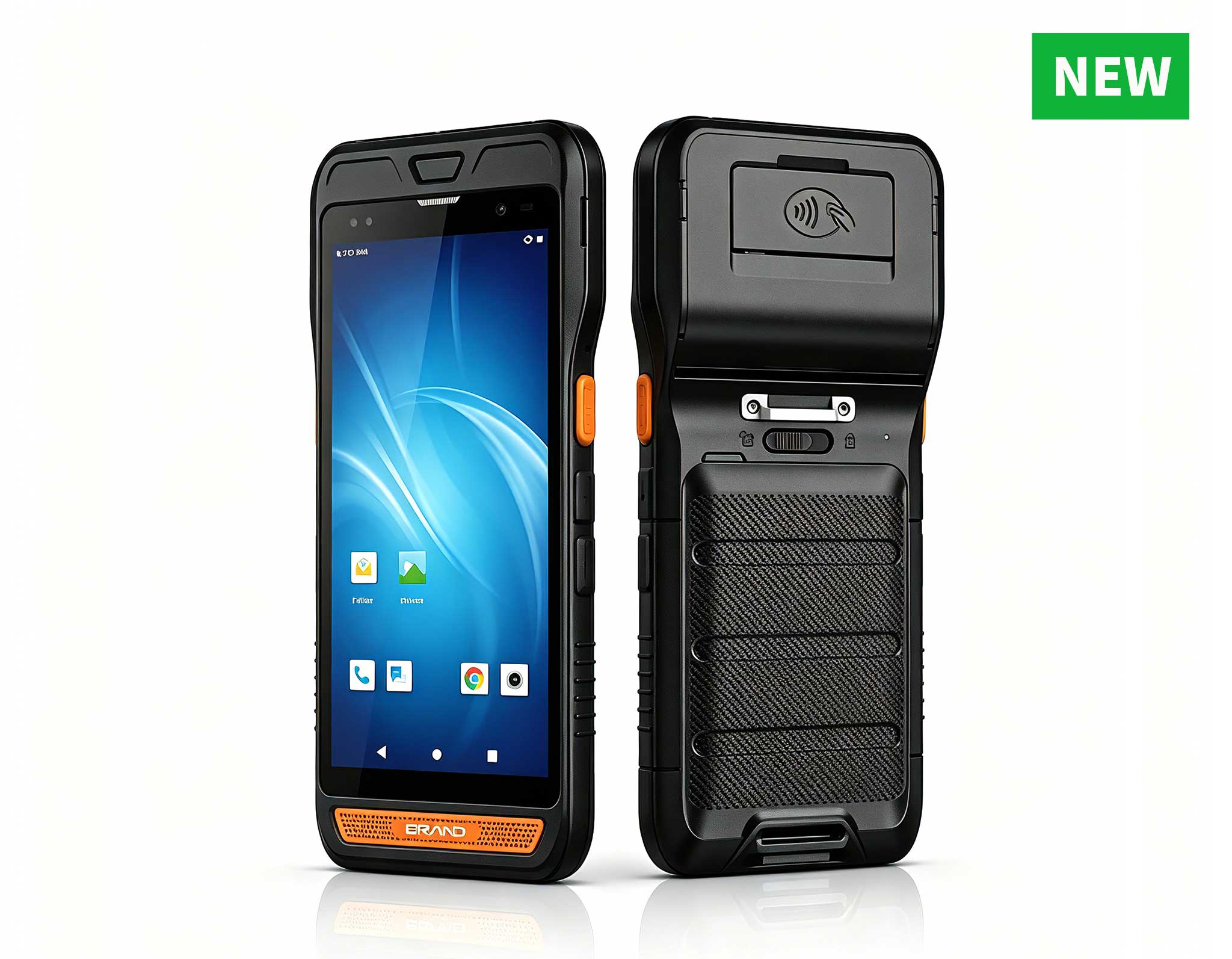
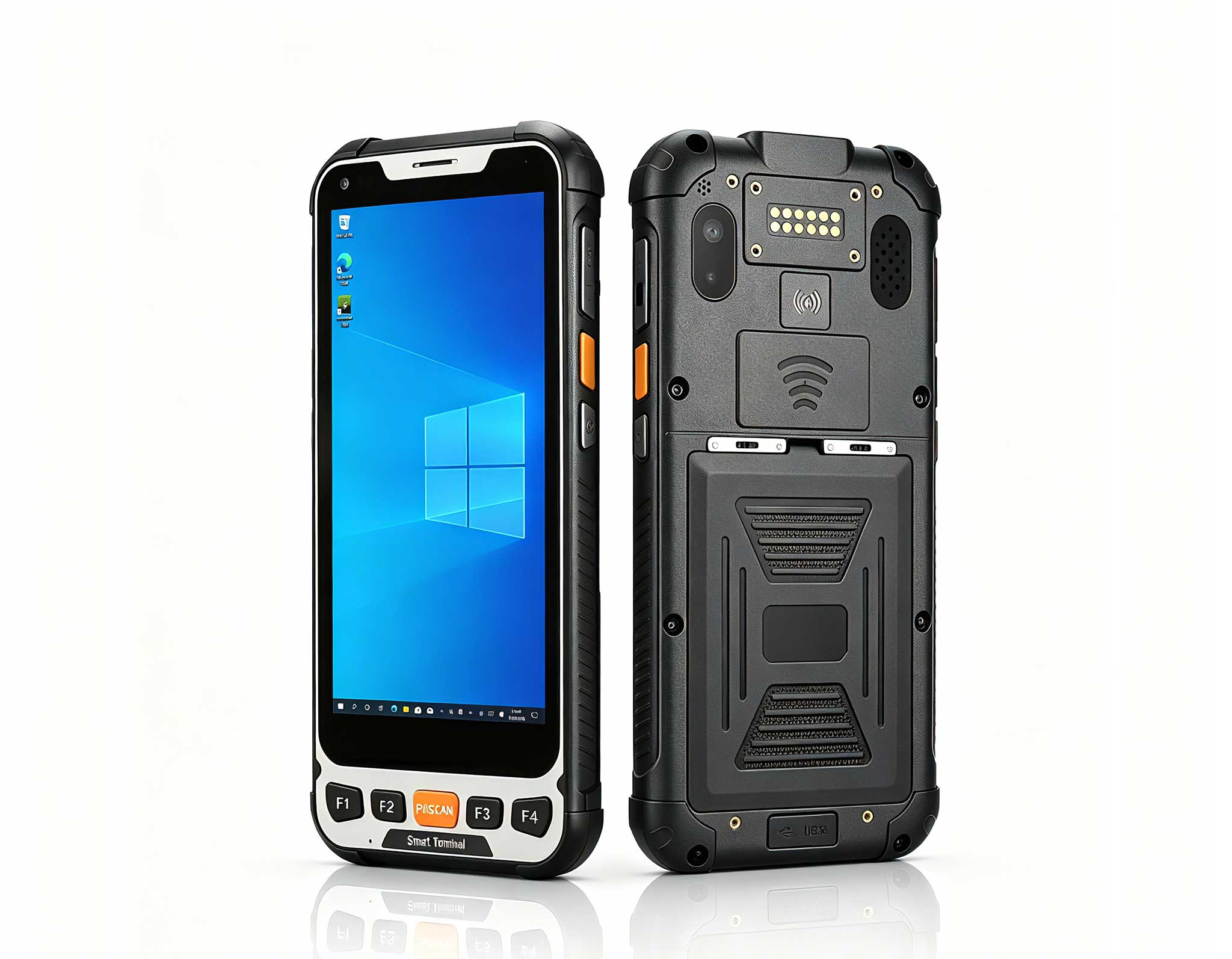
R860-S 5.5-inch Industrial PDA with Thermal Printe...
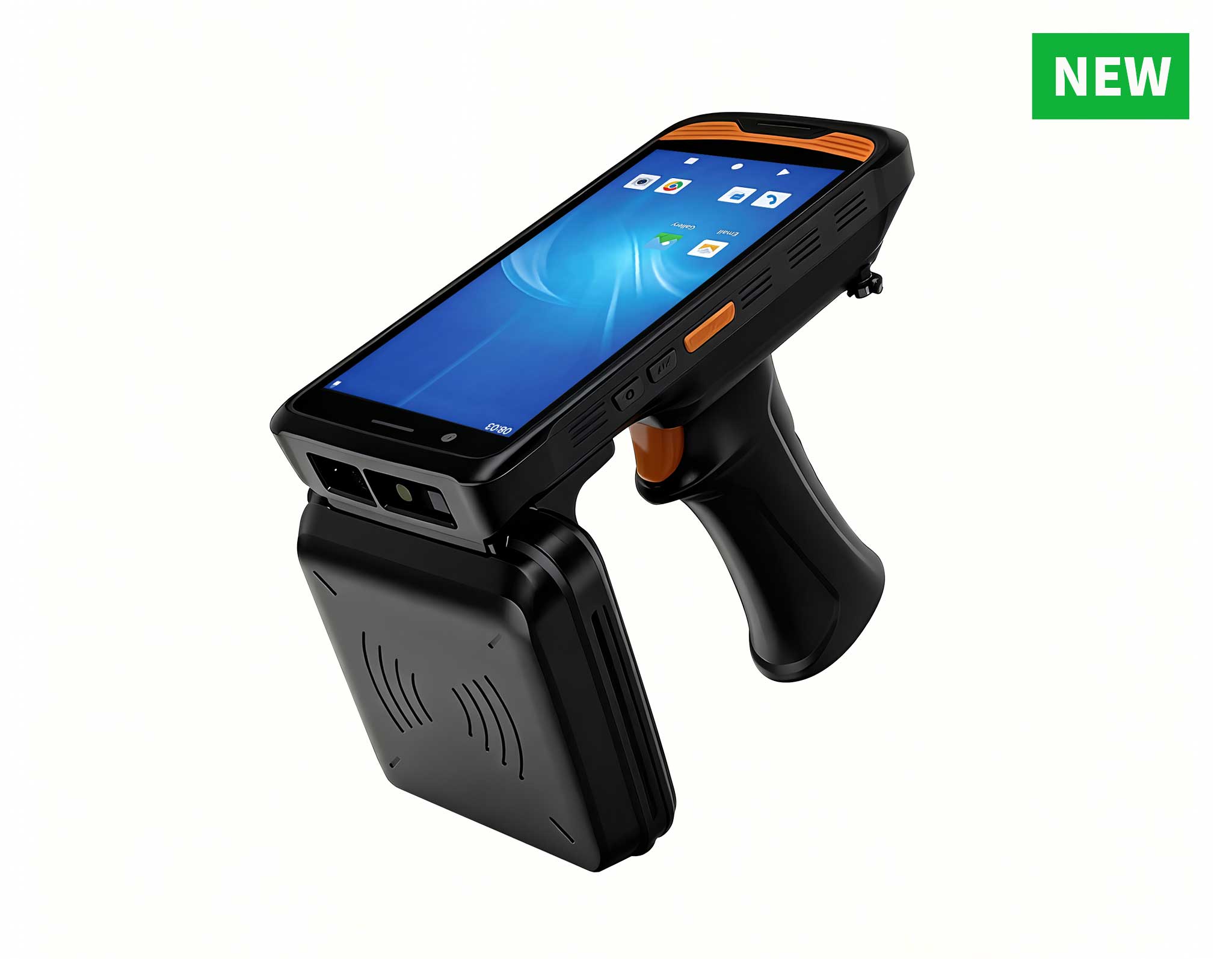
R366C-S 5.5-inch Industrial UHF RFID Reader | Qual...
R530C 6.0-inch Industrial PDA | Qualcomm Octa-core...
Full SpecificationsModel Hotus SH5‑WOperating ...
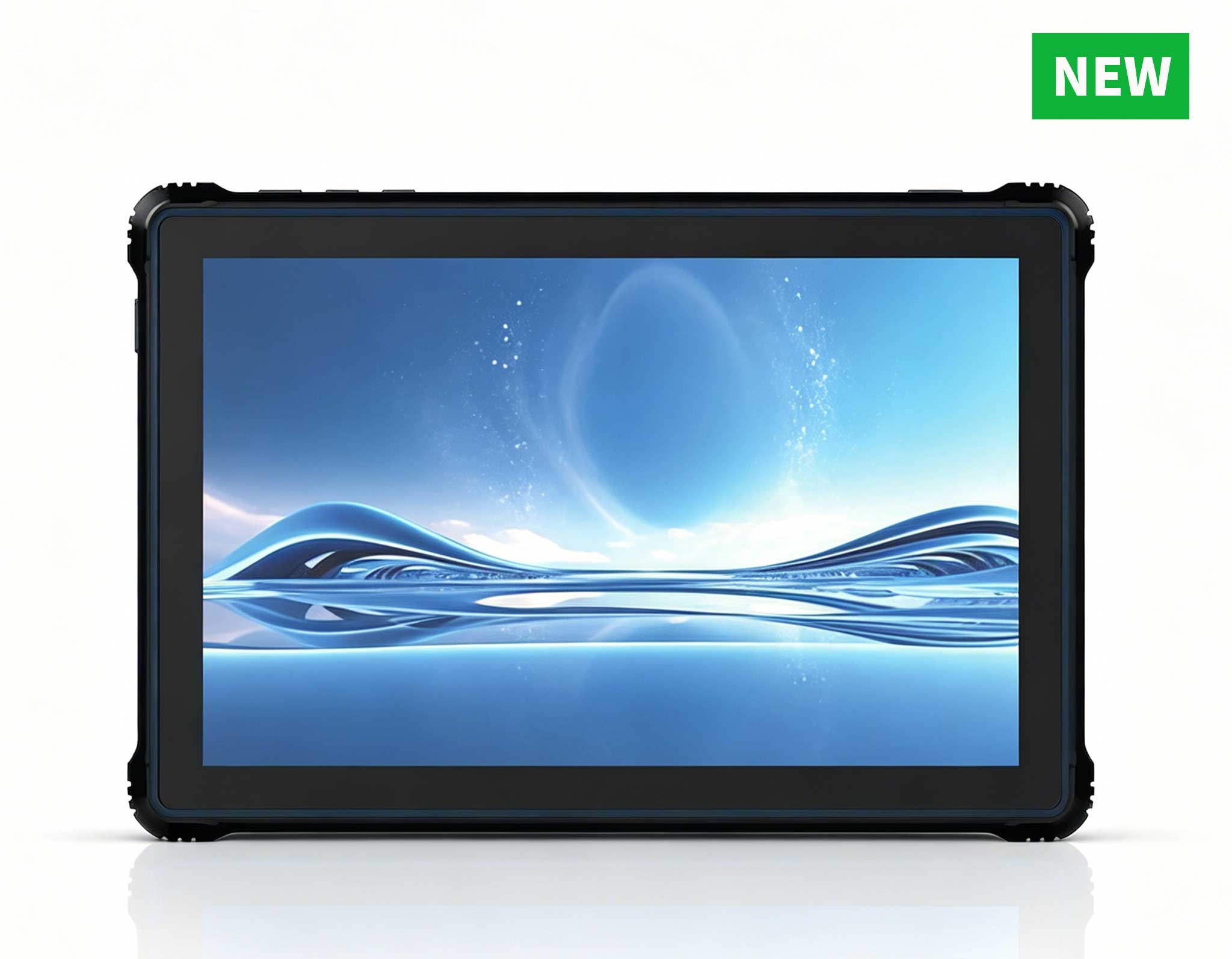
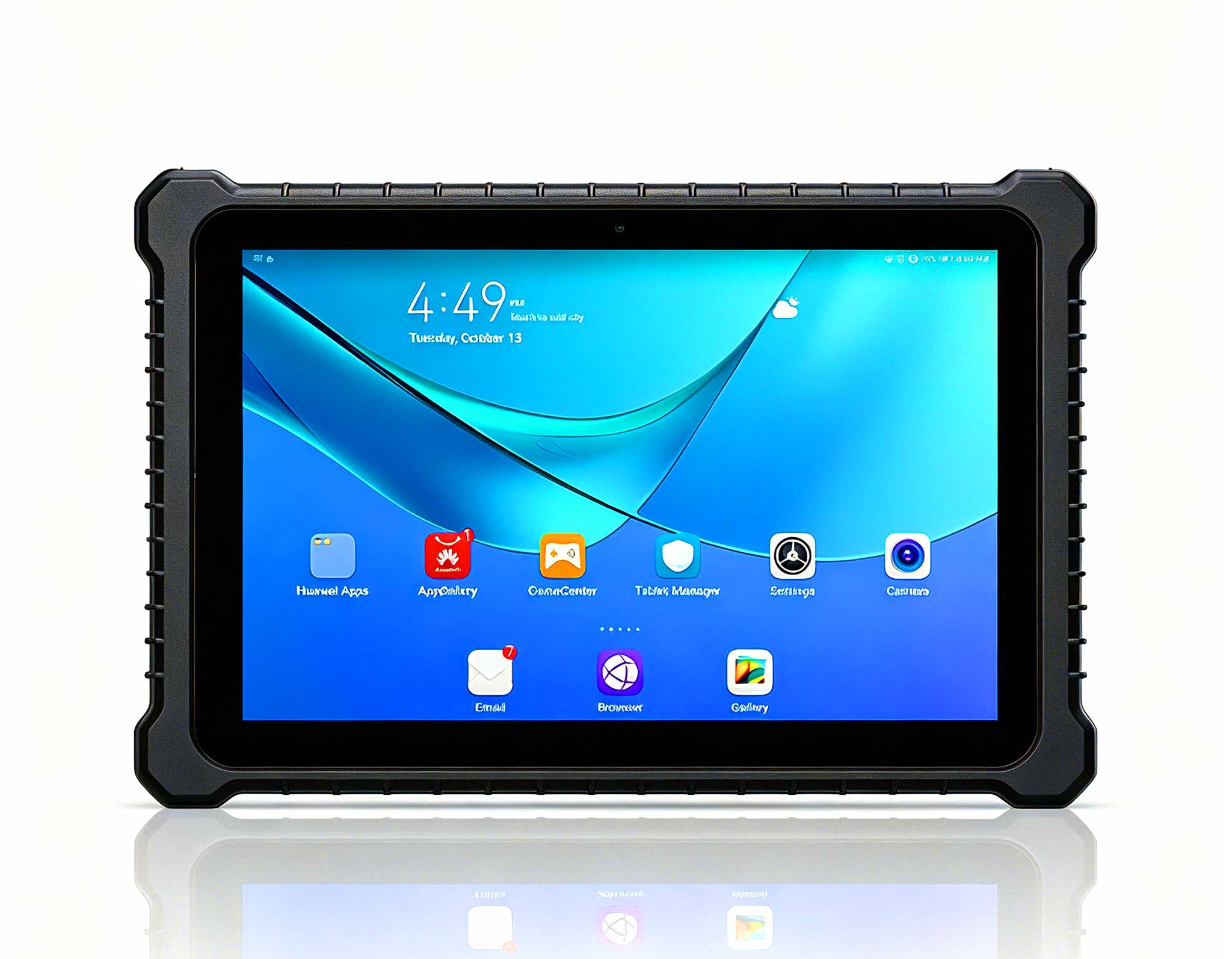
RT80 5G Rugged Tablet | 10.1" FHD 400nit | Un...
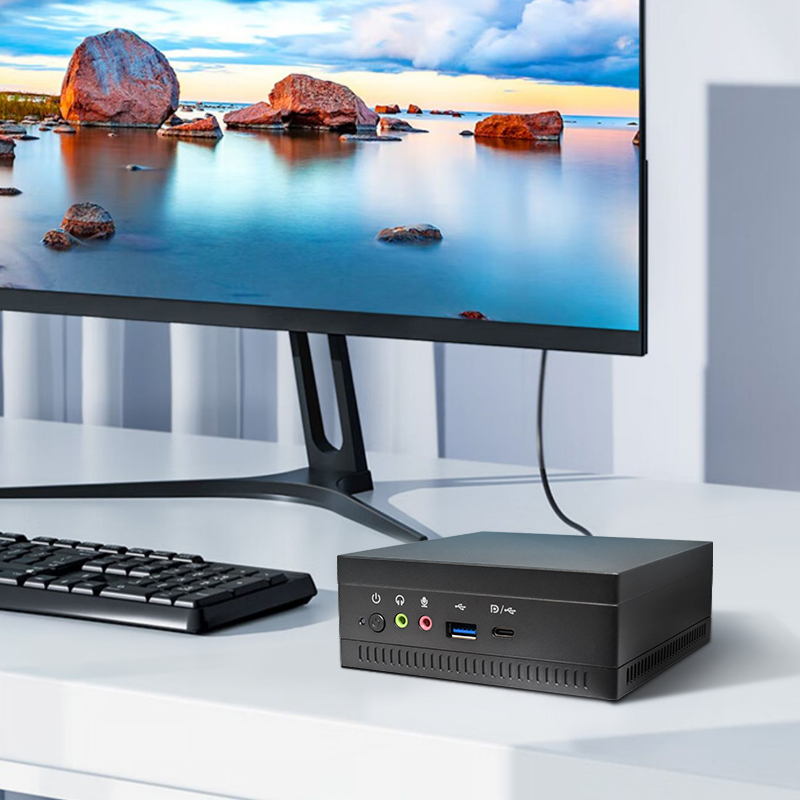
This ultra-compact mini PC offers powerful perform...
From the unknown so simpleUsed for mobile phones, ...
The N60 PDA is a cutting-edge device for inventory...
The AMD Mini PC Windows 10 Pro is a compact yet po...
Three units, all sold as a 10-inch rugged tablet, all with the same resolution and a brightness figure within ten nits of each other, and all sitting in the same warehouse aisle before a site deployment. Hand them to a crew at the gate and the similarity ends immediately. One boots into a login screen and asks for a dock, one runs a scanner app until the cell is flat, and one arrives with a battery you can swap in the back of a van. For anyone specifying a three-proof field tablet fleet, the useful question is not which one is better — it is which of the differences you can actually feel on site.
The panel is the one part of the specification that genuinely matches. All three carry a 10-inch LCD at 1,920 × 1,200, a 10-point capacitive touch layer hardened to 7H, and brightness within ten nits of each other — 560 on two of them, 550 on the third with a 700-nit option. Under a plant skylight or an outdoor gate, that is the same screen with the same glove-friendly behaviour. Everything that separates the three machines sits behind it: processor class, platform, battery form, and the sealing figure. A comparison that starts from the display has almost nothing to compare, which is why the useful comparison starts at the back of the housing.
Set the three on a bench and the profile gives away more than the spec sheet. The Android unit measures 15mm thick. The two Intel-based units come in at 25mm and 32mm. That gap is not styling. A Windows build carries a mainboard with a wider power envelope, a cooling path for the processor under sustained load, and a larger I/O block. The 25mm machine weighs more than the longer-lasting unit beside it despite a smaller cell, because the chassis is doing more work: a double-layer body, sealed bays, and room for a full-size port set. Thickness is the clearest single number for how much machine sits between your hand and the back cover.
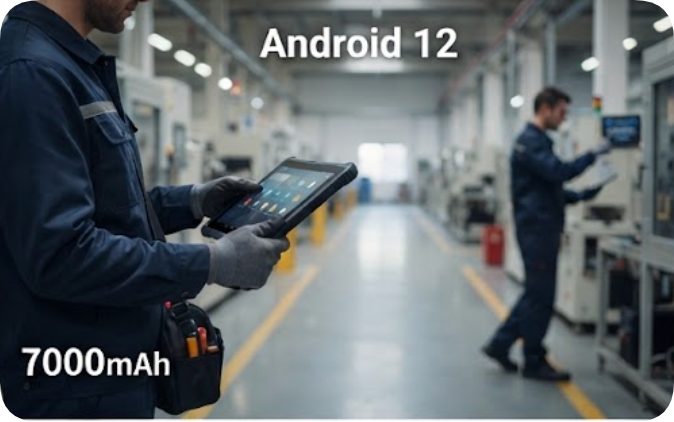
Read the three battery lines in order and the logic looks inverted. The thinnest unit carries 7,000mAh. The 25mm unit carries 3,500mAh. The 32mm unit carries 11,200mAh and is the only one of the three with a detachable cell rated at seven hours of working time. Capacity here is not a quality ranking; it is a consequence of the platform. A phone-class Android board sips power and can live on a slim sealed cell. An Intel board across ten cores at 2.70 GHz pulls far more current, so the same working window demands a much larger pack — and that pack is what sets the thickness. The 3,500mAh figure is the tell: it is the pack that fits the smaller frame, not the pack the platform would prefer.
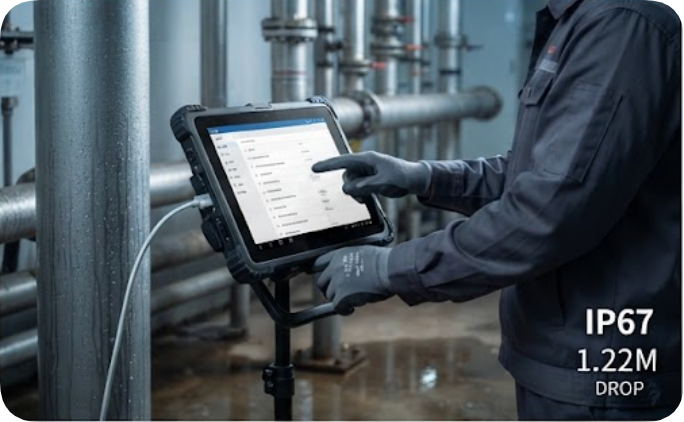
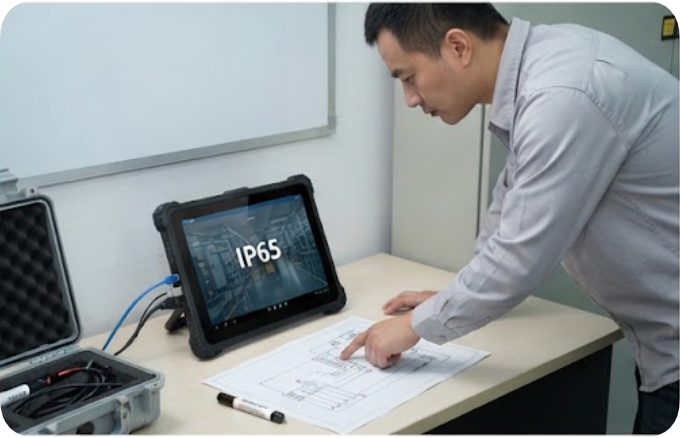
This is the line that surprises buyers. The most expensive of the three — ten cores, 16GB of RAM, a 1TB ceiling on storage — is rated IP65. The two lower-cost units are rated IP67 and carry a 1.22-metre drop figure in the same breath. The difference is specific: IP65 covers dust ingress and water projected from a nozzle, while IP67 covers the same dust protection plus short immersion. On a site where a unit gets hosed down or dropped in standing water, that is not a marketing distinction, it is a repair rate. The unit with the strongest processor is not the unit with the strongest housing, and a spec-first shortlist will price them as if the two always travel together.
For field work the port block decides more days than any benchmark score. Two of the three carry an RJ45 jack, so they can be patched into a fixed network in a control room or a service van without a dongle. The Android unit keeps its connector set to audio, Mini HDMI, USB, Type-C, DC input, a combined TF/SIM slot and a 12-pin pogo pad — enough for scanning and imaging work, but a wireless-only network story unless you add a dock. Where the job includes serial equipment, the 32mm chassis is the only one of the three with a COM port on the standard list, and that single line often decides a retrofit.
The weight column reads 1.7KG, 2.1KG and 2.0KG — a spread of under half a kilogram across the three. On a bench that is noise. Held in one hand for a route that runs three hours, it is the difference between a unit you forget about and a unit you start resting on whatever surface is nearest, which then changes where it gets left and what it gets left in. The two heavier machines earn their extra mass back only when the work lets the unit sit down: on a cart, a desk, or a mounting bracket. If the route never stops moving, the lightest chassis is doing more for the shift than the strongest processor on the list.
The HTQ10A is the walk-and-scan machine: Android 12, an eight-core MTK8788 at 2.0GHz, 8GB of memory, and a sealed 7,000mAh cell in a 15mm, 1.7KG body that stays in one hand for a full route. It is the unit you hand to a new crew on day one, because there is nothing to configure and nothing to dock.
The HTNJ10C sits between the two: an Intel N100 platform with four cores at 3.4GHz, a 25mm body, and a connector set that includes RJ45 alongside Mini HDMI, Type-C and a 12-pin pogo pad. It is the middle unit for teams that need a desktop application on site but do not need to run heavy processing on the device itself.
The HTXUK10A-55 is the workstation that happens to have a handle: ten cores at 2.70 GHz, 16GB of memory, storage to 1TB, a detachable 11,200mAh pack, and a port block that adds COM to the RJ45. It is built for the bench, the van, and the site office — places where the unit sits down rather than walks.
| Specification | HTQ10A | HTNJ10C | HTXUK10A-55 |
|---|---|---|---|
| Platform | Android 12 | Intel N100 (x86) | Windows 11 |
| Processor | MTK8788, 8 cores, 2.0GHz | Intel N100, 4 cores, 3.4GHz | Intel i7-1255U, 10 cores, 2.70GHz |
| Memory / storage | 8GB / 128GB | Not listed | 16GB / 128GB (1TB option) |
| Display | 10", 1,920 × 1,200, 560 nits | 10", 1,200 × 1,920, 560 nits | 10", 1,920 × 1,200, 550 nits |
| Battery | 7,000mAh, sealed | 3,500mAh | 11,200mAh, detachable, 7H |
| Sealing | IP67, 1.22m drop | IP67, 1.22m drop | IP65 |
| Operating temperature | -20°C to 60°C | Not listed | -20°C to 60°C |
| Wired network | Not standard | RJ45 only | RJ45 + COM |
| Dimensions | 284 × 175 × 15mm | 284 × 190 × 25mm | 284 × 189 × 32mm |
| Weight | 1.7KG | 2.1KG | 2.0KG |
The pattern in that table is worth naming. The three units share a screen and almost nothing else, and the two numbers buyers reach for first — sealing and battery — point in opposite directions depending on which machine you pick. The sensible way to buy a rugged tablet fleet is to start from the task list rather than the comparison chart: count the hours spent walking with the unit in hand, the hours it sits on a desk, and the hours it spends near water or on a damp surface. Those three totals will pick the platform, the battery form and the sealing figure for you, and more often than not they will pick two different units for one site. More of these side-by-side breakdowns sit in our rugged device comparisons.