- Select Language
R860-S 5.5-inch Industrial PDA with Thermal Printe...
One Device, Dual Functions – A Projector and a Com...
R366-S Thin 5.5-inch Industrial PDA | Qualcomm Oct...
A custom hardware quotation carries dozens of numbers and only one date decides whether they survive: the day the drawing is frozen. Everything before it is a document. Everything after it is an object that already exists in some partial form, and every edit from that point on is paid for twice, once when it was made and again when it is undone. Buyers rarely ask where a proposed edit sits relative to that date. They ask what the edit costs, which is the wrong question, because the same edit is a ten-minute redraw in one place and a scrapped set of tooling in another.
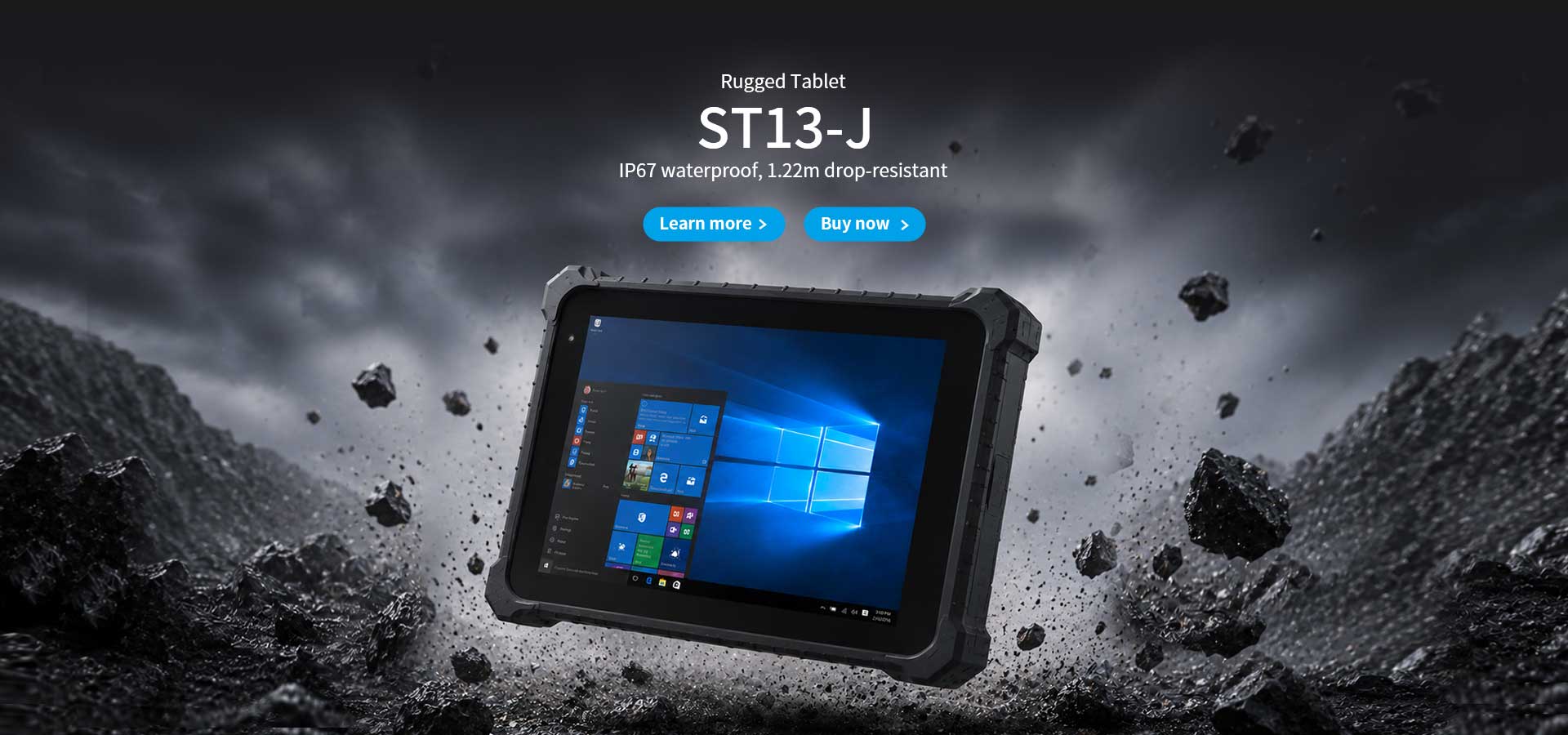
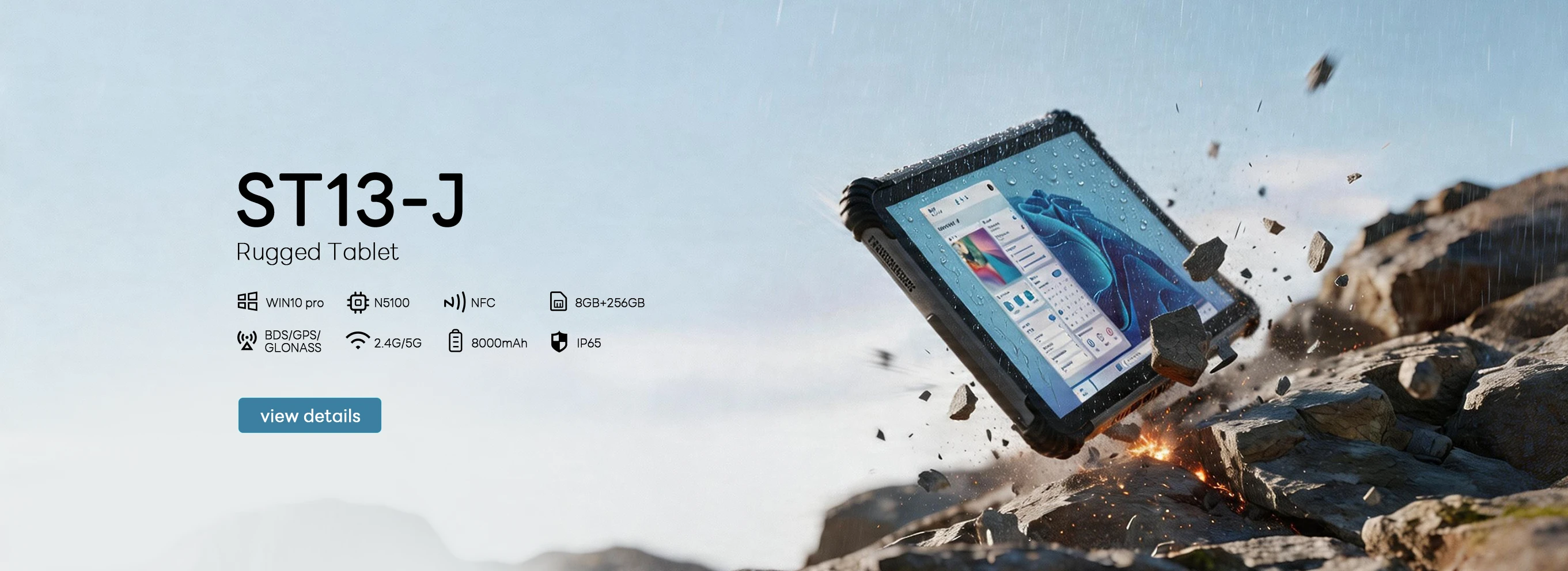
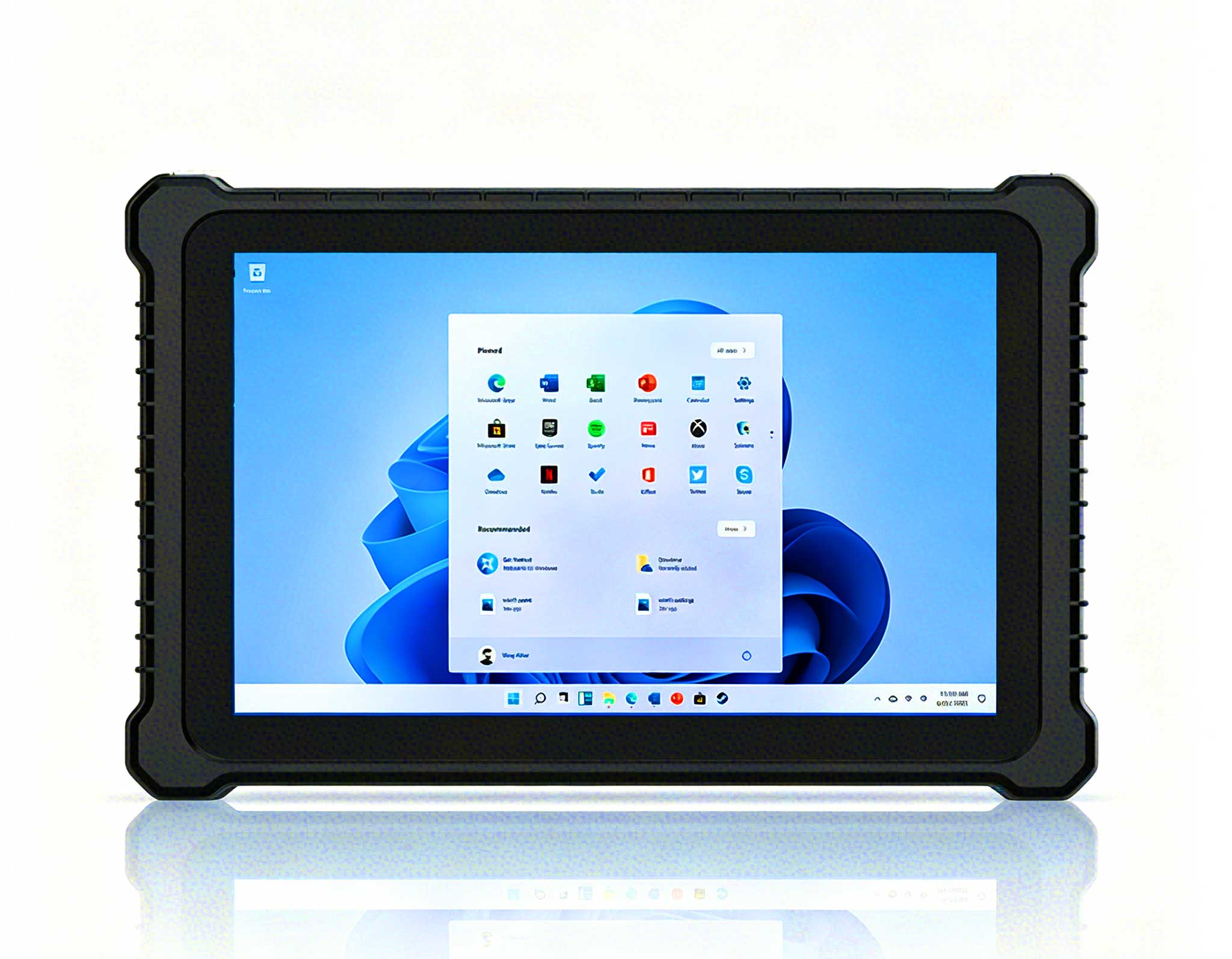
Three tablets make the point cleanly. A 10-inch unit on Intel's N100, a 10.1-inch unit on the Celeron N5100 platform, and a 13.3-inch unit on the same N5100 board. All three come out of the same custom hardware programme, so a decision taken for one usually has to be repeated, or deliberately not repeated, across the other two. This article follows one edit through the five positions it can occupy, and prices each one.
Freezing a drawing means the geometry, the bill of materials and the finish are fixed as a set. The factory can order long-lead parts and schedule the line, and quotations are built on that frozen set, with per-unit prices that assume whatever the line touches has already been qualified. An edit arriving after the freeze receives no per-unit price at all. It receives a one-off engineering charge plus a rework charge, because the work now happens to something in progress rather than to a plan. It is not that late edits are forbidden or that suppliers punish indecision. It is that the object has a shape, and changing a shape that exists is a different trade from drawing one that does not.
In the paperwork stage an edit is absorbed almost entirely by engineering hours. An aperture moves two millimetres, a connector swaps family, a screw boss gains a rib. The drawing is reissued, the flat pattern regenerated, and the change booked against the next revision. Nothing physical has to be discarded because nothing physical has been made. This is the cheapest place to be wrong, and the reason a serious programme spends weeks in it. HTNJ10C shows how many decisions live at this level. Its interface list runs to audio, Mini HDMI, USB Type-A, USB Type-C, an RJ45 socket and a dedicated DC input, and each opening, its gasket and its shielding can was settled on paper before any of them existed as a hole in a case.
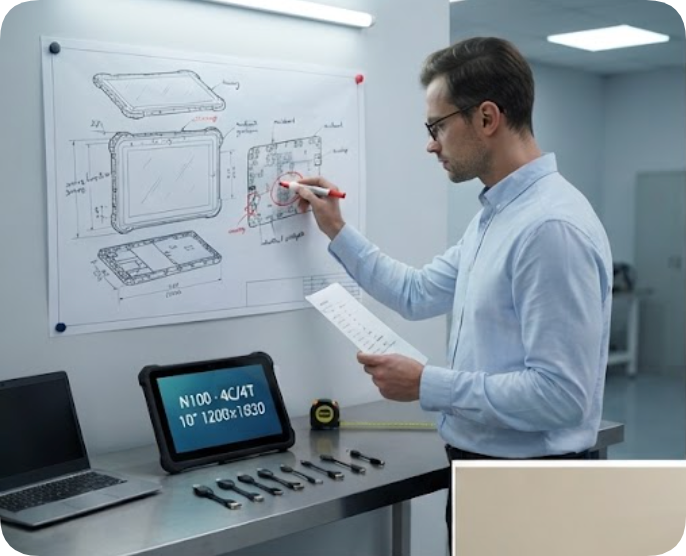
Once the tool has been roughed out, the first real money is on the floor. Roughing removes the bulk of the material but stops short of the finished cavity, precisely so a measurement can still be corrected. An edit here does not scrap the tool. It sends it back for more machining, and the cost is a returning charge plus a place in the toolroom queue. That queue matters more than the machining. A busy toolroom schedules weeks ahead, and an unplanned re-cut displaces whatever was next. A buyer who asks only for the rework price will find the schedule damage on a separate line.
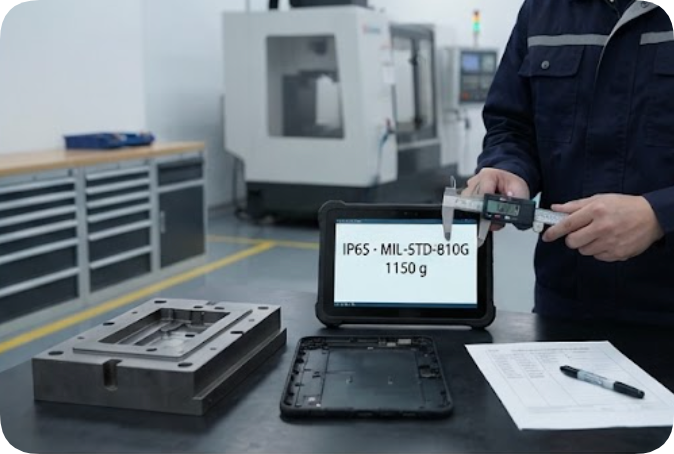
Here the curve steps up hard. Once the first article exists, the geometry has been proven and the tool produces a part that assembles. An edit that changes the case is no longer a re-cut. It is a scrapped tool and a second first article, with inspection, fit check and sign-off repeated from the beginning. ST11-J illustrates why teams hesitate here. Its sealed enclosure carries a 268.9 x 176.8 x 18 mm body at 1150 grams, holds IP65 sealing and MIL-STD-810G shock ratings, and wraps a 10.1-inch IPS panel driven by the N5100. Every one of those figures is enforced by the shell, so an edit touching the shell drags all of them back into qualification.
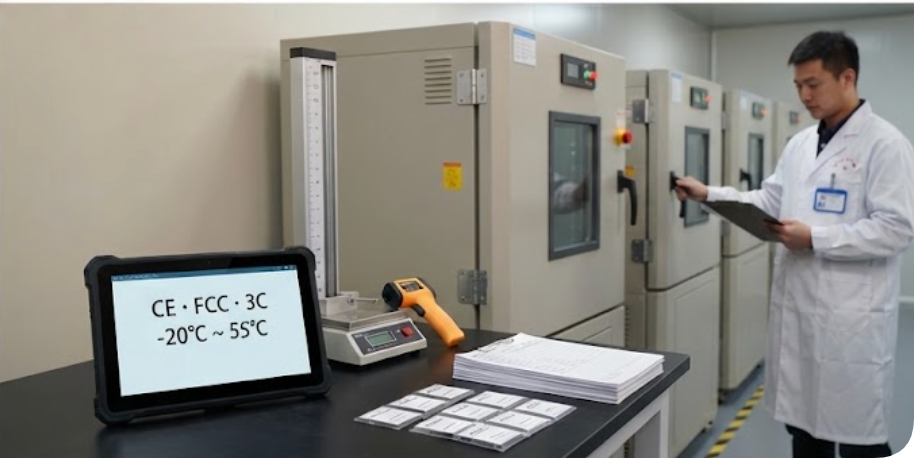
Certification adds a cost that cannot be bought back with overtime. Samples are submitted, fees are paid, and the file takes its turn in a test house queue that no amount of money shortens. An edit reaching the enclosure or the power path after submission invalidates part of the evidence already gathered, and the affected tests are re-run rather than patched. ST13-J carries CE, FCC and 3C marks and a stated operating band from minus twenty to fifty-five degrees, which is the kind of claim that has to be demonstrated rather than declared. Touching the mains path or the shielding after the file has gone out means paying the test house twice and waiting in line twice.
During production the loss stops being a tooling figure and becomes a line-stoppage figure. Work in progress sits at various stages: boards populated, housings moulded, units assembled and waiting for test. An edit here has to be applied to a mixed population, and the population sorted before anything can continue. Parts far enough upstream can be reworked at a bench. Parts already sealed cannot, and are scrapped. The stoppage is usually the largest single number, because an idle line consumes the output of every station behind it while producing nothing shippable.
After dispatch there is no drawing to change and no tool to re-cut. The only object left is the device in the customer's hands, so the edit becomes either a field action on units already delivered or a change carried into the next batch. Drawing that boundary is the last real decision available. A defect affecting safety or a stated specification has to travel backwards into the field. A preference, a layout tweak or a connector that would have been nicer does not, and belongs in the next order where it costs nothing beyond the paperwork of a new revision.
The practical defence is to keep two lists rather than one, and to agree the split before the freeze rather than during a crisis. The first holds changes that must land in this order: anything a customer's own compliance, safety or contractual requirement depends on. The second holds everything else, and its default answer is the next revision. Three questions sort an item quickly. Does it change an external interface or an internal one? Interfaces visible to the user belong on the first list, because a later field fix is expensive. Is it a tooling change or a firmware change? Firmware ships as a file. Does it depend on a claim that has already been tested? A tested claim cannot be quietly amended.
| Where the edit lands | What has already been paid for | What has to be paid again | Who has to agree |
|---|---|---|---|
| Drawing stage | Engineering hours only | A redraw and a re-check | Engineering and the customer |
| Tool roughed out | Tool steel and rough machining | A re-cut and a place in the queue | Engineering and the toolroom |
| First article built | The finished tool and the first sample | A replacement tool and a second sample | Programme management and purchasing |
| File submitted | Test samples and a queue position | A repeat test and a second wait | Compliance and the test house |
| Line running | Work in progress and scheduled hours | Sorting, scrapping and lost output | Production planning |
| Units shipped | The whole batch and its freight | A field action, or nothing at all | Service and the customer |
| Item | HTNJ10C | ST11-J | ST13-J |
|---|---|---|---|
| Display | 10 inch LCD, 1200 x 1920, 560 nit | 10.1 inch IPS, 1200 x 1920, 420 nit | 13.3 inch IPS, 1920 x 1080, 260 nit |
| Processor | Intel N100, four cores, 3.4 GHz | Intel Celeron N5100, four cores | Intel Celeron N5100, four cores |
| Memory and storage | Not published | 8 GB / 256 GB | 8 GB / 256 GB |
| Battery | 7.6 V, 3500 mAh, 7 hours | 6000 mAh at 7.6 V, 8.5 hours | 8000 mAh at 7.6 V |
| Sealing and shock | IP67, 1.22 m drop | IP65, MIL-STD-810G | IP65, 1.2 m drop |
| Body dimensions | 284 x 190 x 25 mm | 268.9 x 176.8 x 18 mm | 331.7 x 203.2 x 19.5 mm |
Mass is left out because the three pages do not state it on the same basis: two give a bare figure for the unit, while the third quotes a gross weight with the carton included. Placed side by side they would suggest a difference that is really a difference in terms.
None of this requires a supplier to be generous. It requires the wish list to be finished while the drawing is still the only thing that can be wrong. A programme that arrives at the freeze with a settled list spends its money on parts and labour. One that arrives with an open list spends the same money and then spends it again. The three units here share a platform so a decision can be taken once, which is only an advantage if the decision is taken at the right moment. Buyers comparing options across a wider range can do that against the industrial hardware range, and readers who want the figures line by line will find them in the published side-by-side comparisons.