- Select Language
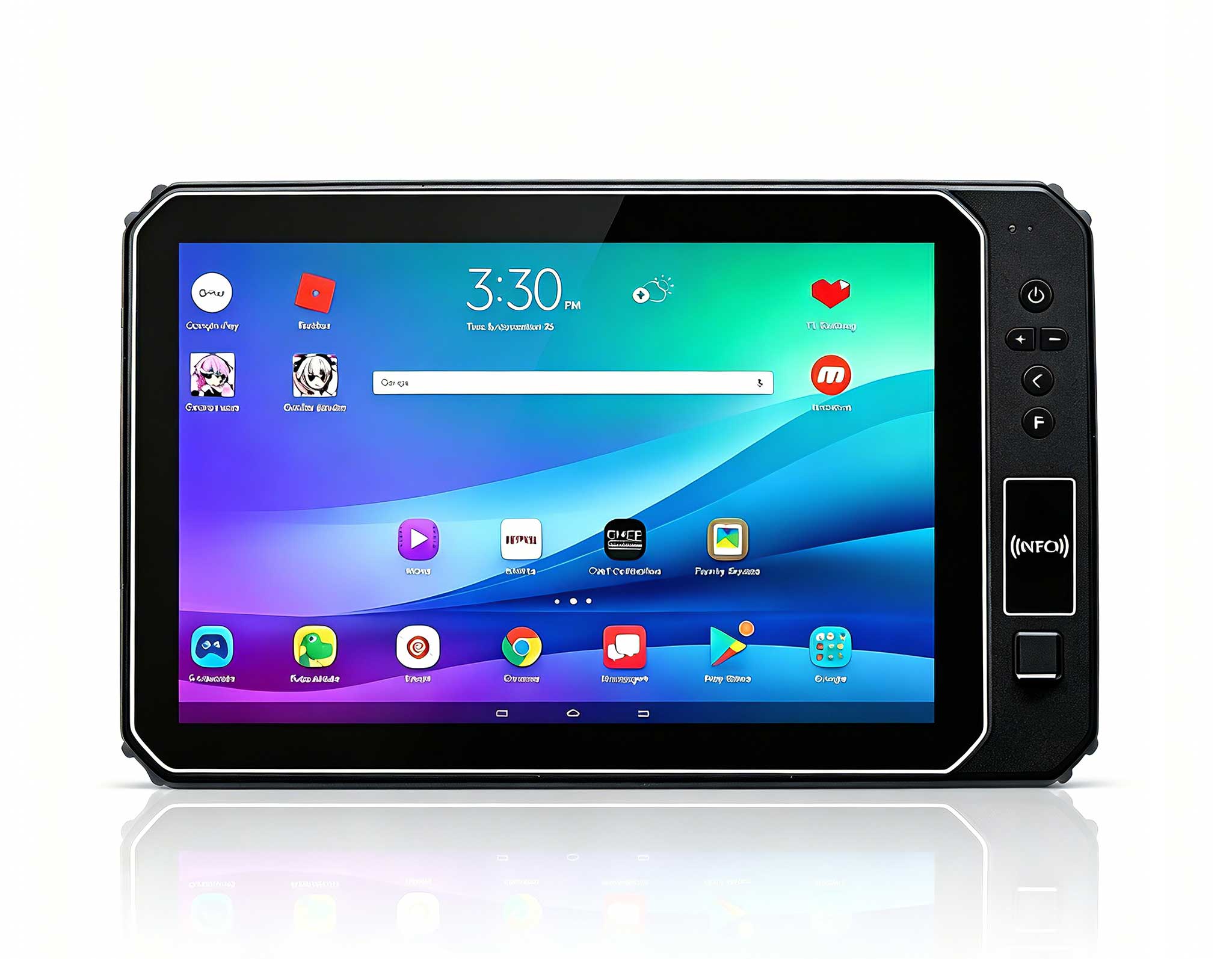
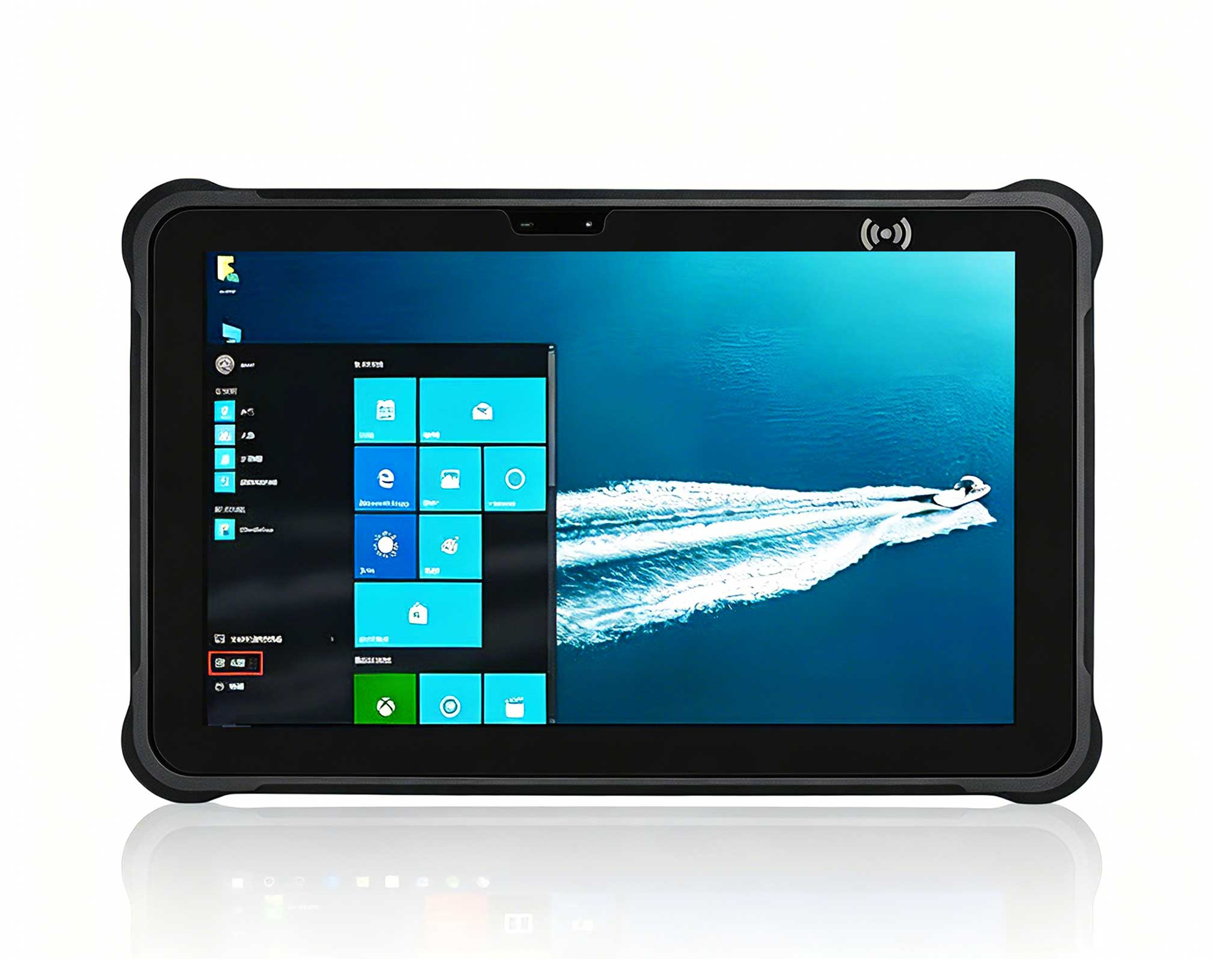
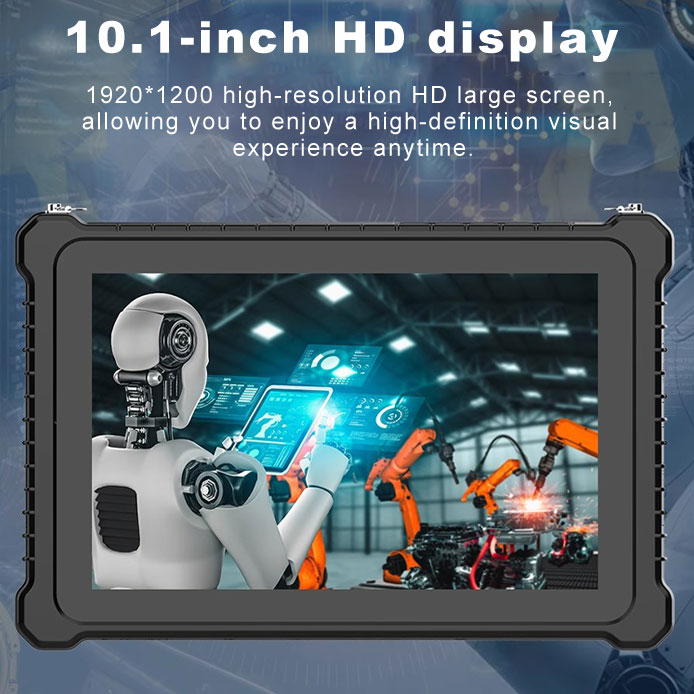
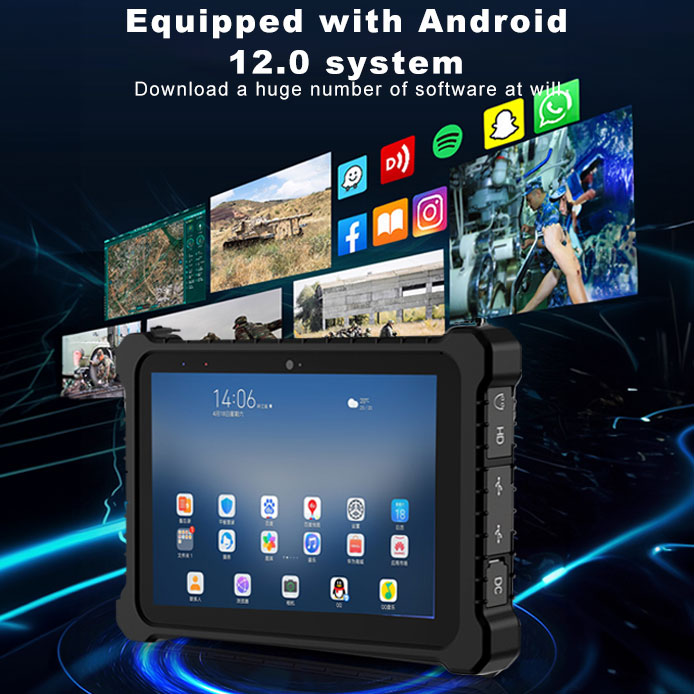
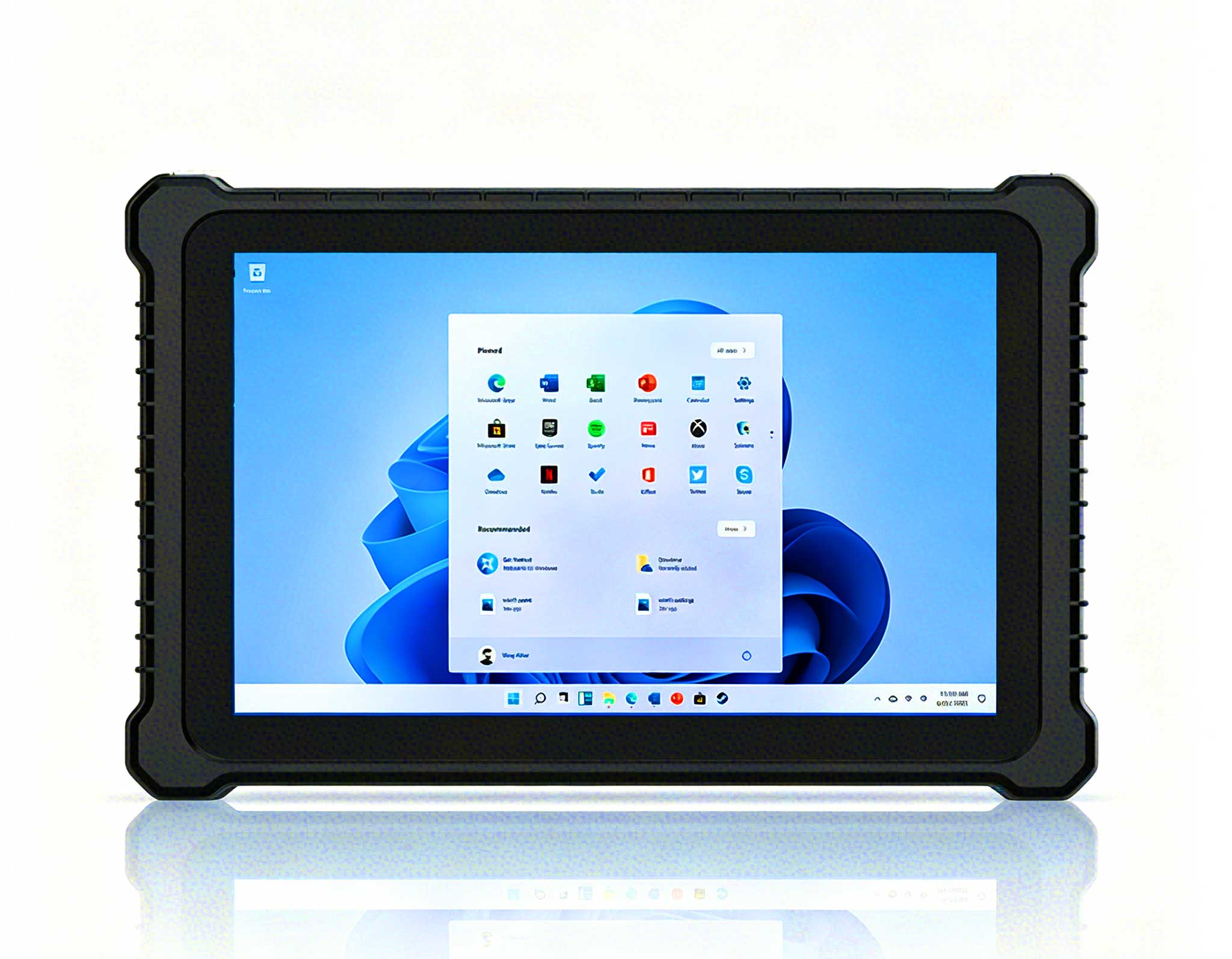
This 10-inch Android rugged tablet is designed for...
Enterprise Flagship SeriesEngineered for mission-c...
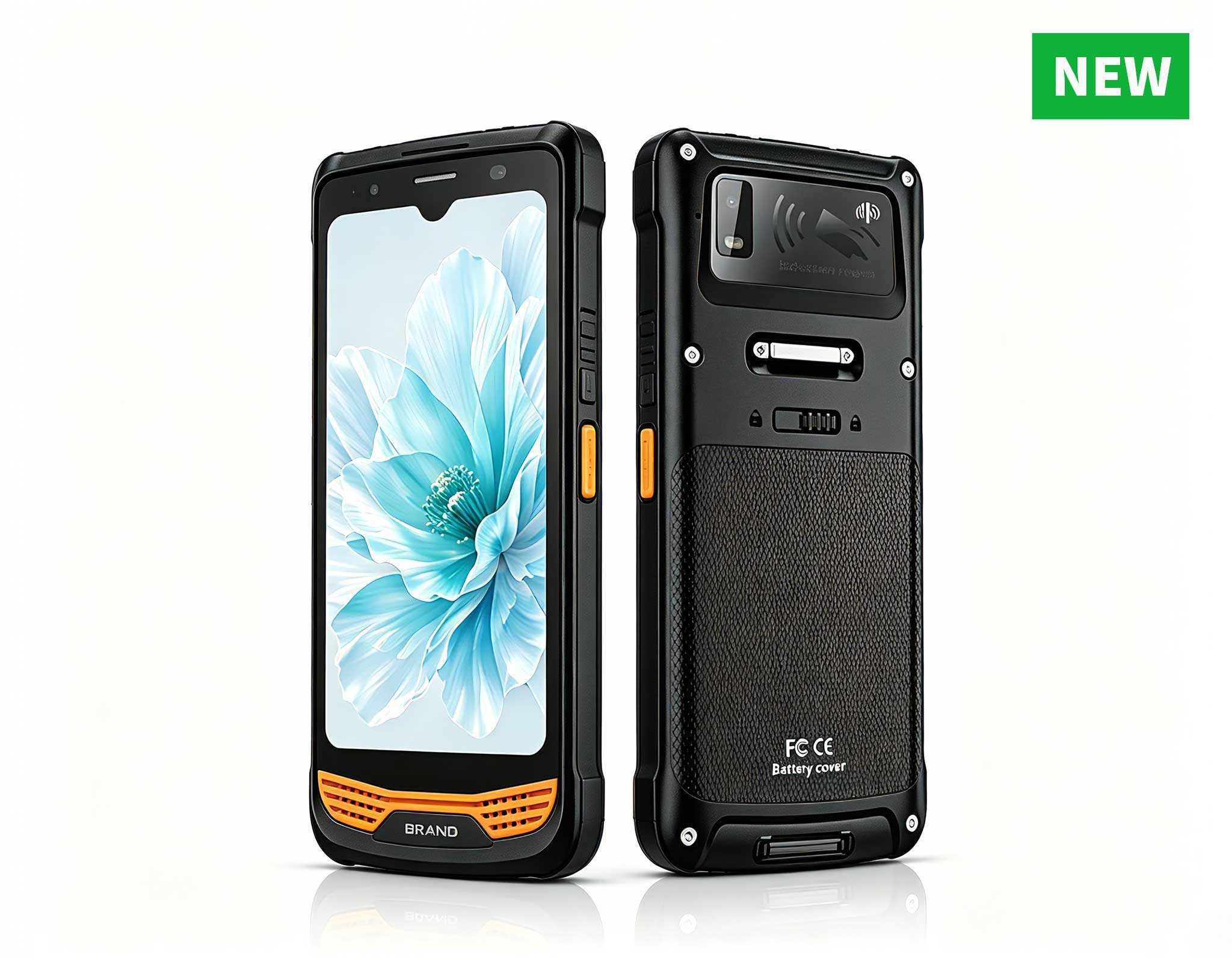
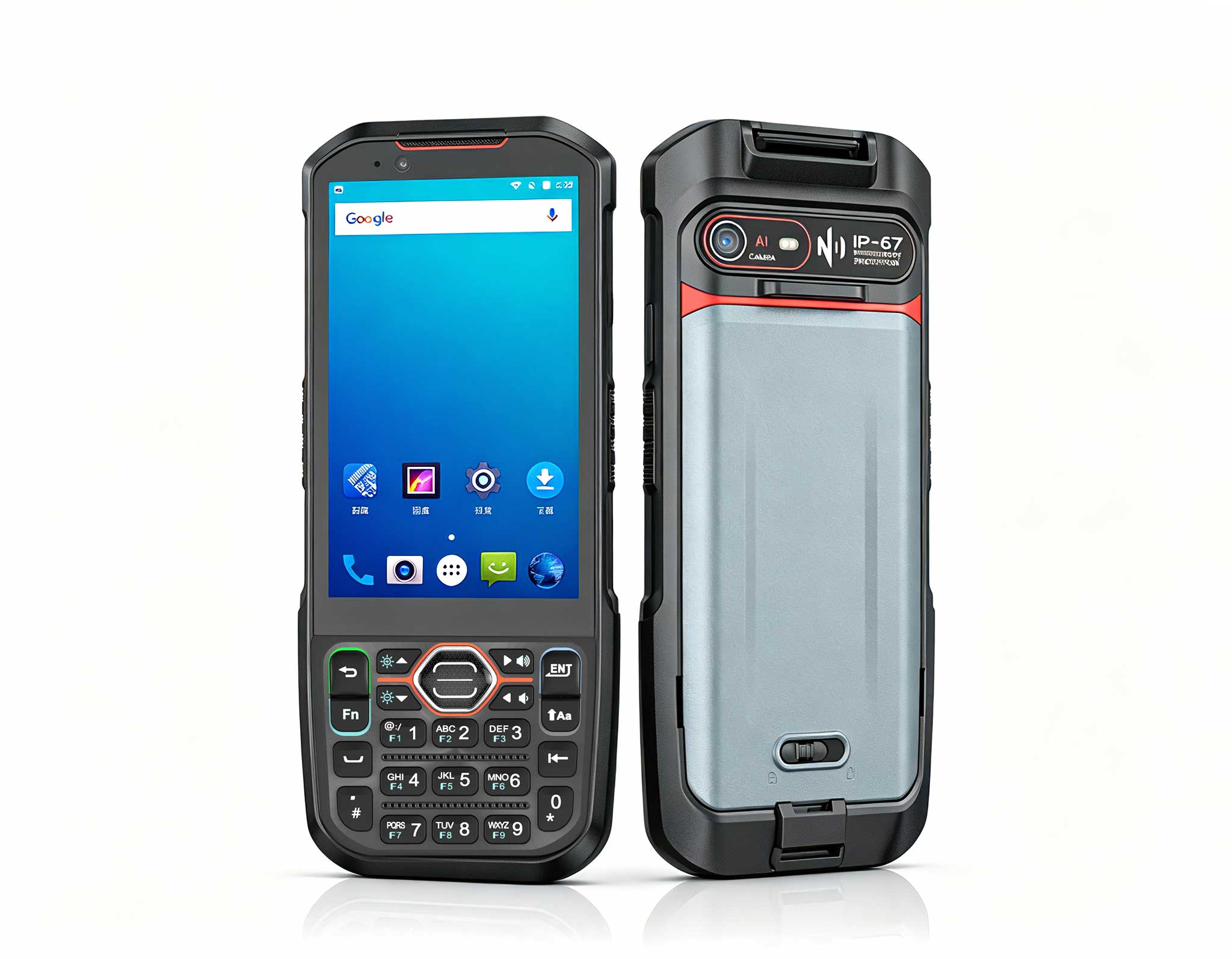
R366-S Thin 5.5-inch Industrial PDA | Qualcomm Oct...
Full SpecificationsModelHotus ST11‑JOSWindows 10 P...
Explore an innovative Personal Digital Assistant f...
Most writing about enforcement hardware starts with the specification. It lists the read rate, the antenna gain, the seal rating, everything that can be printed on a page. That is the part a buyer can compare, and it is the part that decides almost nothing in the street. What decides the outcome of a stop is one physical event: a reader and a tag agreeing with each other at the distance the job actually puts between them. Teams that run regular public safety enforcement work learn this the slow way, by carrying a unit that tested well and then performed badly.
Three handhelds sit at three different points on that distance, and their published numbers only start to mean something once they are read that way. The RS51 Handheld Terminal answers at the distance of a hand. The R530C PDA answers at the distance of an open shelf. The R366C-S UHF Reader answers at the distance of a parked vehicle. None of the three is a better device than the other two. Each covers a range the others cannot, and each loses its footing at a range the others handle without effort. The useful question is what to measure before trusting any of them.
The range printed on a data sheet is measured under conditions a patrol never recreates. One tag, held at the optimum angle, in open air, with nothing behind or beside it. A real check adds three variables at the same moment. The tag is stuck to something, and that something is usually metal, liquid or a body. Other tags sit inside the beam, answering as loudly as the one that matters. The officer is moving, so the read has a deadline measured in fractions of a second. A unit that reaches ten metres down a corridor can miss at two on a wet pavement.
Some checks cannot be done at a distance at all, and should not be. A warrant card, a sealed evidence bag or a signed seizure note has to be read where the officer is standing, with a second person watching. The RS51 Handheld Terminal is built for that end of the job. Its optional NFC module works at 13.56MHz over a distance of two to three centimetres, short enough that nobody has to wonder which credential answered. A 6.3in IPS panel at 1080×2340 with five-point capacitive touch keeps working through a wet glove, which decides whether a result can be produced in the rain.
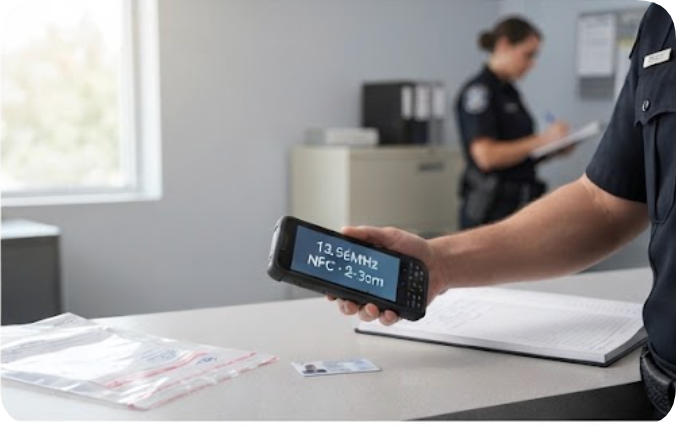
The rest of the package suits a stop that runs longer than planned. Its 5000mAh battery is detachable, so a spare cell travels in a jacket pocket rather than a charger in a vehicle, and the 16MP rear camera records a seal or a serial number without a second device coming out. Two Nano-SIM slots and 4G on either the CN or the EAU band set keep a lookup alive where the street has no usable Wi-Fi. At 172mm by 76.6mm by 16.5mm and under 500g, it stays in one hand through a long conversation.
The next distance out is the one an inventory check needs. A kit bag, a locker or a van shelf holds a dozen tagged items, and tipping them onto a table to count them costs more time than the count is worth. The R530C PDA carries an optional 40 by 40mm ceramic UHF module with a read distance of up to two metres. That is far enough to tally a shelf through its open front, and near enough that the unit's own screen still shows which items answered and which stayed silent. Nothing has to be lifted out for the tally to happen.
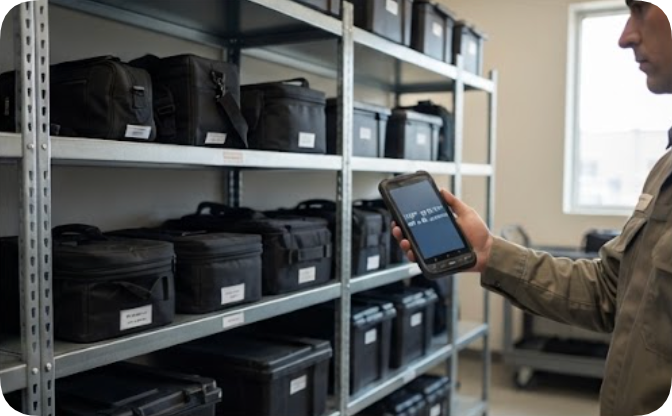
The R530C carries the largest panel of the three, 6.0in at 1080×2160, on a Qualcomm SDM450 octa-core and Android 9.0. That release is not the newest in the group, and for this work it does not need to be: a unit running a fixed set of validated applications wants a platform that stops moving. Two gigabytes of memory and sixteen of internal storage suit that same stack, and its 6000mAh battery is sealed, so a long shift is covered by a vehicle charger instead of a spare cell. A PSAM slot makes it usable wherever a secure element has to be present for the check to count as a check.
The longest distance is the one that decides whether a stop stays safe. Reading a vehicle tag, or a group's credentials, without walking up to either keeps the officer at the kerb instead of in the lane. The R366C-S UHF Reader is the unit for that. An Impinj E710 module with a 4dBi antenna gives a read distance of 10 to 20 metres and a read rate of at least 900 tags per second. Those three figures are what allow a moving group to be tallied rather than halted, and the difference between the two is the difference between a check and a queue.
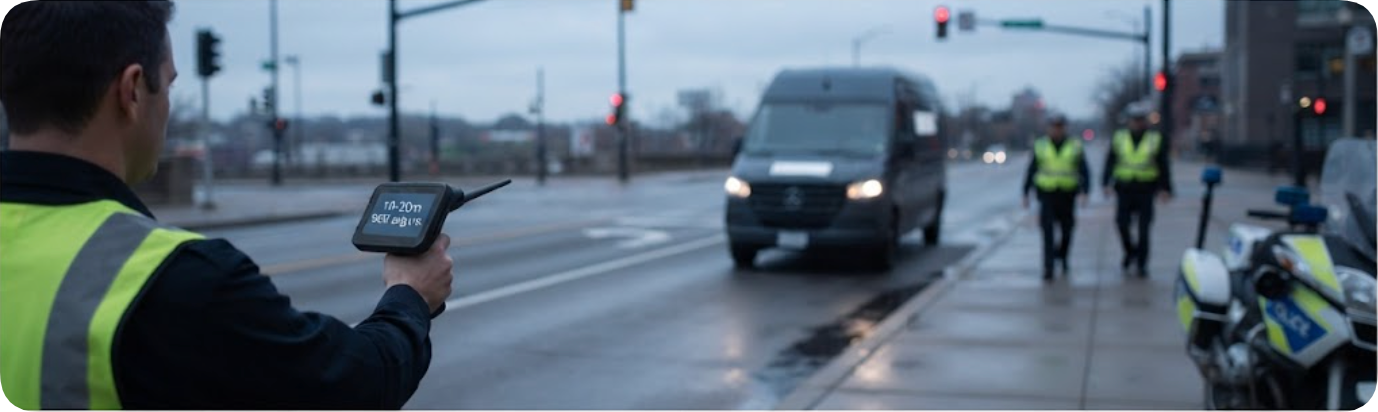
The R366C-S pays for that reach in size. At 170mm by 79mm by 22.6mm and under 700g it is the heaviest of the three, and the 10000mAh battery that gives it a full day is detachable, which matters when the unit itself has to come out of a vehicle cradle and go back into one. The UHF module is offered with or without a 2D engine, so a site that also handles untagged paperwork can carry one unit instead of two. Both ends of the job sit on the same body.
Two tables follow and they answer different questions. The first collects only the fields all three manufacturers publish, so nothing in it is inferred, and it should be read across the industrial hardware range the same way. The second is the one worth taking on a trial, because it lists what can be measured on site, what moves each number, and what a failure looks like when it happens.
| Unit | Operating system | Processor | Display | Memory | Battery | Body |
|---|---|---|---|---|---|---|
| RS51 Handheld Terminal | Android 13 | Qualcomm SM6225 octa-core 2.4GHz | 6.3in IPS FHD+ 1080×2340 | 4GB+64GB, TF to 256GB | 5000mAh detachable | 172 × 76.6 × 16.5mm, under 500g |
| R366C-S UHF Reader | Android 13 | Qualcomm SM6225 octa-core 2.4GHz | 5.5in IPS HD+ 720×1440 | 4GB+64GB, TF to 256GB | 10000mAh detachable | 170 × 79 × 22.6mm, under 700g |
| R530C PDA | Android 9.0 | Qualcomm SDM450 octa-core 1.8GHz | 6.0in IPS FHD+ 1080×2160 | 2GB+16GB, TF to 128GB | 6000mAh sealed | 188 × 83 × 22mm, under 500g |
| What you measure on site | What moves the number | What a failure looks like | Unit that holds here |
|---|---|---|---|
| Answer distance on a known tag | Orientation of the tag, what it is fixed to, what stands behind it | A tag in the next bay answers before the target does | R366C-S |
| Reads per second against a moving group | Tag population inside the beam, walking speed of the group | The tally at the end is short by two or three items | R366C-S |
| Tally inside a closed or open-fronted container | Door material, liquid content, spacing between tags | Nothing answers until the contents are lifted out | R530C |
| Credential read at the point of contact | Credential type, distance from the reader face | The officer has to touch card to unit to get a result | RS51 |
| Screen legibility in direct sun | Angle of the sun, brightness of the panel | The officer reads the result aloud instead of showing it | RS51 and R530C |
The number that matters is not the maximum range but the range at which the first wrong tag answered. A trial sheet needs four lines on it, and none of them is a specification. The first is the distance at which something other than the target entered the beam, because that is the working limit and it is often a third of the published figure. The second is reads per second with the group actually walking. The third is the time from trigger to a result on the screen, since a slow stop is one that gets argued about. The fourth is the hours the unit gave before the battery warning.
Reach is the first thing to fail when the environment changes, and it fails quietly. Metal shelving reflects, water absorbs, and one body standing between antenna and tag is enough to close a long read down to nothing. Two of these units also publish no ingress or drop figure at all. The RS51 carries IP67 with a 1.2m drop rating, while the R366C-S and the R530C stop at an operating window of -10°C to 50°C and leave the mechanical claim to the buyer. For a unit that comes out of a vehicle in the rain, that gap is closed with a case, not a promise.
Before the first round, fix four constants: the same tag, the same position, the same operator and the same hour of the day, so that any change in the reading belongs to the hardware rather than the weather. Then measure the whole loop instead of the read, from the moment an officer looks at a target to the moment a record exists on the device. That interval is what a supervisor is really asking about, and it is the figure that survives a review. The published tables for the wider range sit in product comparisons and competitor analysis for anyone who wants the tables first.