- Select Language
P11 Series Next-Gen Enterprise Rugged Industrial ...
R860-S 5.5-inch Industrial PDA with Thermal Printe...
RS51 4G Rugged Handheld Terminal | 6.3" FHD+ ...
The X501 Handheld PDA combines advanced barcode sc...
Explore our customized PDA designed for versatile ...
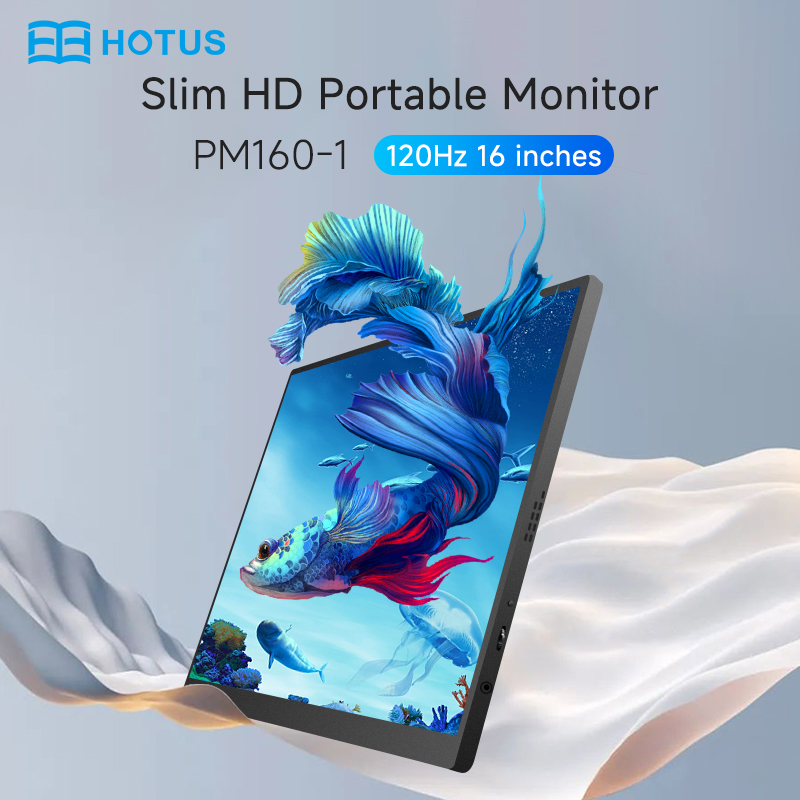
The PM158-1 is a 15.6-inch portable touchscreen mo...
This dual touchscreen gaming laptop combines cutti...
The T80 handheld PDA combines advanced barcode sca...
Full SpecificationsModel Hotus SH5‑WOperating ...
A gas utility does not send a technician to a house for a long visit. The appointment slot is short, the customer answers the door once, and everything the crew is there to do — confirm the appliance state, capture the index, log the condition of the regulator — happens in one uninterrupted exchange. That constraint is what makes a handheld terminal comparison in this vertical different from a warehouse one. The device is not competing for throughput on a conveyor; it is competing for how much of the job closes before the door shuts.
Hotus builds three handhelds that land at very different points on that problem. The RS50 Handheld Terminal carries 5G and an optional RTK positioning module. The RS51 Handheld Terminal keeps the same body and camera layout on a 4G platform. The X501 Handheld PDA sits below both as an entry unit with an older Android build. This walkthrough compares the three the way a gas operations manager would: by what each one manages to finish inside the entry window, and what it leaves for a second appointment.
Most residential safety appointments are scheduled in tight blocks, and the customer's patience runs out faster than the checklist. A technician who has to walk back to the van, swap hardware, or reboot a frozen unit burns the goodwill that keeps the appointment alive. Anything the handheld can hold in one hand, wake instantly, and submit from the hallway protects that window. This is why the comparison below weighs boot behavior, upload path, and one-handed operation more heavily than processor benchmarks. A slower chip that never interrupts the exchange beats a faster one that locks up at the hallway, and the three devices divide on exactly that line.
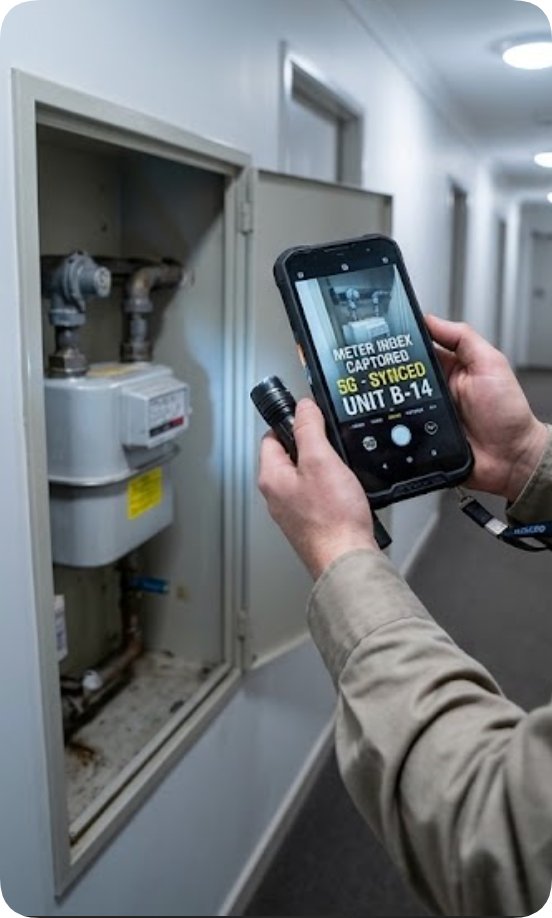
The index capture is the one task that cannot slip. If the meter sits in a dark cabinet or the display is glazed, the technician needs a screen bright enough to verify the digits before closing the app. The RS50 and RS51 both run a 6.3-inch IPS FHD+ panel at 1080×2340, which keeps a photographed index legible during review. The X501's 5.5-inch IPS screen runs at 720×1440, which is adequate for the capture app but shows less of the history screen at once. When the submit fails on cellular, both larger units fall back on dual-band Wi-Fi at the depot, while the X501 holds to the same trick on older radios. The point of the comparison is not which screen is prettier; it is which device lets the technician confirm and submit while still standing at the doorstep, instead of promising the customer a correction later.
A safety visit lives or dies on documentation. The technician photographs the appliance state, the seal, and any abnormal reading, and that photo set has to survive the upload path intact. On the RS50 the rear 48MP autofocus camera with LED flash handles dim cabinet interiors, and the front 8MP unit covers a signature-on-screen confirmation. The RS51 records the same evidence with a rear 16MP autofocus camera and flash, which is sufficient for compliance archives. The X501 does not publish camera specifications on its product page, and that absence matters in this vertical: an operator who needs documented proof cannot treat an undocumented camera as a plan. Where the light is bad and the regulator sits deep in a cupboard, the difference between the 48MP unit and the rest is the difference between an archived photo and a return trip.
The RS50 is the only one of the three with 5G SA/NSA support across bands such as N1, N41, N78, and N79, and it pairs that radio with a Unisoc UIS7885 octa-core processor at 2.7GHz and an 8T NPU. In a dense estate where the crew uploads photo sets, syncs the schedule, and pulls the meter history at once, the headroom is real. Its 6.3-inch panel, IP67 sealing, and 1.2-meter drop rating come in the same 172mm × 76.6mm × 16.5mm body weighing under 500g. The RS50 is also the unit to spec when an optional independent Beidou RTK module makes sense, because pit-mounted meters and communal risers reward centimeter-grade positioning. For fleets that bill by completed appointments rather than by hardware cost, this is the device that closes the hardest calls.
The RS51 keeps the same shell, the same 6.3-inch FHD+ display, and the same IP67 and 1.2-meter drop envelope, then trades the 5G radio for a Qualcomm SM6225 octa-core platform at 2.4GHz on a 11nm process. Cellular coverage runs on 4G LTE with regional CN and EAU band variants, which matches how most gas estates actually operate: jobs are dispatched in the morning, photos sync in batches, and the office does not need live video from the hallway. Its 5000mAh detachable battery supports hot-swapping between appointments, and the optional Beidou RTK module reaches 2-5cm horizontal accuracy where positioning matters. The RS51 is the volume pick for a mixed fleet because it preserves the evidence workflow and the seal rating while skipping the radio cost that only dense urban routes can justify.
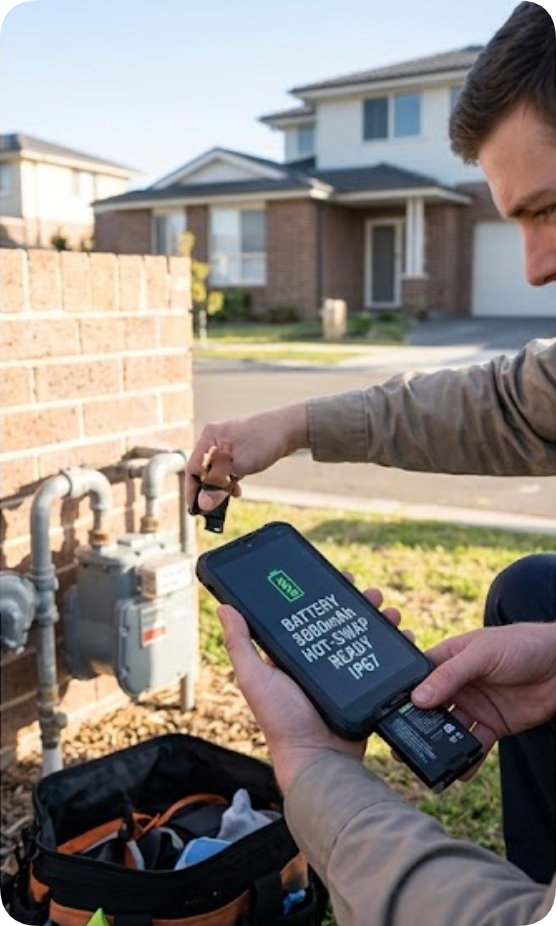
The X501 is the honest baseline of this comparison. It runs Android 10.0 on an MT6762 processor, stores 2GB+16GB or 4GB+64GB configurations expandable by microSD to 256GB, and seals to IP66 rather than IP67. Connectivity is 4G WWAN with Bluetooth 5.0 + BLE, and positioning comes from GPS, Galileo, Glonass, and Beidou without an RTK option. It weighs under 500g and ships with an SDK for in-house app integration, which keeps it viable for utilities that run their own software team. Battery capacity and camera specifications are not published on its product page, and neither figure should be guessed at in a tender. The X501 still covers straightforward capture-and-submit appointments, and for crews whose estates have good coverage, that may be all the job actually needs.
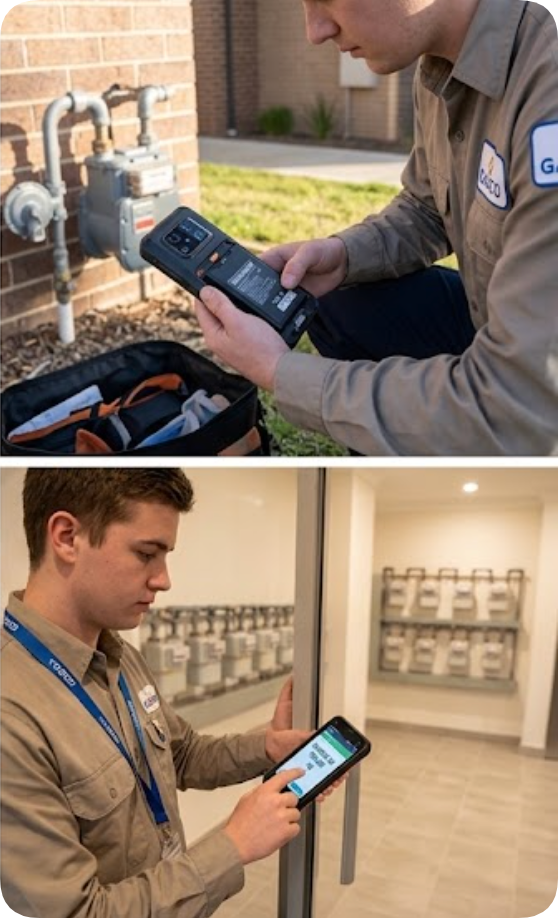
The specification split is easiest to see side by side.
| Dimension | RS50 | RS51 | X501 |
|---|---|---|---|
| Display | 6.3in IPS FHD+ 1080×2340 | 6.3in IPS FHD+ 1080×2340 | 5.5in IPS 720×1440 |
| Operating System | Android 13; Harmony OS optional | Android 13 | Android 10.0 |
| Storage | 128GB ROM; TF to 512GB | 64GB ROM; TF to 256GB | 16GB or 64GB; microSD to 256GB |
| Cellular | 5G SA/NSA | 4G LTE; CN and EAU variants | 4G WWAN |
| Positioning | GPS; Glonass; Galileo + Beidou; RTK optional | GPS; Glonass; Galileo + Beidou; RTK 2-5cm optional | GPS; Galileo; Glonass + Beidou |
| Protection | IP67; 1.2m drop; -10 to 50 C | IP67; 1.2m drop; -10 to 50 C | IP66 sealed |
Two fields sit outside the table because the pages do not state them on a comparable basis. Battery: the RS50 page lists a 4800mAh specification in its table while describing a 5000mAh detachable pack with hot-swap elsewhere, and the RS51 consistently describes a 5000mAh detachable hot-swappable pack; the X501 publishes no battery figure at all. Camera: the RS50 carries a rear 48MP autofocus unit with LED flash and an 8MP front camera, the RS51 a rear 16MP autofocus unit with flash, and the X501 publishes none. Where a tender requires either field in writing, it should be confirmed with the factory against the current datasheet rather than quoted from memory. Weight and dimensions are safer ground: both 6.3-inch units share a 172mm × 76.6mm × 16.5mm body under 500g, and the X501 also lists under 500g.
Procurement should match hardware to the shape of the year. Estates dominated by dense apartment blocks, pit-mounted meters, and photo-heavy compliance files justify the RS50's 5G path and RTK option. Suburban rounds with predictable coverage and a compliance archive to feed are the RS51's territory, and its hot-swappable pack absorbs the longest winter days. Light-duty portfolios with strong coverage and in-house app support can run the X501 without apology, provided nobody on the team assumes an IP67 seal or a documented camera it does not publish. A wider cost view across the same hardware family is available in the Multi-Function PDA Fleet Cost Guide, and crews standardizing on a printing or labeling workflow can cross-check the U1 Series Handheld PDA before locking the order. Every URL in this paragraph, like the handheld terminal range itself, is worth a look before the next tender cycle closes.