- Select Language
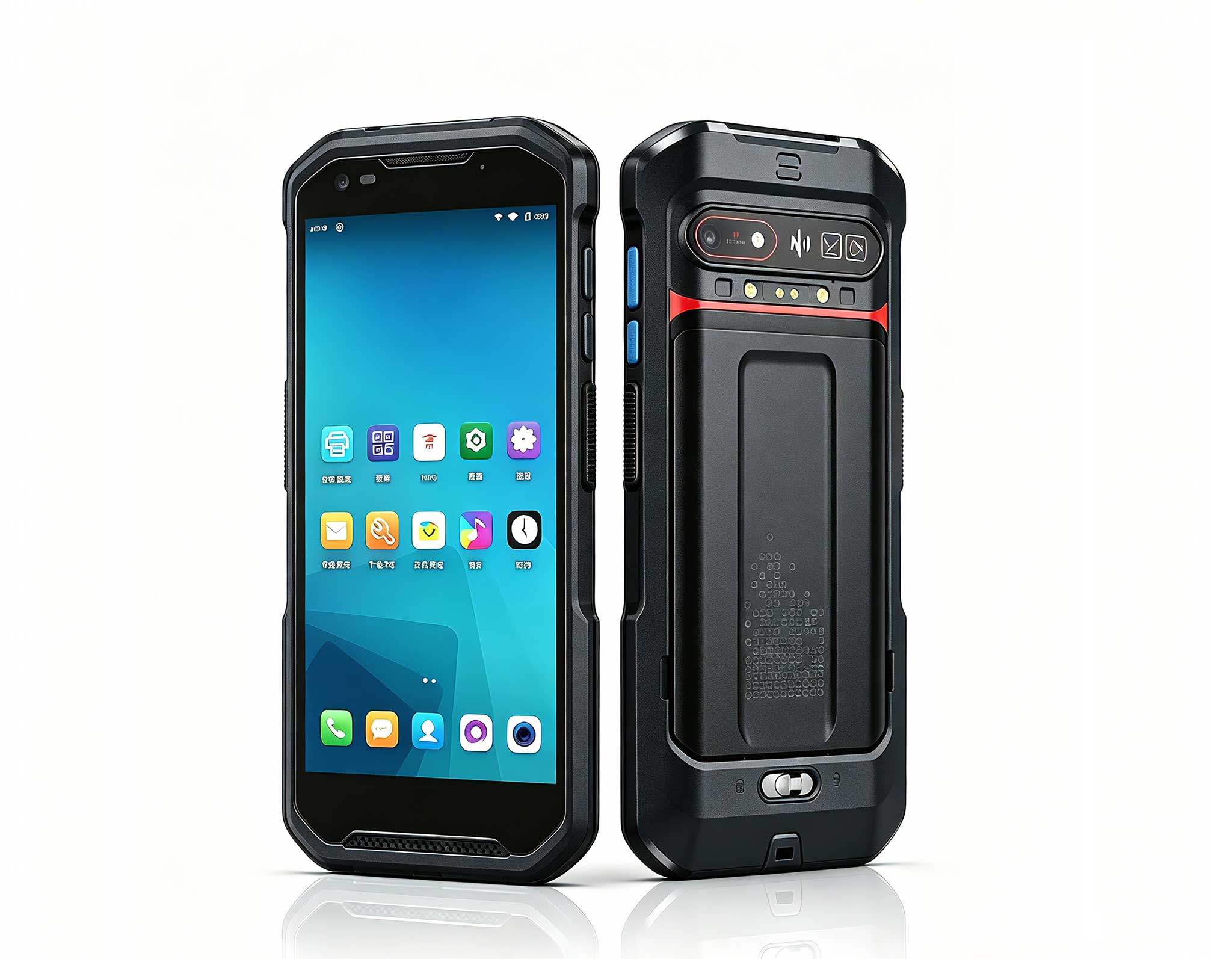
The F505 Handheld PDA is a compact, high-performan...
RS51 4G Rugged Handheld Terminal | 6.3" FHD+ ...
Full SpecificationsModel Hotus SH5‑WOperating ...
Full SpecificationsModelHotus ST11‑MOSWindows 10/1...
From the unknown so simpleUsed for mobile phones, ...
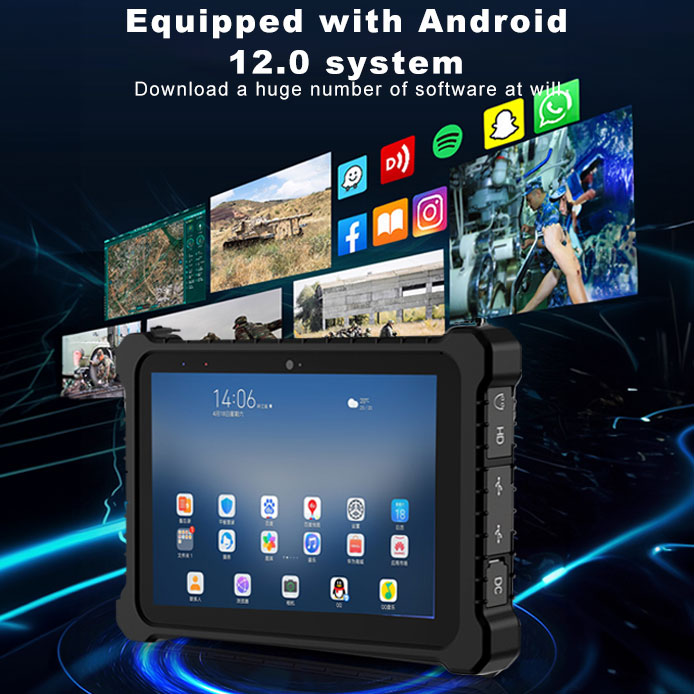
Explore our customized PDA designed for versatile ...
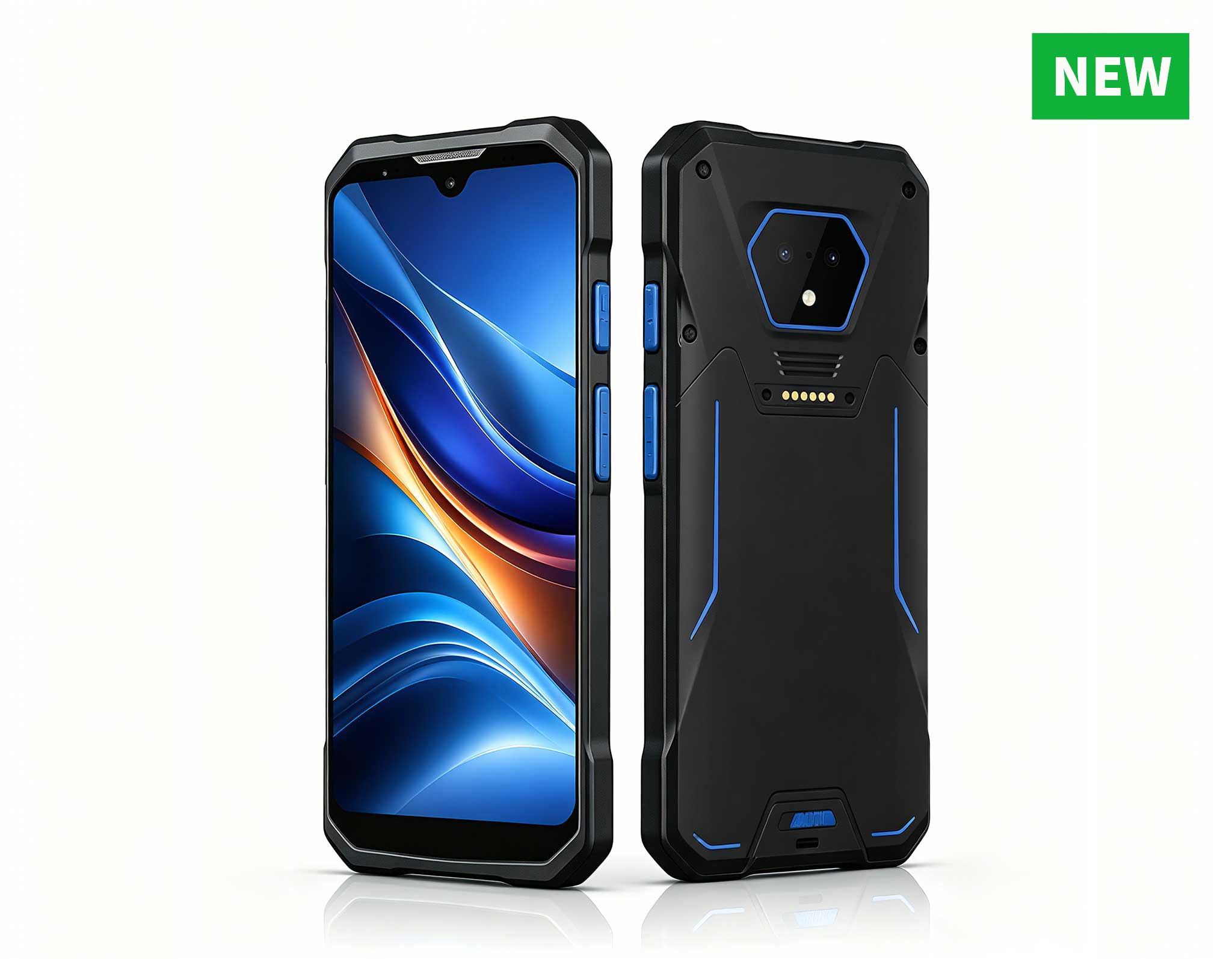
RS50 5G Rugged Handheld Terminal | 6.3" FHD+ ...
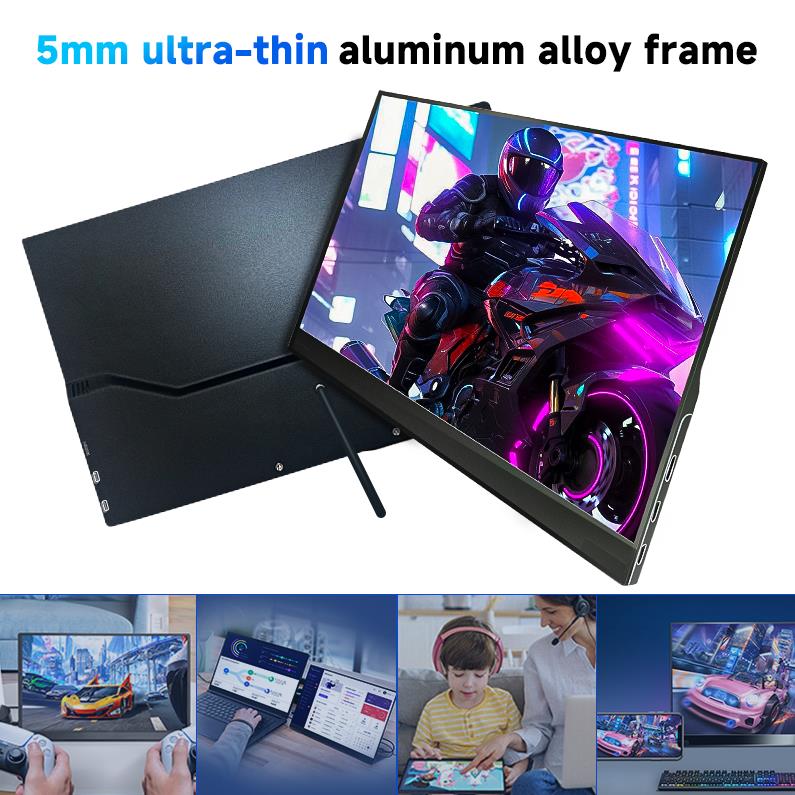
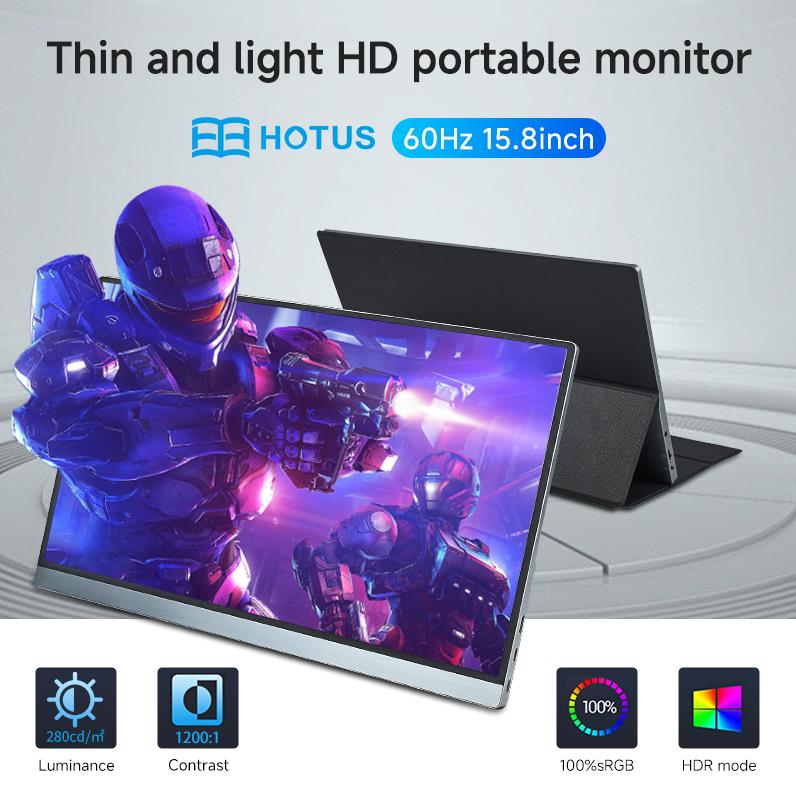
The PM158-1 is a 15.6-inch portable touchscreen mo...
A meeting room hides two decisions inside one purchase order: where the projector lives, and who produces the picture. Most projectors are display endpoints that wait for a laptop; a smaller group carries a computer inside. Those two questions decide more about daily use than any lumen figure on a specification sheet.
This comparison places three Hotus projectors against two established meeting-room machines: the Epson EB-1485Fi and the BenQ MH733. The Hotus line-up covers a fixed ultra-short-throw laser, a portable Windows 11 projector and a pocket-sized Windows 10 unit, while Epson and BenQ represent the two conventional routes. Where a manufacturer does not publish a figure, this article says so rather than estimating.
A presenter standing in a throw beam casts a shadow on the screen and looks into the lens flare whenever they turn to the audience. Ultra-short-throw mounting fixes that by placing the lens centimetres from the wall, at the cost of any freedom to move the furniture. A trolley-mounted or battery-powered projector keeps the room flexible but brings the shadow back the moment somebody crosses the light path.
The second question is easier to feel than to see. If the projector is only a screen, every meeting starts with the same ritual: find the cable, find the adapter for the visiting laptop, wait for the source to be detected. Putting the operating system inside deletes that ritual, but the projector's own hardware then becomes the ceiling on performance.
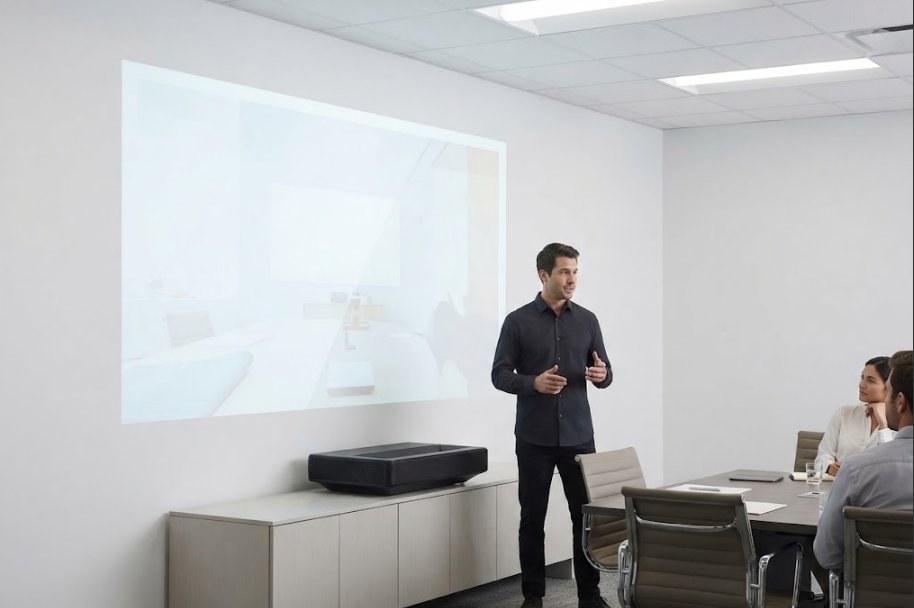
The HT2500 Pro Ultra is the fixed-installation answer. Its published throw ratio is 0.233:1, which the manufacturer describes as a 100-inch image from about 7.2 inches off the wall, shorter than the 0.27:1 of the Epson EB-1485Fi. Brightness is quoted at 3000 ANSI lumens, contrast at 1,000,000:1, resolution at 4K on a 0.47-inch DMD with pixel shifting, and HDR10 is supported. The laser light source is rated at 25,000 hours and audio comes from a built-in 60 W Harman Kardon soundbar with DTS-HD and Dolby decoding. Projection size adjusts between 80 and 120 inches.
The cost of that optical design is mass. The unit weighs 20 kg, more than twice the 9.3 kg of the Epson, and it is not a device that moves between rooms. Buyers who want the same ceiling-free geometry in a lighter chassis should read the specifications for the ultra-short-throw laser projector carefully before committing to a mount.
The HT500 attacks the second question instead. It runs Windows 11 on an Intel Celeron N5105 with 4 or 8 GB of LPDDR4 memory and a 256 or 512 GB SSD, so office software and video calls run on the projector itself. A sliding switch moves between projection and desktop mode: this is a screenless computer that happens to throw an image.
Optically it is a different class of machine: native 1280x720, 400 ANSI lumens, a quoted 340:1 contrast with an NTSC gamut of at least 90 percent, and a German Osram three-LED engine. The body measures 183x164x61 mm at 1,080 g, with a 3700 mAh battery, 100 W fast charging, dual-band Wi-Fi, Bluetooth 5.0, USB, Type-C at 65 W and a 3.5 mm jack. Front, rear and ceiling projection are supported. Full figures sit on the HT500 product page.
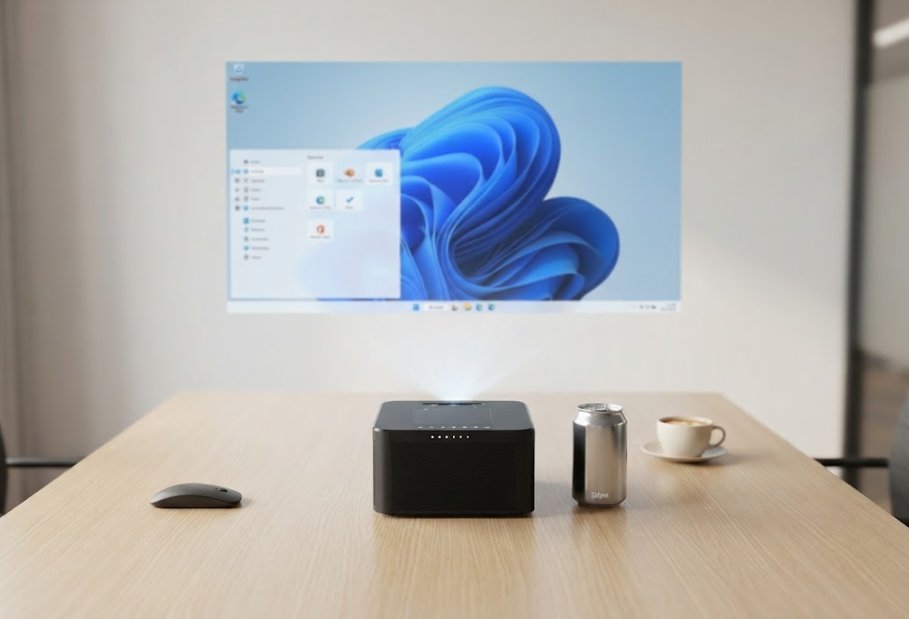
The H2 is the smallest of the three: an Intel Atom quad-core processor with 4 GB of memory and 128 GB of eMMC storage on Windows 10, measuring 214x142x25 mm at 735 g, about half a sheet of A4. Its throw ratio is 1.1:1 over a 20 to 200 inch range, best viewed at 70 to 80 inches from 1.7 to 2.3 metres, with auto focus and auto keystone correction of plus or minus 40 degrees. Two 2 W speakers, Bluetooth 4.2 and dual-band Wi-Fi are included.
Two numbers define its limits. Brightness is 350 ANSI lumens and native resolution is 1280x720, with 1080P, 2K and 4K content accepted as input rather than displayed natively. The 10,000 mAh battery runs for about 120 minutes, so a long session needs mains power. The specifications are listed on the H2 portable projector page.
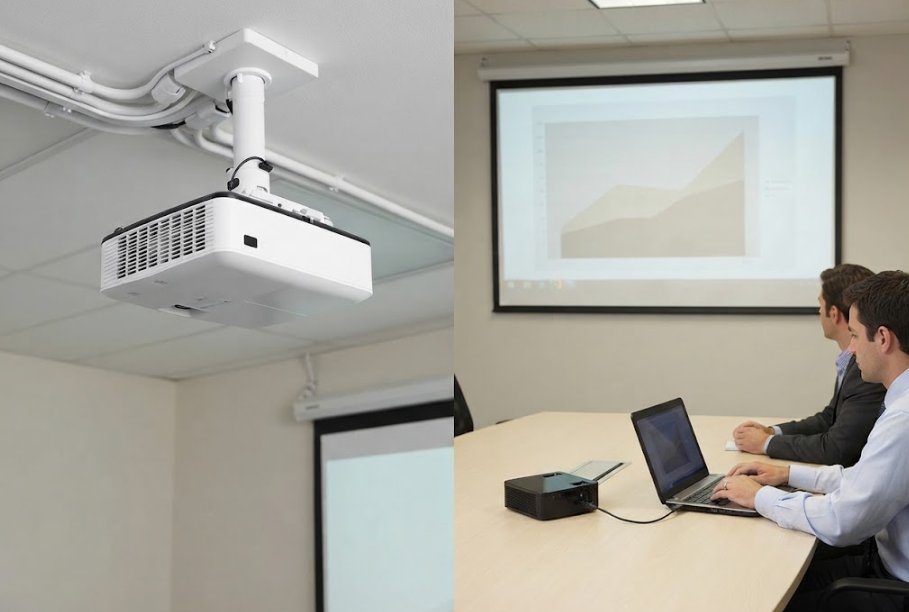
Epson's EB-1485Fi is the reference fixed installation: 5,000 lumens of white and colour light from a 3LCD engine, 1080p resolution, contrast above 2,500,000:1 and a laser source rated at 20,000 hours, or 30,000 in economy mode. Throw ratio runs from 0.27 to 0.37:1 for 65 to 100 inch screens, with 16 W of stereo audio. Its distinguishing feature is interactivity: an infrared finger-touch unit and two pens turn the wall into a whiteboard, with up to six fingers recognised. It weighs 9.3 kg, includes a wall mount, and holds no computer, so it waits for a signal.
BenQ's MH733 takes the conventional lamp route: 4,000 ANSI lumens from a 0.65-inch DLP chip at 1080p, with a 16,000:1 contrast ratio. The lamp is rated at 4,000 hours normally, 8,000 in eco modes and up to 15,000 in LampSave. Throw ratio is 1.15 to 1.5:1 with 1.3x optical zoom across 30 to 300 inches, plus automatic vertical keystone correction of plus or minus 30 degrees. Audio is a single 10 W speaker, connectivity covers two HDMI inputs, an RJ45 port, two USB-A ports and RS232, and the body weighs 2.5 kg. Like the Epson it has no operating system and no battery; BenQ publishes the full figures in its own specification sheet.
The brightness gap comes first. Epson publishes 5,000 lumens and BenQ 4,000, against 3,000 for the HT2500 Pro Ultra, 400 for the HT500 and 350 for the H2; the two portable models are dim-room devices and will not fill a lit conference room. Second, both portable units are native 720p while both competitors are native 1080p, so text-heavy slides look softer. Third, at 20 kg the HT2500 Pro Ultra is more than twice the weight of the Epson, making installation and servicing a two-person job. Fourth, nothing here offers interactive pen or finger input, and the H2 battery covers roughly 120 minutes.
The decision follows the room. A dedicated boardroom with fixed seating rewards the ultra-short-throw geometry of the HT2500 Pro Ultra. Rooms that host visiting laptops of unknown origin are the case for the HT500, because Windows 11 lives inside it and no adapter hunt is required. Presenters working from cafes, client sites and temporary desks should look at the H2, accepting lower brightness for a bag lighter than a laptop. The projector range covers all three shapes, and the business conference application page sets out how they are positioned for meeting rooms. Buyers comparing them against other brands can start from the head-to-head comparison library, which collects these breakdowns across products and manufacturers.